
مخطط تفصيلي
- مقدمة
- What Are the Core Features of JL-723A1H and JL-411 Series?
- How Do JL-723A1H وعاء التحكم الضوئي and JL-411 Differ Technically?
- How Do Their Physical Structure and Installation Methods Compare?
- How Should You Choose Between JL-723A1H and JL-411 Based on Real Application Cases?
- الكلمات النهائية
Smart lighting is evolving fast. Cities want more than simple on and off control. They want intelligence. They want efficiency. They want adaptability.
Automatic التحكم في الإضاءة is no longer optional. It directly affects energy savings, maintenance costs, and system performance.
The Long-Join JL-723A1H Zhaga مستشعر الخلية الضوئية represents the new generation of adaptive lighting. It combines motion detection and ambient light sensing. It reacts to real-world activity.
In contrast, the Long-Join JL-411 Wired أجهزة الاستشعار الكهروضوئية focus on stable and reliable dusk-to-dawn control. It is simple. It is proven. It is widely deployed.
So how do these two solutions really differ? This article discusses these products in detail.
What Are the Core Features of JL-723A1H and JL-411 Series?
ال JL-723A1H زاغا مستشعر إضاءة الخلية الضوئية Is Technically Advanced

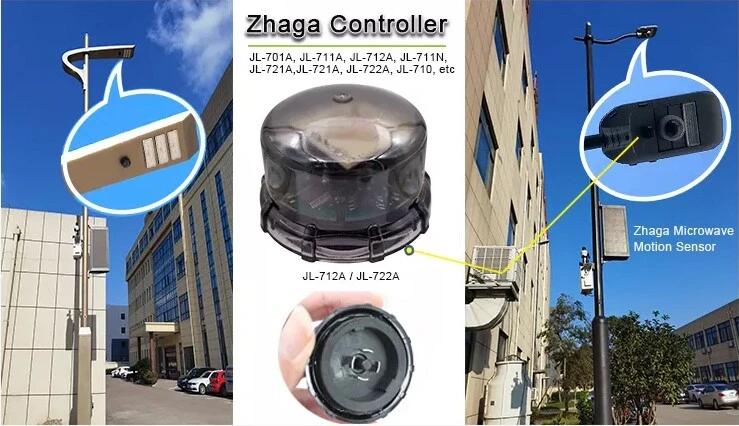
This product is a smart زاغا-compliant controller built for adaptive lighting. It merges PIR motion detection with ambient light sensing, so it reacts both to movement and natural light changes.
This dual sensing reduces unnecessary illumination while maintaining visibility. It supports دالي dimming output. This enables smooth brightness control and flexibility in smart city applications.
The unit’s design supports adjustable لوكس thresholds and remote configuration. This helps adjust system performance for specific environments. Its architecture is optimized for low power draw and long operational life, making it a reliable choice for modern adaptive lighting networks.
Key Characteristics of the JL-411 سلكي مفتاح مستشعر الضوء

هذا التحكم في الإضاءة focuses on automatic lighting based on ambient light changes. It uses a phototransistor sensor to detect dusk and dawn conditions and switch loads accordingly.
Typical models support 12 V and 24 V DC systems with adjustable on/off lux thresholds. This enables reliable automation. Its simple, direct wire-in design and colour codings make installation quick and error-free.
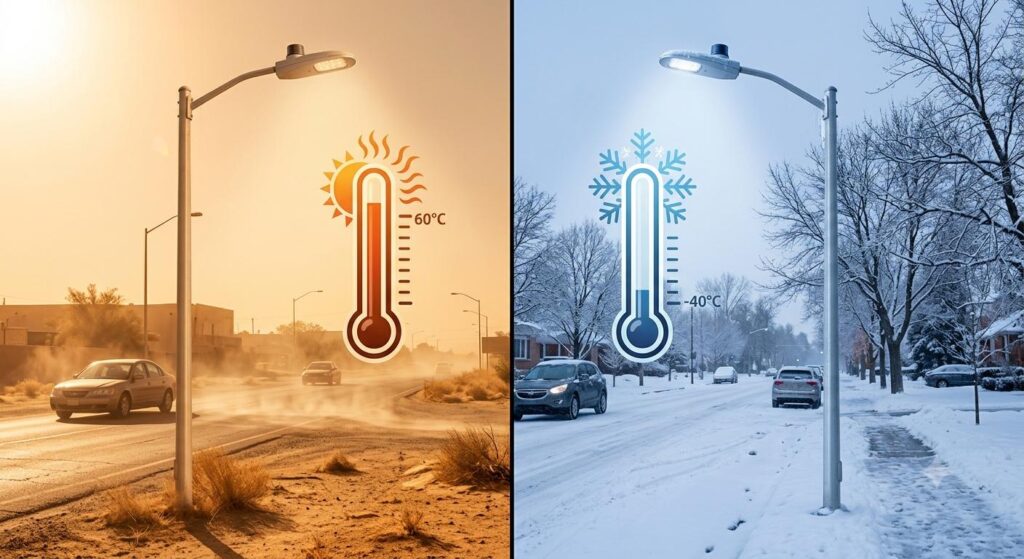
Integrated IP-rated housings ensure weather resistance and outdoor durability. The series delivers stable, low-maintenance operation ideal for standalone lighting applications like signage and simple street lights.
How Do JL-723A1H وعاء التحكم الضوئي and JL-411 Differ Technically?
Difference Between Their Trigger Mechanisms
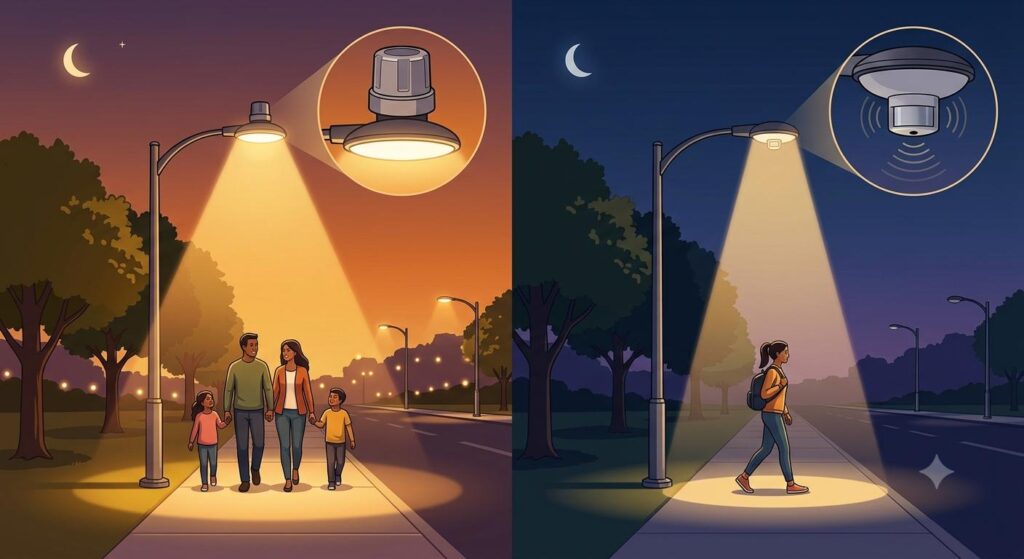
The trigger logic is the biggest technical difference. Long-Join JL-723A1H مستشعر الخلية الضوئية الضوئية uses PIR + ambient light sensing. It stays off until motion is detected at night. Once triggered, it can dim or brighten based on movement patterns and light levels. This real-world response boosts safety and adapts lighting to human flow.
In contrast, the Long-Join JL-411 مستشعر ضوئي كهربائي uses ambient light sensing only. It turns the lights on at dusk and off at dawn based on the Lux level. There’s no motion trigger, so the control is stable and predictable. This makes it ideal for continuous dusk-to-dawn switching without dynamic response.
Energy Savings Comparison
| ميزة | JL-723A1H Zhaga Sensor | JL-411 Wired Photocell |
| Base Activation | Motion + Light | Light only |
| Idle Energy Use | Very low when no motion | On full through the night |
| Peak Efficiency | High in intermittent zones | Moderate across the night |
| Ideal for | Dynamic traffic/movement | Stable dusk-to-dawn contro |
JL-723A1H shines where lights don’t need to run at full power all night. It stays in low-power mode when no motion is present. Motion triggers full output only when needed, significantly reducing energy waste in low-traffic periods.
JL-411 runs steady power after sunset until sunrise. It saves on manual control but uses more energy overall than a motion hybrid system.
Application Scenarios Suitability
JL-723A1H:
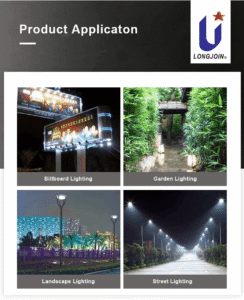
- Public squares & pedestrian plazas
- Urban walkways and commercial sidewalks
- Parking areas where movement varies
- Smart city nodes need adaptive control
JL-411:
- Long roadways & highways
- Residential street poles needing dusk-to-dawn service
- Areas with predictable lighting schedules
- Signage and outdoor fixtures need consistent lighting
Why It Matters:
If the goal is responsive lighting based on activity, choose a dual controller. If the need is for simple day-night automation, a photocell switch delivers simple and stable control. Each device’s design reflects these needs.
How Do Their Physical Structure and Installation Methods Compare?
When it comes to physical design and installation compatibility, these two control solutions are fundamentally different.
The Long-Join JL-723A1H is built around the Book 18 interface. This means its physical form fits into a standardized receptacle on the luminaire. This compact, modular design allows quick mounting without rewiring.
The sensor module simply locks into the Zhaga socket. This reduces installation time and eases future upgrades. The standardized interface also supports 0-10 V or DALI dimming outputs. The results are deployments that are ready for future expandability.
In contrast, the Long-Join JL-411 Wired Photocell Series uses a direct wire-in photocell structure. Installation involves mounting the sensor head through a knockout hole and into the fixture body. Then, the wires are connected according to color coding.
This wired method makes the controller integral to the luminaire, which is stable and robust but less flexible for post-installation changes.
Maintenance & Upgrade Impact Comparison
| Maintenance Factor | JL-723A1H (Zhaga) | JL-411 (Wired) |
| Replacement Time | Minutes (plug-and-play) | Requires rewiring |
| مرونة الترقية | عالي | قليل |
| Smart System Expansion | سهل | محدود |
| Downtime During Service | الحد الأدنى | معتدل |
| Technician Skill Level | أساسي | Basic-to-intermediate |
Key Install & Structure Differences:
● Interface
Zhaga plug-in vs wired connection
● Physical Change
Easy module swap (Zhaga) vs fixture disassembly (wired)
● Compatibility
Zhaga supports standardized smart nodes and future upgrades; wired is fixed to the installed controller
● Maintenance
Zhaga simplifies replacement; wired may require fixture access for servicing
How Should You Choose Between JL-723A1H and JL-411 Based on Real Application Cases?

Choosing the right controller boils down to purpose and performance needs.
Suitability of JL-723A1H
Start by assessing traffic dynamics and lighting goals. If your site has mixed traffic with fluctuating pedestrian and vehicle movement, adaptive control matters. The Long-Join JL-723A1H Zhaga Sensor excels where lighting needs to respond to occupancy and ambient light simultaneously.
It delivers motion-triggered lighting. This helps cut energy use when areas are idle and boosts illumination when people are present. This makes it ideal for public plazas and commercial walkways.
Dual sensing supports safety and reduces wasted light in lightly trafficked hours.
Suitability of JL-411
In contrast, the Long-Join JL-411 Wired Photocell Series thrives in environments that demand predictable automation. It keeps lights on consistently throughout the night based on ambient light alone. This simplicity yields cost benefits and stable control with fewer variables for maintenance.
It’s suited for streets and perimeter lighting where steady illumination is required, and motion-based dimming isn’t needed.
ROI & Project Strategy Comparison
| Project Goal | Recommended Product | سبب |
| Smart City Deployment | JL-723A1H | Supports dimming + adaptive logic |
| إضاءة الطرق السريعة | JL-411 | Stable dusk-to-dawn control |
| Campus Energy Reduction | JL-723A1H | Motion-based optimization |
| Budget-Sensitive Retrofit | JL-411 | Lower upfront complexity |
| Future-Ready Infrastructure | JL-723A1H | Modular + upgradeable |
Product Selection Checklist
Use JL-723A1H Photo Sensor when:
- Movement varies by time of day
- Energy savings and adaptive control are priorities
- You plan smart city integration or dynamic lighting scenes
Use JL-411 التحكم الضوئي when:
- You need simple, reliable dusk-to-dawn switching
- Motion-based control isn’t needed
- Budget and maintenance simplicity matter most
الكلمات النهائية
Choosing between JL-723A1H and JL-411 depends on control goals. One delivers adaptive intelligence. The other provides stable automation. For genuine Long-Join photocontrollers with technical support and consistent supply, تشي-سوير remains a dependable partner. Their experience ensures the right model fits your project from day one.


 Arabic
  English
  Spanish
  Russian
  Italian
  Japanese
  Portuguese