
مخطط تفصيلي
- مقدمة
- What Is a Button-Type Photocell and Where Is It Used?
- What Is a Twist-Lock وعاء التحكم الضوئي and How Does It Work?
- How Do Button-Type and Twist-Lock Photocells Compare in Key Aspects?
- What Are the Key Differences Between Button-Type and Twist-Lock Photocells?
- Which Type of Photocell Should You Choose for Your Application?
- الكلمات النهائية
Outdoor lighting needs to work without manual control. That is where وحدات تحكم الخلايا الضوئية come in. They help automate light switching. This, while helping with power savings, also reduces maintenance effort.
But not all photocells are the same. Different designs suit different installation needs. Button-type and twist-lock مفاتيح الخلايا الضوئية المستشعرة للضوء are two widely used options. Each offers distinct benefits in structure and application.
For selecting the right solution, it’s critical to understand their differences. This boosts the performance of lighting fixtures and extends their service life.

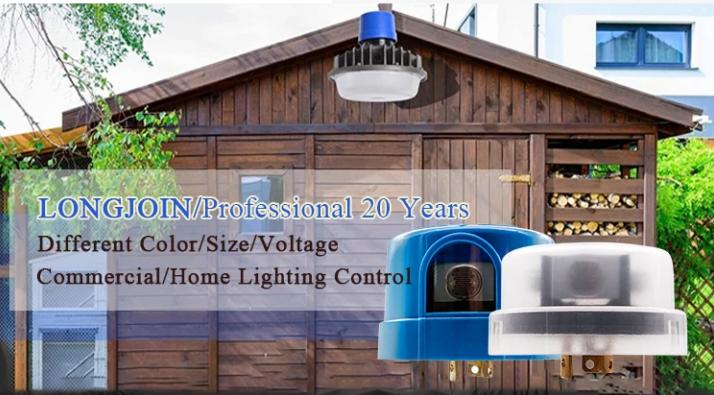
What Is a Button-Type Photocell and Where Is It Used?
A button-type photocell is a direct wire-in light control sensor. It connects to the fixture using lead wires instead of a socket. Installation requires wiring into the circuit and fixing it through a knockout hole. This design is simple but reliable. It is widely used in compact lighting systems where space is limited.
Key Features That Define Button-Type Photocells
Button-type designs focus on flexibility and compactness. They are built for integration inside or onto fixtures.
Wire-in installation
- Uses pigtail wires. Requires manual wiring during setup.
Compact structure
- Small bodies fit tight housings like wall packs and landscape lights.
Flexible integration
- Can be mounted on different fixtures without relying on standard sockets
These photocells typically operate on dusk-to-dawn logic. Common switching levels are around 10–20 lux ON and 30–60 لوكس OFF, ensuring stable light control.
Typical Models Used in Projects
- JL-103A → Standard 120V residential use
- JL-403C → Compact, wide voltage (120–277V)
- JL-423C → Higher load and surge-resistant design
Common Uses Of Button-Type التحكم الضوئي
They are best for small to mid-scale lighting setups:
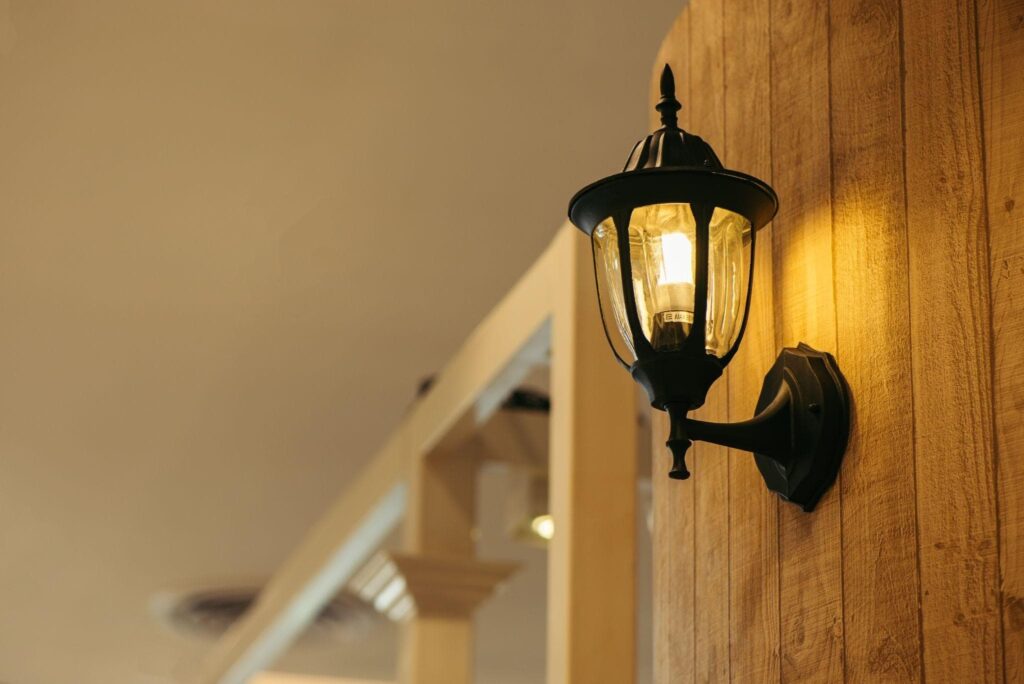
- Residential yards and porch lights
- Park pathways and landscape lighting
- General outdoor fixtures like wall packs and barn lights
These environments need compact size and flexible wiring more than fast replacement.

Typical Technical Specifications of Button-Type مستشعر ضوئي كهربائي
| المعلمة | JL-103A | JL-403C | JL-423C |
| نطاق الجهد | 120V AC | 120–277 فولت تيار متردد | 120–277 فولت تيار متردد |
| الحمل المقدر | 1000 واط تنجستن | 1500W Tungsten | 1800W Tungsten |
| نوع المستشعر | CDS Photocell | CDS Photocell | CDS Photocell |
| ON/OFF Lux Level | 10–20 / 30–60 lux | 10–20 / 30–60 lux | 10–20 / 30–60 lux |
| Mounting Method | التوصيل السلكي | التوصيل السلكي | التوصيل السلكي |
| تصنيف IP | IP65 | IP65 | IP65 |
What Is a Twist-Lock وعاء التحكم الضوئي and How Does It Work?
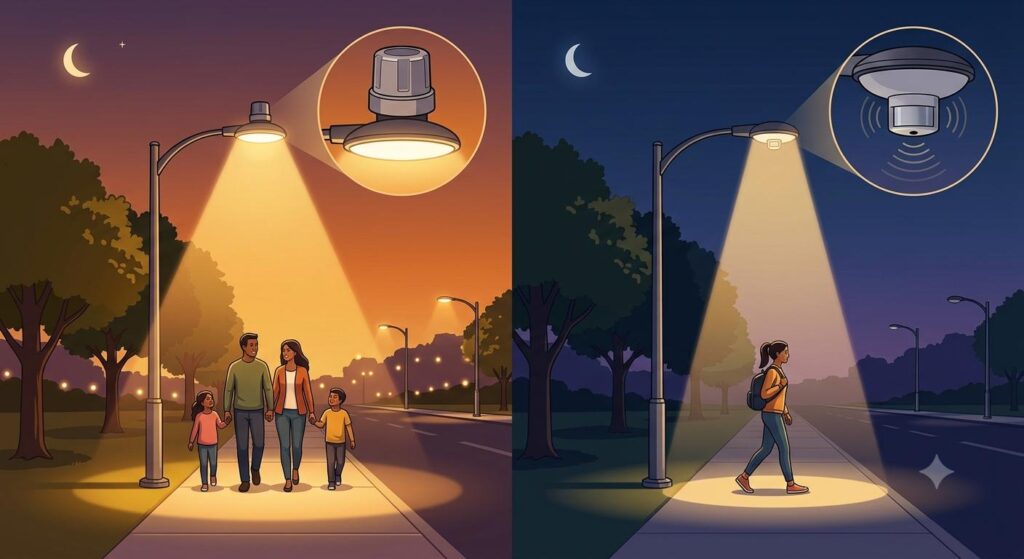
They are plug-in lighting controller designed for standardized sockets. They mount using a twist lock mechanism. Insert, twist, and it locks in place. No wiring is needed during installation. This reduces labor time and wiring errors. It is widely used in municipal lighting systems where speed matters.
Key Features That Define Twist-Lock Photocells
Twist-lock designs focus on speed, standardization, and field serviceability.
● Twist-lock interface design
Uses المعهد الوطني للمعايير الأمريكية/نيما 3-pin or 5/7-pin receptacles. Ensures secure electrical contact
● Quick installation and removal
No tools or rewiring required. Ideal for field replacement
● Standard socket compatibility
Works with photocontrol receptacles used in streetlight fixtures
These units typically support 120–277V or higher ranges. Many models handle heavy loads and include surge protection for grid stability.
Typical Models Used in Projects
- JL-205C → Widely used 3-pin standard model
- JL-207C → Enhanced durability and weather resistance
- JL-215E → Advanced version with higher load capacity
Common Uses Of Twist-Lock مفاتيح الخلايا الضوئية
They are preferred in large-scale and high-maintenance environments:
- Street lighting systems
- Public infrastructure projects
- Industrial zones with frequent replacements

Twist-Lock Photocell Electrical & Interface Standards
| المعلمة | JL-205C | JL-207C | JL-215E |
| Interface Type | ANSI C136.10 (3-pin) | ANSI C136.10 (3-pin) | ANSI C136.41 (7-pin) |
| نطاق الجهد | 120–277 فولت تيار متردد | 120–277 فولت تيار متردد | 120–480 فولت تيار متردد |
| الحمل المقدر | 1800W Tungsten | 2000W Tungsten | 3000W Tungsten |
| حماية من زيادة التيار الكهربائي | 6kV | 10kV | 10–20kV |
| نوع التحكم | من الغسق إلى الفجر | من الغسق إلى الفجر | Smart-ready |
| التركيب | قفل ملتوٍ | قفل ملتوٍ | قفل ملتوٍ |
How Do Button-Type and Twist-Lock Photocells Compare in Key Aspects?
Choosing between these two types depends on installation style and maintenance needs. The differences are practical, not just structural. Each type is built for a specific use case.
Installation Method
- Button-type units require manual wiring. Installers connect line, load, and neutral leads. This takes time and skill.
- Twist-lock units use a plug-and-play approach. Insert and rotate into a receptacle. No wiring needed on-site.
التوافق
- Button-type works with non-standard fixtures and custom housings
- Twist-lock fits ANSI/NEMA standard sockets used in streetlights
This makes twist-lock more suitable for standardized infrastructure.
Maintenance And Replacement
- Button-type replacement needs power-off and rewiring. This increases downtime.
- Twist-lock allows hot-swap replacement in many systems. Maintenance is faster and safer.
Design And Performance
Button-type:
- Smaller size
- Lower to medium load handling
Twist-lock:
- Larger housing
- Designed for higher load and surge capacity
In short, button-type offers flexibility. Twist-lock delivers speed and scalability.
What Are the Key Differences Between Button-Type and Twist-Lock Photocells?
| Comparison Aspect | Button-Type Photocell | Twist-Lock Photocell |
| Installation Method | Wire-in connection, flexible wiring | Twist-lock locking, fast installation |
| التوافق | Compatible with various fixtures | Meets standard lamp socket interfaces |
| Maintenance Ease | Requires power-off and wire disconnection | Quick replacement without power-off |
| Physical Size | Compact, suitable for limited space | Larger, suitable for standard sockets |
| التطبيقات النموذجية | Small outdoor lighting, residential yards | Urban streetlights, industrial lighting |
| Rated Load & Performance | Suitable for general loads (e.g., JL-103A) | Suitable for higher loads (e.g., JL-205C) |
Which Type of Photocell Should You Choose for Your Application?
Opting for any specific lighting control depends on your fixture design and maintenance plan. There is no universal option. Each type solves a different problem.

Choosing a Button-Type مستشعر ضوئي
Go for button-type when flexibility matters more than speed. It fits well in compact or non-standard fixtures.
- Small outdoor lighting setups
- Wall packs, garden lights, and residential fixtures
- Projects with low replacement frequency
- Installations where custom wiring is acceptable
These units save costs and are easy to integrate into tight spaces.
Choosing a Twist-Lock التحكم في الإضاءة
Choose twist-lock for standardized and large-scale systems. It reduces labor and downtime.
- Street lighting and municipal projects
- Industrial and commercial lighting networks
- Applications with frequent maintenance cycles
- Systems using ANSI/NEMA receptacles
This type is built for speed and consistency in the field.
Practical Selection Tips
- Use button-type if space is limited and wiring flexibility is needed
- Use twist-lock if fast replacement and standardization are priorities
- Check voltage range and load rating before final selection
Match the photocell to the project scale. That ensures long-term reliability.
الكلمات النهائية
Choosing between button-type and twist-lock photocells depends on installation style and project scale. The right selection ensures stable performance and lower costs. For consistent quality, تشي-سوير offers reliable Long-Join photocontrollers with proven field performance. It is a practical choice for buyers seeking durability, standard compliance, and dependable supply.



 English
 Spanish
 Russian
 Arabic
 Italian
 Japanese
 Portuguese