
OUTLINE
- Introducción
- What Is the JL-245CN and How Does It Work?
- How Does the JL-245CN Compare to Traditional Systems in Practice?
- What Are the Statistical Differences?
- Wrapping Up
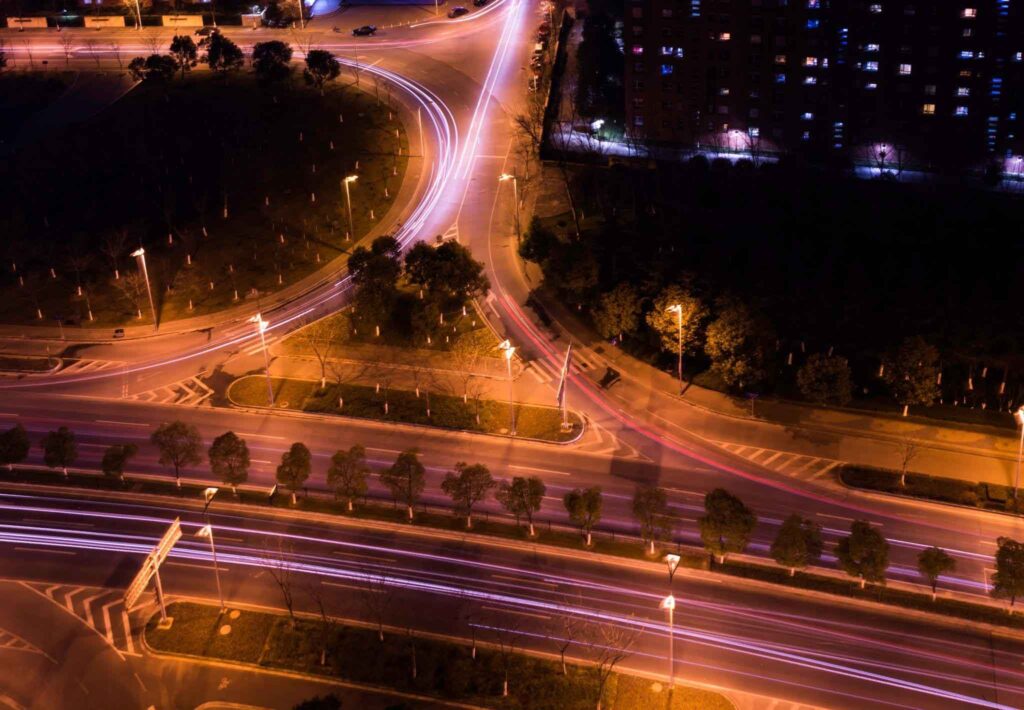
In cities that have multiple street lights, extra considerations are made for inspection crews, fault response teams, equipment replacements, and the administrative overhead that comes with tracking faults. All these are labor-intensive and come with extra cost.
Traditionally, for each light that develops a fault, someone will need to drive there to discover the issue, then drive out again to fix it.
Smart photocells change that equation. Rather than wait for something to fail and then react, the system tells you what’s wrong, where it is, and when it happened.
This article looks at what the Long-Join JL-245CN smart photocell actually does, how it performs against traditional systems, and what the maintenance and labor costs look like in comparison.

What Is the JL-245CN and How Does It Work?
El JL-245CN is Long-Join’s smart NB-IoT photocell, built mainly for street lighting and other outdoor lighting systems. It is an improvement on traditional photocontrollers, as it offers advanced capabilities such as remote monitoring in real time, fault alerts, and intelligent dimming control, all delivered through a cellular network connection.
NB-IoT (Narrowband Internet of Things) is a low-power communication technology designed for devices that need reliable connectivity without consuming much energy. It connects directly to the cloud through nearby mobile network towers, so there is no need for additional gateways, complex wiring, or extra communication infrastructure. This makes installation simpler while still allowing consistent monitoring and control of lighting systems.
What the JL-245CN does that a standard photocell cannot:
- Monitors its own status and reports abnormalities to the cloud immediately
- All operating parameters, including dimming schedules and lux thresholds, can be adjusted from a web interface
- When a lamp or controller fault occurs, an alert is pushed to the management platform instantly
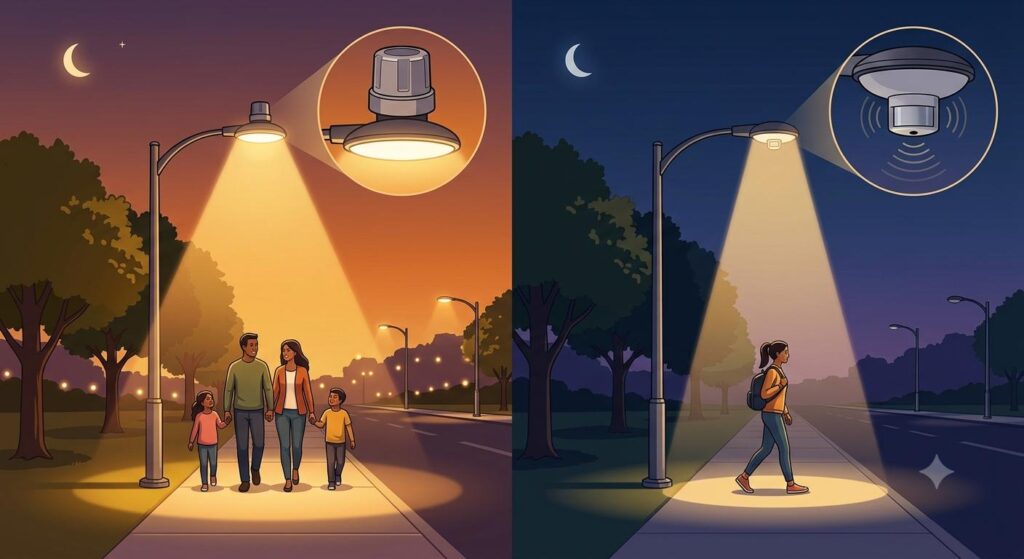
- Scheduled dimming becomes possible to reduce energy consumption during low-traffic hours,
- Internal fault protection from voltage spikes or abnormal operating conditions
How Does the JL-245CN Compare to Traditional Systems in Practice?
Switching from manual inspection to a smart-controlled system cuts inspection frequency, fault response time, and total maintenance spend significantly.
Traditional system challenges:
In a conventional setup, the maintenance team has no information about fixture status between visits. A lamp that burns out on the night of an inspection could pass out unnoticed for an entire month.
With the JL-245CN:
The management platform in a ciudad inteligente has a live view of every connected fixture. When a fault occurs, such as a lamp failure, a voltage anomaly, or a communication dropout, the system flags it immediately. The repair crew goes straight to the affected fixture with the right information.

Inspection and maintenance impact:
- Scheduled full-route inspections drop from monthly to quarterly because the system provides continuous status data between visits
- Targeted visits replace blanket inspections
- Fault response shifts from reactive to proactive
- Predictive patterns emerge over time from the data the system collects
What Are the Statistical Differences?
The data comparison between traditional maintenance and JL-245CN-managed systems shows consistent reductions across every key metric.
| Indicador | Traditional System | With JL-245CN | Reduction |
| Manual inspection frequency (times/year) | 12 | 4 | 67% fewer inspections |
| Lamp failure rate (%) | 8% | 2% | 75% lower failure rate |
| Average fault response time (hours) | 48 hours | 6 hours | 87.5% faster response |
| Annual maintenance cost (10,000 CNY) | 50 | 15 | 70% cost saving |
Breaking down what drives these numbers:
Inspection frequency drops by two-thirds due to the efficiency of continuous remote monitoring. Each visit becomes significant and targeted.
Lamp failure rate falls from 8% to 2% because faults are caught and addressed immediately, preventing minor issues from compounding into full failures. Early dimming detection and prompt response extend lamp lifespan significantly.
Fault response time drops by 42 hours because the system removes any discovery lag entirely. A fault is logged immediately it occurs, and an alert is dispatched.
Maintenance cost falls by 70% because of fewer site visits, faster targeted repairs, and longer lamp life, all of which reduce expenditure simultaneously. Labor, fuel, equipment, and replacement parts all cost less when the system is working efficiently.
What Should You Consider Before Adopting the JL-245CN?
Before deploying NB-IoT smart photocells across a network, there are a few practical factors worth checking.
NB-IoT coverage
The JL-245CN connects through telecom infrastructure, so you should confirm that NB-IoT coverage is available in your area of deployment. This is usually not an issue in most urban and suburban regions. However, remote rural locations may need a coverage check first.
Receptacle compatibility
The JL-245CN uses a 7-pin NEMA C136.41 interface. This isn’t as common as the 3-pin receptacle, so sometimes an adaptor or receptacle upgrade may be required.
Platform integration
The unit connects directly to Long-Join’s UM9000 smart lighting control system. If you use another control platform, ensure it supports UART communication, which is how the device exchanges data.
Dimming compatibility
The photocell has 0–10V and PWM dimming outputs, and these require compatible LED drivers in the fixture. Verify driver specs before specifying the JL-245CN on a project.
Browse Chi-Swear’s smart photocell range for full JL-245CN specifications, and visit Chi-Swear’s intelligent photocell product page for compatible receptacle options.
Wrapping Up
Street light maintenance doesn’t have to be as expensive or as slow as it has been. The JL-245CN replaces a reactive, labour-heavy inspection model with continuous remote monitoring, instant fault reporting, and targeted repair dispatch. The data speaks clearly — 67% fewer inspections, 75% lower failure rate, 87.5% faster fault response, and 70% lower annual maintenance cost. For any municipality or infrastructure operator managing outdoor lighting at scale, the shift to NB-IoT smart photocells isn’t a luxury upgrade — it’s a straightforward operational improvement that pays for itself quickly.


 Spanish
  English
  Russian
  Arabic
  Italian
  Japanese
  Portuguese