
OUTLINE
- مقدمة
- What Is the Difference Between 3-Pin and 7-Pin Receptacles?
- Why Upgrade from 3-Pin to 7-Pin?
- What 7-Pin Receptacle Models Does Long-Join Offer?
- What Is Driving Smart City Projects to Specify 7-Pin?
- The Receptacle for Smart Installation
- Frequently Asked Questions on Receptacle Bases
Street lighting has been running on a fairly simple electrical relationship for decades. Power in, light on. Power off, light off. A 3-pin NEMA receptacle handles this operation perfectly well, and it still does in millions of installations worldwide.
However, smart city lighting asks for more than switching. It asks for dimming schedules, remote fault monitoring, energy consumption data, and two-way communication between each fixture and a central management platform.
A 3-pin receptacle was never designed to carry any of those added demands for intelligent management and enhanced system functionalities, and that is why 7-pin is becoming the standard for any project with intelligent lighting ambitions.

What Is the Difference Between 3-Pin and 7-Pin Receptacles?
The core difference is what each receptacle can carry. A 3-pin handles power and switching only, while a 7-pin adds dedicated signal lines for dimming control, communication protocols, and sensor integration.
Here is a more detailed breakdown
| Receptacle Type | Pin Count | Functional Features | السيناريوهات القابلة للتطبيق |
| 3 دبابيس | 3 | Traditional simple design, supports only power and ground | Traditional street lighting and standard outdoor lighting |
| 7 دبابيس | 7 | Supports more control signal transmission, with multiple wiring allocations; meets expanded communication and safety needs | Smart city outdoor lighting and sensor integration systems |
Why Upgrade from 3-Pin to 7-Pin?
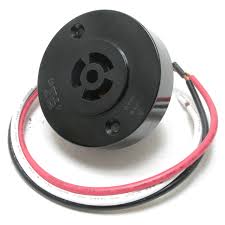
Wiring Colours and Functional Differences
The 7-pin receptacle’s additional wires each carry a dedicated function, and understanding what each one does explains why smart lighting systems need them.
The wiring allocation in a 7-pin ANSI C136.41 receptacle breaks down as follows:
- Black (Line): Main power line
- White (Neutral): Neutral line
- Red: Driver input positive (+)
- Gray/Purple: Control signal line 0-10V
- Brown/Orange: Additional signals, including DALI or functional lines for load switch control and communication interfaces
Clearly distinguishing each wire ensures precise intelligent control, reduces signal interference, meets diverse control demands, and simplifies maintenance.
When a dimming command is sent from a central management platform, it travels down the gray or purple signal wire to the LED driver. When a fault occurs, the status information travels back up through the same infrastructure. None of that is possible with a 3-pin connection that only carries live, neutral, and ground.
What 7-Pin Receptacle Models Does Long-Join Offer?

Long-Join’s 7-pin receptacle range covers three distinct application tiers, from standard smart retrofit projects through to urban industrial infrastructure.
| نموذج | Pin Count | المزايا الرئيسية | التطبيقات النموذجية |
| JL-200X | 3 | NEMA standard compatible, sturdy structure, easy installation | Standard street lighting, retrofit projects requiring a 3-pin NEMA base |
| JL-240X | 7 | Enhanced waterproof and dustproof design, suitable for harsher outdoor environments | Advanced smart street lighting control systems |
| JL-240FXA | 7 | Multiple surge protection features ensure system stability | Urban-level industrial infrastructure lighting solutions |
ال JL-200X is Long-Join’s standard 3-pin NEMA receptacle base, ANSI C136.10 compliant, and the correct starting point for projects that use standard twist-lock photocontrols.
For projects requiring 7-pin smart capability with dimming and communication, the JL-240X series is the appropriate specification. Projects can be future-proofed by installing JL-240X receptacles from the start, even if the initial photocontrol is a standard 3-pin unit — the infrastructure is in place when the smart upgrade comes.
What Is Driving Smart City Projects to Specify 7-Pin?
Four operational requirements in المدينة الذكية lighting cannot be met by a 3-pin system, and each of them is addressed directly by the 7-pin receptacle infrastructure.
Diverse Intelligent Module Expansion
A 3-pin receptacle has no spare capacity for anything beyond basic switching. A 7-pin receptacle has dedicated signal lines that motion sensors, ambient light sensors, IoT controllers, and communication modules can all connect through without additional wiring runs to the pole.
Improved Interaction and Control Accuracy
With a 7-pin receptacle, the sensor connects directly to the LED driver through the receptacle’s low-voltage signal pads. Dimming commands from the management platform reach the driver instantly, and status data returns through the same path. There is no intermediate wiring or conversion required, which reduces the points of failure between the control platform and the physical fixture.
Enhanced System Security
The JL-250F adds dedicated surge protection to the 7-pin receptacle infrastructure, protecting both the photocontrol and the connected driver from lightning-induced transients and grid switching events. Combined with real-time fault reporting through the communication signal lines, the system can detect and alert on electrical anomalies at the fixture level before they become service failures.
Increased Operational Efficiency and Reduced Overall Costs
Because the 7-pin interface is standardised under ANSI C136.41, upgrading the intelligence layer of a smart lighting network means replacing only the controller unit. Maintenance crews swap the controller with a quarter-turn twist-lock motion, the same as a standard 3-pin photocontrol. Over a network of thousands of fixtures, that upgrade simplicity translates directly into lower programme costs when the city is ready to move to the next generation of smart lighting.
For any municipal or commercial project planning a smart lighting upgrade within the next five to ten years, specifying 7-pin receptacle infrastructure from the first installation is significantly more cost-effective than retrofitting 3-pin systems later.
Full specifications for Long-Join’s 3-pin and 7-pin receptacle range are available on Chi-Swear’s NEMA receptacle product pages.
The Receptacle for Smart Installation
The move from 3-pin to 7-pin receptacles in smart city lighting is not a trend; it is an infrastructure decision driven by the functional requirements of intelligent lighting systems that 3-pin connections cannot physically support.
Long-Join’s JL-240X and JL-240FXA 7-pin receptacle series provide the wiring infrastructure, surge protection, and ANSI C136.41 compliance that smart city outdoor lighting projects require, while the JL-200X 3-pin base continues to serve standard photocontrol applications where intelligent control is not a project requirement.
Frequently Asked Questions on Receptacle Bases
Q1: Why do smart city projects need to replace 3-pin with 7-pin receptacles?
The 3-pin system carries only power, neutral, and ground, just enough for a simple on/off photocontrol, but nothing else. Smart city lighting needs dedicated signal lines for dimming commands, fault reporting, sensor data, and communication protocols like DALI and 0-10V.
Q2: What is the main difference between the JL-200X and the JL-240X?
The JL-200X is a 3-pin NEMA receptacle base compliant with ANSI C136.10, suitable for standard twist-lock photocontrols used in traditional switching applications. The JL-240X series is a 7-pin receptacle base compliant with ANSI C136.41, adding dedicated low-voltage signal pads for dimming and communication control.
Q3: How are the wire colours in a 7-pin receptacle functionally distinguished?
Each wire has a single dedicated function, which prevents signal interference and simplifies both installation and fault diagnosis.
- Black, white, and green carry power, neutral, and ground, respectively.
- Red carries driver input positive.
- Gray and purple are assigned to 0-10V dimming control. Brown and orange carry DALI digital dimming signals.
Q4: Are 7-pin receptacles compatible with traditional 3-pin photocontrol devices?
Not directly, but adapters are available to achieve interface conversion where a 3-pin photocontrol needs to operate on a 7-pin receptacle.
Q5: Does using 7-pin receptacles in smart city projects increase installation cost?
The initial unit cost is slightly higher than that of a 3-pin receptacle. However, the 7-pin infrastructure eliminates the need to replace receptacles when smart lighting upgrades are implemented. Across a large network, avoiding that receptacle replacement programme represents a significant saving that comfortably exceeds the initial cost difference.





 Arabic
  English
  Spanish
  Russian
  Italian
  Japanese
  Portuguese
رد واحد
You’ve made some good points there. I checked on the internet for more
info about the issue and found most individuals will
go along with your views on this site.