Índice
- Introducción
- What Are the Most Common Wrong Photocell Selection Problems?
- What Do These Mistakes Actually Cost?
- What Are the Real Risks in Municipal Lighting?
- Why Does Standardisation Reduce These Costs?
- Which Long-Join Models Address These Issues?
- Selecting Photocells for Municipal Projects
- Frequently Asked Questions on Municipal Lighting
Procurement teams working on municipal lighting projects have a natural incentive to find the lowest compliant price in the form of cost, delivery fee, and basic specifications. Budgets are fixed, volumes are large, and a saving of a few dollars per unit across thousands of fixtures looks meaningful on a spreadsheet.
What that spreadsheet rarely captures is what happens eighteen months after installation when the failures start coming in.
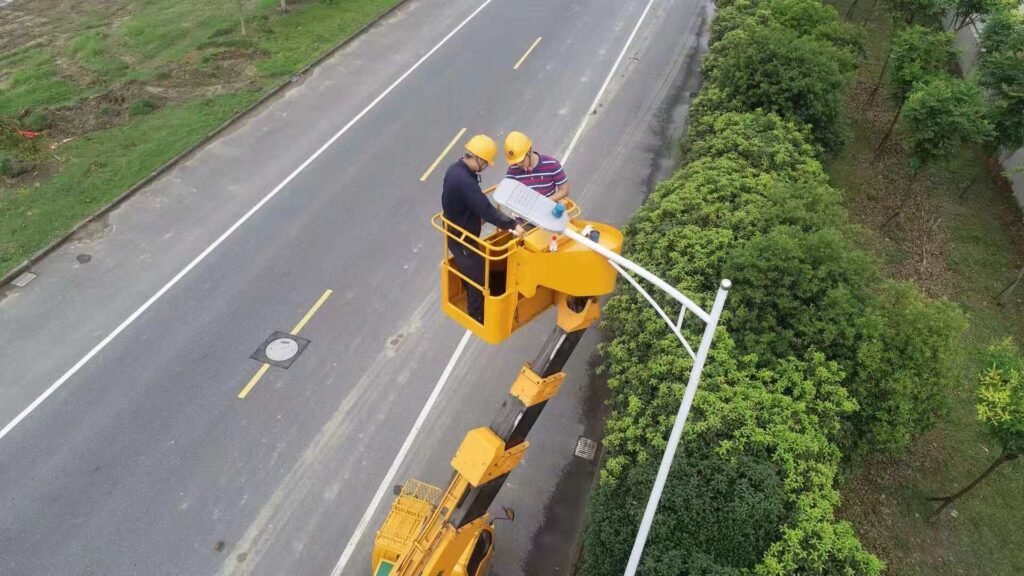
A photocell that costs two dollars less per unit but fails at twice the rate doesn’t save money. It costs more, and it costs more in ways that are harder to account for, such as maintenance crews, bucket trucks, lane closures, public complaints, and the administrative overhead of managing a network that isn’t performing as specified.
The wrong photocell selection is one of the most common sources of hidden cost in municipal outdoor lighting, and it’s almost entirely avoidable.

What Are the Most Common Wrong Photocell Selection Problems?
In my experience, five procurement mistakes account for the majority of avoidable municipal photocell failures, and each of them produces a predictable failure pattern that shows up months or years after installation.
Using Residential-Grade Photocells for Street Lighting
This is the most frequent mismatch. Residential units are designed for sheltered positions, lower loads, and less demanding environments. However, when you put them on a highway pole, they get exposed to full weather, vehicle headlight interference, and grid transients, and they fail early.
Choosing a Low IP Waterproof Rating
Another common mistake involves the IP waterproof rating. IP44 or IP54 in a region with heavy rainfall or coastal humidity means moisture ingress within a wet season or two.
Ignoring LED Compatibility
Doing this produces flickering and relay chatter from the day of installation.
Selecting non-standard mounting systems
This could create maintenance complexity because spare parts and replacement units can’t be sourced interchangeably.
Overlooking UV and surge protection
This results in housing failure and surge-induced damage that rarely appears on initial testing but shows up reliably in service.
What Do These Mistakes Actually Cost?
The hidden costs of wrong photocell selection accumulate across maintenance labour, equipment replacement, operational disruption, and public safety liability, none of which appear in the original unit price comparison.
| Wrong Selection | Hidden Cost |
| Low IP protection | Water ingress & failures |
| Poor UV housing | Cracking & aging |
| Non-LED compatible relay | Flicker & relay damage |
| Cheap contacts | Short lifespan |
| Non-standard installation | Higher maintenance labour |
Beyond the table, consider the operational context of a municipal network. A street light that stays on during daylight wastes energy and draws public attention. One that fails to switch on at night creates a safety hazard and triggers service calls. Lane closures for pole-top maintenance generate traffic management costs.
What Are the Real Risks in Municipal Lighting?

Poor photocell selection produces a recognisable set of operational problems.
- Daytime lights that stay on permanently because a relay has welded.
- Night-time outages from contacts that have corroded through.
- Repeated service calls from a sensor that falsely triggers in response to vehicle headlights.
- Relay chatter and LED flickering lead to lane closures for repairs.
- Safety concerns in areas with non-functioning lights
The public safety dimension compounds the financial one. A dark stretch of roadway at night is not just a maintenance problem. It is a liability exposure for the municipality responsible for it.
Why Does Standardisation Reduce These Costs?
NEMA-standardised photocells reduce municipal maintenance costs through interchangeability, faster replacement, and simpler spare parts logistics.
When every fixture on a network uses the same ANSI C136.10-compliant receptacle, any compliant photocontrol from any manufacturer fits any receptacle without modification. A maintenance crew carrying a single replacement model can service every pole on the network.
Inventory is simplified to one part number. Tool-free twist-lock replacement means the actual swap takes under a minute at the fixture. Across thousands of replacements over a contract period, the cumulative labour saving from standardisation is significant.
In addition to easy field replacement, municipal projects that follow photocell standardization also benefit from:
- Long relay life
- Waterproof construction
- Stable LED switching
Non-standard installation formats eliminate these advantages. A bespoke wiring configuration means each replacement requires a specific part, specialized wiring knowledge, and more time at height, resulting in additional costs.
Which Long-Join Models Address These Issues?
Uniones largas JL-205C y JL-207C are the primary recommendations for municipal lighting applications.
JL-205C

- ANSI C136.10 twist-lock
- LED-compatible
- Stable roadway switching
- IP54 to IP67 (depending on variant)
- UL and CE certified.
The standard specification for general municipal street lighting where the environment is moderate and volume efficiency matters.
JL-207C
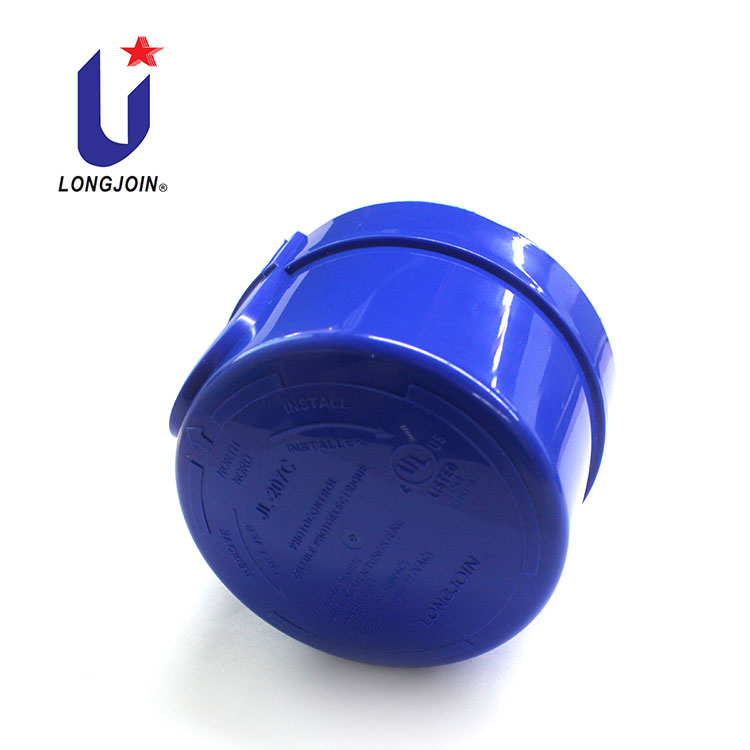
- Protección IP65
- Carcasa resistente a los rayos UV
- IR-filtered phototransistor
- Zero-crossing switching
- HP relay option with 50,000-plus cycle life.
The right specification for harsher environments, coastal zones, industrial areas, and any site where relay longevity and false-trigger resistance are explicit requirements.
Looking at these specifications, you can get clarity on how Long-Join models differ from other low-cost photocells in the market:
| Característica | Low-Cost Photocell | Unión larga |
| Waterproof | Básico | IP65 |
| Resistencia a los rayos UV | Limitado | Mejorado |
| Relay lifespan | Corto | Long-life |
| Norma NEMA | Sometimes | Sí |
| Municipal reliability | Unstable | Proven |
Full specifications are available on Chi-Swear’s twist-lock photocell product pages.
Selecting Photocells for Municipal Projects
The lowest photocell price is not the lowest project cost. Wrong photocell selection in municipal lighting creates a cascade of hidden expenses that far exceed the unit cost savings that motivated the original procurement decision. Long-Join’s JL-205C and JL-207C provide the IP protection, LED compatibility, NEMA standardisation, and relay longevity that municipal networks require from day one, not from the first replacement cycle.
Frequently Asked Questions on Municipal Lighting
Q1: Why do municipal photocell failures create high maintenance costs?
Because the response to each failure requires a crew, a vehicle, and time at height, all with separate costs. On a highway or elevated pole, that maintenance visit involves traffic management, safety equipment, and specialised access. Multiply one failure by the failure rate across a network of thousands of fixtures, and the cost accumulates quickly.
Q2: What IP rating is recommended for street lighting?
IP65 is the recommended minimum for any fully exposed outdoor street lighting position. It provides complete dust protection and resistance to water jets from any direction, which covers wind-driven rain, road spray, and coastal humidity. IP67 is worth specifying for coastal environments, wash-down areas, or flood-prone positions where temporary immersion protection adds meaningful margin.
Q3: Why is LED compatibility important in municipal retrofits?
Most municipal lighting retrofit programmes are replacing HID fixtures with LED. Older photocell relay designs were calibrated for HID and tungsten load characteristics. When paired with LED drivers, they can produce flickering, relay chatter, and cycling on and off that creates immediate complaints and accelerates relay wear. Specifying a photocell with confirmed LED compatibility at the retrofit stage avoids these issues from day one of the new installation.
Q4: How does NEMA standardisation reduce repair time?
An ANSI C136.10 compliant twist-lock photocell fits any compliant receptacle regardless of manufacturer, meaning maintenance crews can carry a single replacement model for the entire network.
Q5: Which Long-Join photocell is better for harsh outdoor projects?
The JL-207C is the right specification for harsh environments. Its IP65 housing protects against the dust and water exposure of coastal, industrial, and high-humidity locations. The UV-resistant polypropylene housing resists the brittleness and cracking that tropical UV causes in standard plastics. The IR-filtered phototransistor prevents false switching from vehicle headlights and mixed artificial light. And the HP relay variant’s 50,000-plus cycle life provides long service intervals in installations where maintenance access is expensive.