
Describir
- Introducción
- ¿Por qué es importante la selección del material de cubierta en exteriores de grado de ingeniería? Control de iluminación?
- ¿Por qué la “máxima transparencia” es una suposición engañosa para la publicidad exterior? Fotosensor ¿Exactitud?
- ¿Qué estreses ambientales afectan al exterior? Fotocontrol ¿Cubre su rostro durante toda su vida?
- ¿Qué problemas a largo plazo introducen las cubiertas totalmente transparentes?
- ¿Por qué las cubiertas totalmente transparentes sufren amarilleamiento y envejecimiento del material?
- ¿Cómo las cubiertas transparentes causan variaciones en el umbral de lux en exteriores? Sensores de fotointerruptor?
- ¿Por qué las cubiertas totalmente transparentes son más vulnerables a la luz dispersa y reflejada?
- ¿Por qué las cubiertas translúcidas negras se han convertido en la solución de ingeniería preferida?
- ¿Cuál es la estrategia de selección de ingeniería recomendada para Interruptores de sensor de luz exterior?
- ¿Cuándo se deben seguir evaluando las cubiertas transparentes y bajo qué condiciones?
- Palabras finales
El color de la cubierta de una fotocélula es fundamental en exteriores, ya que afecta directamente la precisión con la que se detecta la luz a lo largo del tiempo.
En entornos reales de alumbrado público, las condiciones son duras e impredecibles. Una mala elección de la cubierta puede provocar un encendido prematuro o un apagado tardío.
Esto genera quejas, mayor mantenimiento e inconsistencias en el sistema. Este artículo explica por qué las cubiertas translúcidas negras superan a las totalmente transparentes en uso prolongado en exteriores.
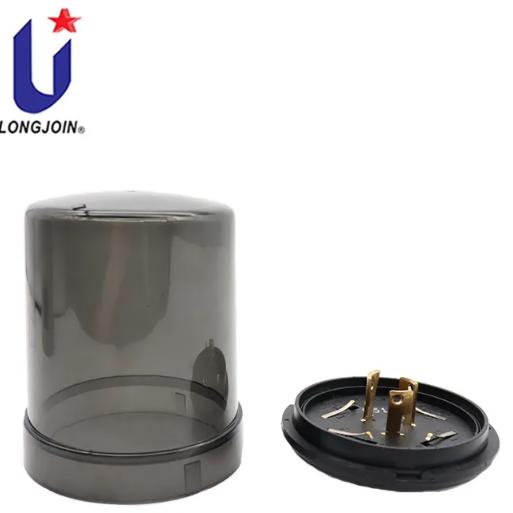
¿Por qué es importante la selección del material de cubierta en exteriores de grado de ingeniería? Control de iluminación?
Elegir el material de cubierta adecuado no es un detalle menor. Afecta directamente la forma en que la luz llega al sensor. Exterior interruptor de fotocélula se enfrenta a condiciones extremas como:
- UV
- Calor
- Polvo
- Humedad
Estos factores pueden cambiar las propiedades ópticas con el tiempo y distorsionar las lecturas. Los entornos exteriores son mucho más rigurosos que los de laboratorio, donde la transparencia inicial parece buena.
En el campo, los plásticos pueden degradarse, lo que reduce la precisión. Una cubierta resistente a los rayos UV protege los componentes internos y mantiene la estabilidad de la detección durante más tiempo.
Sin el material adecuado, sensores de iluminación de fotocélula Fallan prematuramente, lo que genera dificultades de mantenimiento e iluminación inconsistente en proyectos municipales y de ciudades inteligentes. Profesionales diseñan cubiertas para equilibrar la protección, la estabilidad y el rendimiento en condiciones reales.
¿Por qué la “máxima transparencia” es una suposición engañosa para la publicidad exterior? Fotosensor ¿Exactitud?
Muchos compradores creen que una cubierta totalmente transparente ofrece una mejor captación de la luz. A primera vista, más luz parece mejor.
Pero la transparencia pura no garantiza la estabilidad a largo plazo. La exposición a los rayos UV en exteriores degrada muchos plásticos transparentes, causando amarilleo y una menor transmisión. La transmisión inicial solo predice el rendimiento en condiciones ideales, no después de años a la intemperie.
Lo que importa es con qué constancia la cubierta mantiene su comportamiento óptico.
Una cubierta que al principio es transparente, pero se degrada rápidamente, modificará los umbrales de detección, lo que provocará una conmutación temprana o tardía. Los ingenieros priorizan los materiales que resisten el envejecimiento por rayos UV y mantienen una transmisión estable a lo largo del tiempo, incluso si no son completamente transparentes.
La estabilidad óptica a largo plazo siempre supera la claridad a corto plazo.
¿Qué estreses ambientales afectan al exterior? Fotocontrol ¿Cubre su rostro durante toda su vida?
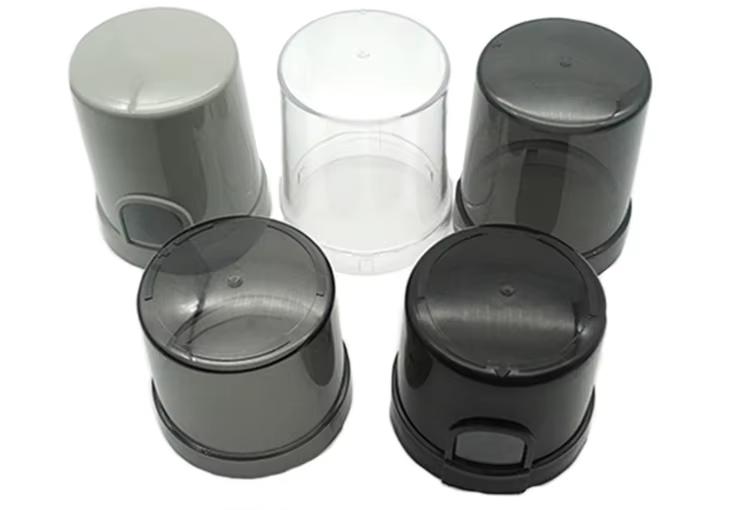
Exposición constante a los rayos UV y al sol
Controles de iluminación se enfrentan a la luz solar directa todos los días. Esto los hace vulnerables a Radiación ultravioleta Ataques. Finalmente, las superficies plásticas se debilitan y afectan los enlaces moleculares. Con el tiempo, esto reduce la claridad óptica y la estabilidad.
Extremos climáticos
El alumbrado público experimenta tardes calurosas y noches frías. Este ciclo térmico provoca repetidas expansiones y contracciones. Gradualmente, aparecen pequeñas grietas y fatiga superficial.
Humedad y luz reflejada
Los entornos exteriores introducen múltiples fuentes de estrés:
- Lluvia y condensación
- Niebla salina en zonas costeras
- Polvo y contaminación industrial
- Luz reflejada de carreteras, señales y luminarias
Estos factores distorsionan las trayectorias de la luz entrante. En conjunto, aceleran la inestabilidad óptica y reducen la fiabilidad de la detección a largo plazo.
| Factor ambiental | Frecuencia de exposición | Nivel de riesgo óptico | Impacto primario en la cobertura |
| Radiación ultravioleta | Continuo | Muy alto | Amarillamiento, formación de neblina |
| Ciclos de temperatura | A diario | Alto | Microfisuras, fatiga |
| Alta humedad | Estacional / Diario | Medio | Empañamiento, condensación |
| Niebla salina (costera) | Basado en la ubicación | Alto | Degradación de la superficie |
| Contaminación del aire | Urbano / Industrial | Medio | Dispersión de luz |
¿Qué problemas a largo plazo introducen las cubiertas totalmente transparentes?
Envejecimiento incluso en plásticos de alta calidad
Policarbonato El uso de PMMA es bastante común para la transparencia. También envejece con la exposición a los rayos UV y al calor. Los aditivos protectores ralentizan la degradación, pero no la detienen.
Pérdida de transmisión
A medida que avanza el envejecimiento, se desarrollan cubiertas transparentes:
- decoloración amarilla
- neblina superficial
- Aumento de la dispersión de la luz
La transmisión de luz disminuye de forma desigual. El sensor ya no recibe una iluminación uniforme.
El riesgo aumenta a lo largo de 5 a 10 años
Los sistemas de iluminación exterior están diseñados para una larga vida útil. Las cubiertas transparentes se degradan de forma gradual pero continua. Tras años de exposición, el comportamiento óptico cambia lo suficiente como para afectar la precisión de la detección, aumentar el mantenimiento y reducir la uniformidad del sistema en instalaciones de gran tamaño.
A continuación se muestra una tabla comparativa de cubiertas negras y transparentes según su envejecimiento a lo largo del tiempo.
| La propiedad a lo largo del tiempo | Cubierta totalmente transparente | Cubierta translúcida negra |
| Resistencia a los rayos UV | Moderado | Alto |
| Tendencia al amarilleo | Alto | Bajo |
| Estabilidad óptica | Disminuye de forma no lineal | Se mantiene estable |
| Riesgo de neblina superficial | Alto | Bajo |
| Previsibilidad de la vida útil | Bajo | Alto |
¿Por qué las cubiertas totalmente transparentes sufren amarilleamiento y envejecimiento del material?
Descomposición molecular impulsada por rayos UV
Las cubiertas transparentes suelen estar hechas de PC o PMMA. Ambos materiales reaccionan mal a la exposición prolongada a la radiación UV. La energía UV rompe las cadenas de polímeros y forma compuestos cromóforos.
Estos compuestos absorben la luz azul, lo que provoca un amarilleamiento visible.
La transmisión de la luz cambia de manera desigual
El envejecimiento no reduce la transmisión de forma lineal. Cambia de forma desigual en las distintas longitudes de onda.
Esto conduce a:
- Formación de neblina
- Aumento de la dispersión de la luz
- Eficacia reducida lujo llegando al sensor
Impacto en la calibración
Sensores de fotocélulas de luz Están calibrados para una trayectoria óptica fija. A medida que la cubierta envejece, dicha trayectoria cambia. La precisión de la calibración se pierde gradualmente. El sensor ya no recibe el nivel de luz para el que fue diseñado. El rendimiento varía poco a poco con el tiempo.
¿Cómo las cubiertas transparentes causan variaciones en el umbral de lux en exteriores? Sensores de fotointerruptor?
La degradación óptica altera la entrada del sensor
Como las cubiertas transparentes se vuelven amarillas o se nublan, llega menos luz utilizable al sensor. control del sensor de luz No falla. Interpreta erróneamente las condiciones ambientales. Esta es la causa de la deriva lux.
Síntomas típicos de campo
Pequeños cambios ópticos crean grandes efectos en el sistema:
- Encendido temprano al anochecer
- Apagado retrasado al amanecer
- Diferencias de cambio aleatorio entre accesorios
Problemas de consistencia a nivel de red
En las grandes redes de alumbrado público, no todas las cubiertas envejecen del mismo modo. Esto provoca:
- Comportamiento de iluminación desigual
- Aumento de las quejas
- Mayores costos de mantenimiento y recalibración
Es por eso que la estabilidad óptica, no la transparencia, define la precisión a largo plazo.
¿Por qué las cubiertas totalmente transparentes son más vulnerables a la luz dispersa y reflejada?
Autorreflexión de la luminaria
Las cubiertas totalmente transparentes permiten que la luz de la luminaria vuelva a entrar en el sensor. Esto incluye la luz reflejada por la carcasa y la cámara óptica. El sensor la interpreta erróneamente como luz ambiental.
Entrada lateral y reflexión en el suelo
Los materiales transparentes ofrecen poco control sobre las trayectorias de luz no deseadas. La luz difusa entra desde:
- Reflexiones en la superficie de la carretera
- Fachadas de edificios y señalización
- Luminarias adyacentes
Esto distorsiona las lecturas ambientales reales.
Desafíos de los sensores orientados hacia arriba
Los diseños orientados hacia arriba son comunes en el alumbrado público. Las cubiertas transparentes agravan el problema, ya que permiten que la luz reflejada y de ángulo bajo llegue fácilmente al sensor. El resultado es una detección de brillo falsa, una conmutación inestable y un comportamiento de encendido y apagado inconsistente en las distintas instalaciones.
La siguiente tabla muestra diferentes fuentes de luz y cómo afectan la gravedad.
| Fuente de luz dispersa | Camino de entrada | Impacto en la detección | Nivel de riesgo |
| Carcasa de luminaria | Reflexión | Brillo falso | Alto |
| Superficie de la carretera | Reflexión ascendente | Apagado retardado | Medio |
| Señalización cercana | Entrada lateral | Cambio aleatorio | Medio |
| Luminarias adyacentes | Entrada lateral | Ruido de umbral | Alto |
¿Por qué las cubiertas translúcidas negras se han convertido en la solución de ingeniería preferida?
Decisiones respaldadas por datos de campo
El cambio en la industria no se produjo de la noche a la mañana. Los datos de campo a largo plazo demostraron que el filtrado de luz controlado funciona mejor que la transparencia total. Las cubiertas translúcidas negras envejecen con mayor previsibilidad y mantienen un comportamiento de detección estable.
Adopción europea y municipal
Las normas europeas de alumbrado público priorizan la estabilidad durante su vida útil. Los proyectos municipales especifican cada vez más cubiertas translúcidas negras para:
- Sensibilidad reducida a la luz parásita
- Mejor consistencia del umbral de lux
- Menores necesidades de recalibración y mantenimiento
Implementaciones a gran escala confirmaron los resultados. El rendimiento se mantuvo constante año tras año. Esta evidencia impulsó una adopción más amplia. Hoy en día, las cubiertas translúcidas negras se consideran una opción de ingeniería madura y con control de riesgos, más que una solución de compromiso de diseño.
¿Cuál es la estrategia de selección de ingeniería recomendada para Interruptores de sensor de luz exterior?

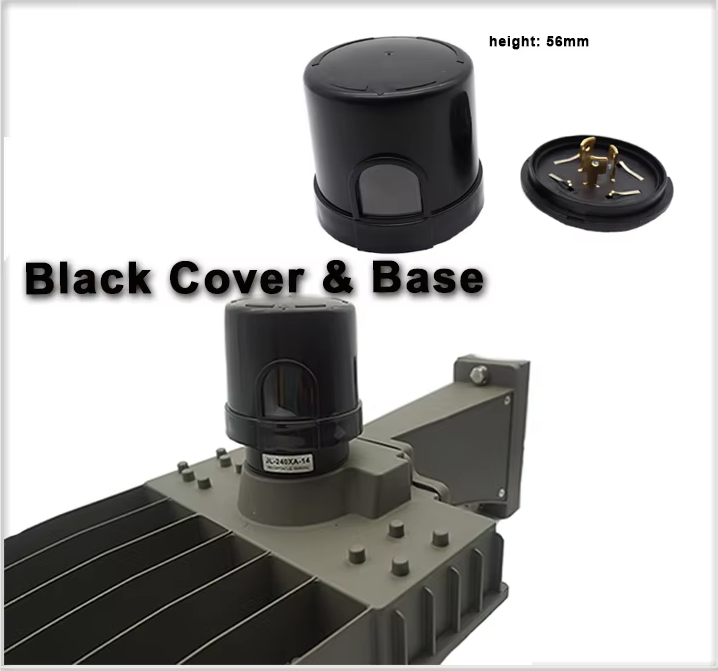
La configuración más fiable consiste en un sensor de luz ascendente con una cubierta translúcida negra. Esto garantiza que el sensor detecte la luz ambiental real y no los reflejos.
Casos de uso ideales
Esta configuración es adecuada para proyectos de infraestructura de larga duración como:
- Alumbrado público municipal
- Sistemas de tráfico y carreteras
- Instalaciones de ciudades inteligentes que requieren un funcionamiento estable
Beneficios clave
El uso de esta configuración ofrece ventajas de ingeniería mensurables:
- Umbrales de lux estables a lo largo del tiempo
- Comportamiento de conmutación consistente en todas las redes
- Mantenimiento y recalibración reducidos
- Menor costo total de propiedad debido al rendimiento predecible a largo plazo
¿Cuándo se deben seguir evaluando las cubiertas transparentes y bajo qué condiciones?
Las cubiertas transparentes solo son aptas para muestreo, prototipos o validación de diseño. No deben considerarse para su uso masivo.
Si es necesaria una evaluación:
- Realizar pruebas de envejecimiento UV para evaluar el amarilleamiento a largo plazo.
- Realizar estudios comparativos de iluminación con versiones translúcidas negras.
- Monitorizar la deriva del umbral de lux a lo largo de meses o años
Las cubiertas transparentes se degradan de forma impredecible en exteriores. Sin las pruebas adecuadas, confiar en ellas puede resultar en mayores costos durante su vida útil. Una evaluación controlada permite que los riesgos sean visibles y controlables.
Palabras finales
El rendimiento de las fotocélulas para exteriores depende de la estabilidad óptica a largo plazo, no de la transparencia inicial. Las cubiertas translúcidas negras ofrecen una detección uniforme y un mantenimiento reducido durante toda la vida útil del producto. Para proyectos que exigen fiabilidad comprobada, Chi-Swear trabaja en estrecha colaboración con Long-Join para suministrar fotocontroladores probados en campo respaldados por experiencia en ingeniería.

 Spanish
  English
  Russian
  Arabic
  Italian
  Japanese
  Portuguese