
Schema
- Introduzione
- What Makes Zigbee Technology Ideal for Smart Controllo dell'illuminazione Systems?
- What Are the Core Functions and Technical Features of JL-245CZ and JL-246CG?
- How Do JL-245CZ and JL-246CG Integrate into Smart Lighting Systems and Applications?
- How Do These Zigbee Smart Sensori di interruttore fotografico Improve Energy Efficiency and Intelligent Management?
- How Do JL-245CZ and JL-246CG Enhance User Experience and Support Future Smart City Development?
- La conclusione
Smart lighting is no longer optional. Cities and buildings now demand systems that are wireless and easy to manage. Zigbee technology answers that need with low power use and reliable networking.
Long-Join’s JL-245CZ and JL-246CG are built around this advantage. They combine intelligent sensing with flexible wireless control. Together, they simplify lighting management while cutting energy waste.
This article breaks down how these devices work and where they perform best.

What Makes Zigbee Technology Ideal for Smart Controllo dell'illuminazione Systems?
Zigbee is not just another wireless protocol. It’s designed for secure and scalable networks. This is exactly what smart lighting systems need. Its strengths show up clearly when deployed in large and distributed deployments like city lighting.
Here’s how the technology truly adds value.
Low Power Consumption and High Security Networks Benefit Large Lighting Deployments
Zigbee drives energy efficiency as power consumption for communication remains low. Devices spend most of their time sleeping and wake only to send control data.
Ultimately, the power consumption plunges dramatically. This helps extend battery life for sensors and controllers.
Suo Crittografia AES-128 secures every message across the network. Thus, lights and sensori fotografici remain secure from unauthorized access and tampering.
Mesh networking lets devices organize automatically and heal the network. If one node fails, others reroute traffic to maintain stability. This means no single point of failure and strong uptime for critical lighting infrastructure.
Zigbee Enable Live Communication and Flexible Lighting Scene Management
Zigbee supports fast and reliable message delivery across many nodes. Lighting commands travel quickly and consistently.
Remote control becomes seamless. Lighting state and scene triggers can be managed from mobile apps and building management systems in real time.
This flexibility enables custom lighting scenes and automation rules that adapt to time and environment. This boosts both comfort and efficiency.
In short, Zigbee’s combination of efficiency and secure networking makes it especially suitable for smart lighting networks that must scale and adapt dynamically.
Zigbee vs Other Wireless Protocols for Smart Lighting
| Parametro | Zigbee | Wifi | LoRaWAN | NB-IoT |
| Consumo energetico | Molto basso | Alto | Ultra Low | Basso |
| Tipo di rete | Maglia | Stella | Stella | Cellulare |
| Latenza | Basso | Molto basso | Medio | Medio |
| Gamma tipica | 10–100 m per node | 50–100 metri | 2–10 chilometri | Wide Area |
| Miglior caso d'uso | Reti di illuminazione intelligenti | Video / High Data IoT | City Sensor Networks | Utility Metering |
| Scalabilità | Molto alto | Medio | Alto | Alto |
What Are the Core Functions and Technical Features of JL-245CZ and JL-246CG?
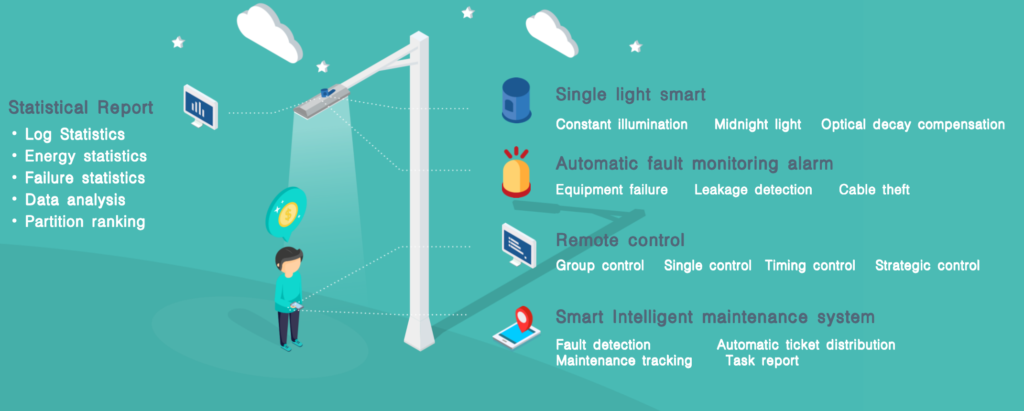
This section breaks down the real technical roles of the JL-245CZ and JL-246CG sensori di illuminazione a fotocellula in a Zigbee smart lighting system. We focus on what each device actually does, not general theory.
JL-245CZ Integrate Zigbee Communication and 0–10V Dimming Control
The JL-245CZ sensore di luce fotocellula esterna acts as a subordinate photocontrol module in Zigbee mesh networks. It combines three capabilities in one compact device:
- Zigbee wireless communication for remote command/feedback and mesh network participation.
- Ambient light sensing to detect daylight levels (range ~350–1100 nm), with accurate dusk/dawn switching thresholds.
- Dimmerazione 0–10 V output to translate network commands into analog control for LED drivers.
Key features include:
- ANSI C136.41 twist-lock interface for easy pole mounting.
- Surge protection and IP67 environmental rating for outdoor durability.
- Fail-on mode ensures lights activate even during network or sensor anomalies.
This combination enables automated brightness control based on light levels and remote system schedules.
JL-246CG Operate as a Centralized Intelligent Street Light Controller in a Zigbee Network
Il JL-246CG sensore di luce fotocellula interruttore plays the central controller role in a Zigbee lighting cluster. Its design focuses on network coordination and comprehensive control.
Main architectural functions:
- Acts as mesh master within Zigbee topology and handles command distribution upstream to subordinate nodes.
- Supports one-to-many configuration — typically up to 50 JL-245CZ sensore di luce units in a single network, ideal for clusters of streetlights or park lighting.
- Integrates critical features that enhance robustness and intelligence:
- Multi-sensor fusion for combined ambient detection.
- Fault diagnosis and status feedback across the network.
- Distributed dimming intelligence to fine-tune light levels per group or schedule.
JL-246CG interruttore sensore luce uses the same Zigbee standard and dimming interface as JL-245CZ, making the whole system seamless and scalable for larger deployments. Here is a table of head to head comparison of both products.
| Caratteristica | JL-245CZ | JL-246CG |
| Mounting Standard | NEMA / Zhaga Compatible | NEMA / Controller Node |
| Control Output | Dimmerazione 0-10V | Network + Control Logic |
| Communication Role | Sub Node | Network Controller |
| Typical Installation Location | Luminaire Top Socket | Pole Controller / Network Master |
| Livello di protezione contro le sovratensioni | Outdoor Grade | Industrial Outdoor Grade |
| Typical Deployment Density | One per Fixture | One per Lighting Cluster |
How Do JL-245CZ and JL-246CG Integrate into Smart Lighting Systems and Applications?
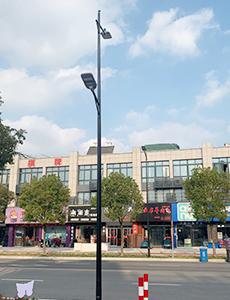
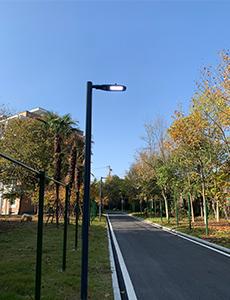
JL-245CZ and JL-246CG aren’t isolated sensors. They’re network-ready smart lighting nodes built to work inside modern lighting management ecosystems. Their design lets them communicate through Zigbee to gateways and cloud platforms.
This makes them compatible with traffic control hubs and municipal systems alike. This isn’t plug-and-play home lighting. It’s urban-grade lighting automation designed for scale and remote management.
These devices are compatible with Mainstream Smart Lighting and Building Automation Platforms
Either units comply with ANSI or Zhaga socket standards. This enables them to connect physically and electrically to standardized fixtures and receptacles. This standardization simplifies retrofits on existing poles and luminaires.
Zigbee mesh connectivity lets them integrate with smart lighting gateways and IoT platforms. Once paired, they can be controlled by central software for:
- Remote status
- Schedules
- Controllo di oscuramento
- Fault reporting
Many platforms can ingest telematics and broadcast commands through Zigbee or a centralized controller node like the JL-246CG.
These Zigbee Fotocellule Deliver the Greatest Value
Illuminazione stradale urbana
- Automated dusk-to-dawn control with group dimming.
- Remote fault alerts and centralized monitoring.
Park & Landscape Lighting
- Schedule-based dimming for aesthetics and safety.
- Integrates with broader smart park systems.
Commercial & Public Lighting Systems
- Energy optimization in large campuses and plazas.
- Works with building automation to lower operational costs.
In all these scenarios, the combination of remote control and standardized interfaces makes both photocell variants a practical choice for scaled smart lighting deployments.
How Do These Zigbee Smart Sensori di interruttore fotografico Improve Energy Efficiency and Intelligent Management?
JL-245CZ and JL-246CG aren’t just sensors — they transform lighting into an adaptive, data-driven system. Their Zigbee connectivity lets them communicate lighting needs in real time.
They balance light output with actual usage and ambient conditions, instead of running at full brightness constantly. This approach directly cuts power usage and extends fixture lifespan.
Remote control and analytics also change how maintenance and operations work in practice.
Precise Wireless Light Detection and Dynamic Dimming Reduce Energy Consumption and Extend Luminaire Lifespan
Accorto sensori fotocellule di luce monitor ambient light levels continuously. This ensures lights only operate at the required brightness. Traditional photocontrols simply switch on/off. These Zigbee units can adjust dimming levels throughout the night based on real conditions. That means:
- Lower energy draw when full brightness isn’t needed.
- Midnight dimming during low-traffic hours.
- LED decay compensation maintains optimal output as LEDs age.
This dynamic dimming strategy typically reduces energy usage by significant margins versus static on/off lighting.
Reducing unnecessary runtime also lowers thermal stress on LEDs and drivers, prolonging their lifespan.
Less heat = longer life
Remote Monitoring and Data Analysis Helps With Cost Reduction
Remote capabilities change maintenance from reactive to proactive and predictive:
- Status reporting and alerts flag outages or faults instantly.
- Historical performance data reveals patterns before failures occur.
- Centralized dashboards let operators view entire networks at a glance.
Below is a table showcasing smart lighting energy optimization methods.
| Metodo | Energy Saving Potential | Implementation Complexity | Note |
| Oscuramento programmato | 20–35% | Basso | Time Based |
| Adaptive Light Sensing | 25–45% | Medio | Weather + Seasonal Adaptive |
| Motion-Triggered Boost | 40–60% | Medio | Best for Low Traffic Areas |
| Network-Wide Load Optimization | 30–50% | Alto | Requires Central Analytics |
How Do JL-245CZ and JL-246CG Enhance User Experience and Support Future Smart City Development?
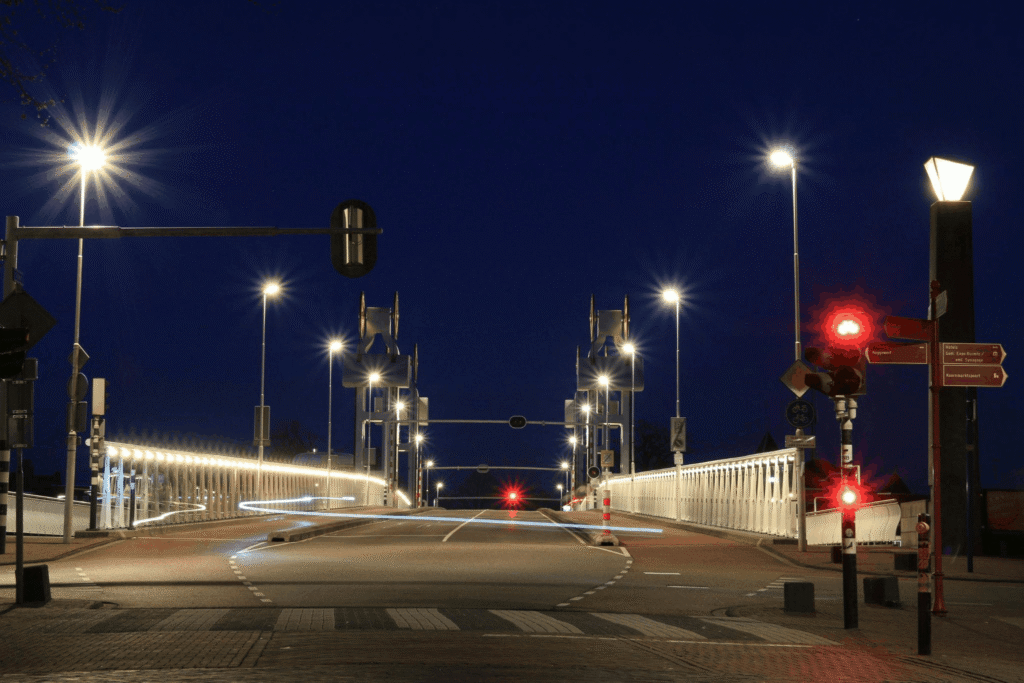
JL-245CZ E JL-246CG aren’t just controlli del sensore di luce — they are interfaces between lighting infrastructure and smart city intelligence. They bring adaptability, user-centric control, and future-ready connectivity into lighting networks. These units support real-time adjustments that improve comfort and safety.
They also align with broader trends in IoT systems and multifunctional urban assets. Importantly, they fit into existing smart frameworks today and lay the groundwork for evolving smart city ecosystems.
Live Adjustment of Lighting Parameters Improves Personalization and Public Lighting Quality
Live control lets operators tune lighting based on conditions and usage patterns. Instead of static schedules, lights can adapt to actual needs. They can be brighter when crowds are present and dimmer when areas are empty.
This improves comfort and safety without wasting energy.
Remote schedules and group commands make it easy to configure zones and events. City managers can adjust parameters from dashboards or mobile apps without site visits.
The result is personalized lighting that reacts to the environment and usage. This boosts effectiveness and citizen satisfaction.
Long-Join’s Zigbee Product Line Evolves to Support Multi-Protocol Integration and Smart City Ecosystems
Long-Join already builds units with multi-protocol capability that include
- Zigbee
- LoRa
- NB-IoT
- LTE
This enables integration with different IoT platforms as cities evolve. Future developments will likely include:
- Enhanced interoperability with lighting management systems and building automation frameworks.
- Standardized interfaces like:
- ANSI
- NEMA
- Zhaga
- Cloud and edge integration for live analytics and OTA updates.
Smart cities need lighting nodes to share data with traffic and public safety platforms. Long-Join’s roadmap aims to support that broader ecosystem.
La conclusione
Long-Join JL-245CZ and JL-246CG combine Zigbee communication and scalable control. They help cities and facilities reduce energy use while improving lighting reliability and automation efficiency. For stable supply and technical support, Chi-Swear is a trusted partner for genuine Long-Join photocontrollers. Their product knowledge and consistent quality make procurement easier and lower project risk.



 Italian
  English
  Spanish
  Russian
  Arabic
  Japanese
  Portuguese