OUTLINE
- Introduzione
- What Are the Power Categories for LED Floodlights?
- Which Long-Join Photocell Suits Which Floodlight?
- How Does Fixture Design Affect Photocell Selection?
- How Do the Models Compare Across Floodlight Power Ranges?
- Rounding up
Flood lights are the go-to when we think about large, bright lights. They are present in security perimeters, sports fields, plazas, loading bays, and so many other outdoor light systems.
Like many modern lights, LED floodlights require outdoor photocell light sensors to come on reliably at dusk and go off at dawn.
However, for floodlights, the load is heavier, the environment is harsher, and there are so many things that could go wrong if you don’t get the right photocell controller.
A lot of Long-Join photocell controllers match well with LED floodlights across the full power range. This makes it a good catalogue to look through for decision-making.
What Are the Power Categories for LED Floodlights?
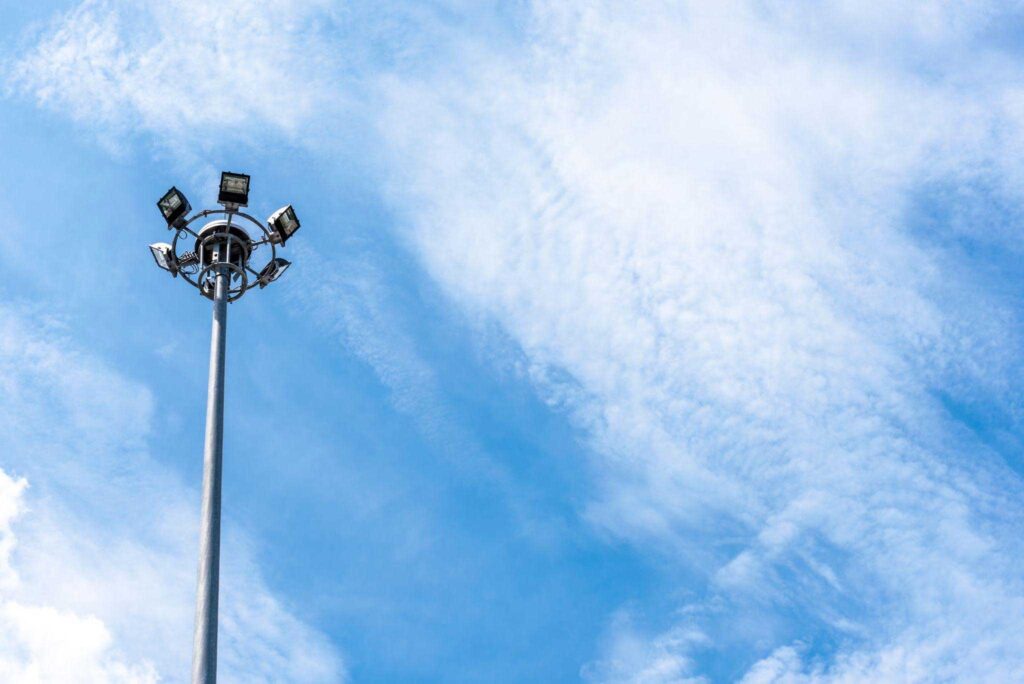
GUIDATO floodlights span from compact 10W residential units to multi-head 400W+ stadium installations, and each power band has different photocell requirements for load rating, IP protection, and sensing format.
Low-Power Floodlights
The lowest power levels of flood lights only go as high as 60W. At this power level, the load is well within the capacity of compact wire-in photocells.
These photocells focus on easy installation, simple sensitivity, and cautious mounting heights to prevent weather disruptions.
Floodlights with low power demands are used in:
- Residential porch
- Garage security lights
- Small retail frontages
- Signage
- Garden and pathway accent floodlights
Medium to High-Power Floodlights
Probably most of the most common floodlights are in this group. With a power range of about 50W-150W, these floodlights cover the majority of commercial and public outdoor lighting.
The photocells installed for such fixtures require a higher load rating and mounting height, along with load protection and a built-in delay function to handle common external lights such as car headlights, which could mimic false daylight.
You would commonly find floodlights of these specifications in:
- Commercial car parks
- Retail area lighting
- Public plazas
- Sports court and recreational areas
- Security floodlighting
High-Power Floodlights (100W–200W and above)
As discussed earlier, floodlights could have power ranges above 100W, and even sometimes above 200W. These are commonly found at industrial and robust sites, running at sustained high loads, mounted at significant heights (10–25 metres), and exposed to the full range of outdoor conditions over long service periods.
At this power level, the photocell here must have a high load rating, zero-crossing technology to protect the relay, IP67 protection for fully exposed mounting, and a robust housing that resists UV degradation over years of outdoor service.
Locations with floodlights of the highest power ranges include:
- parchi industriali
- Warehousing perimeters
- Stadium and large sports venues
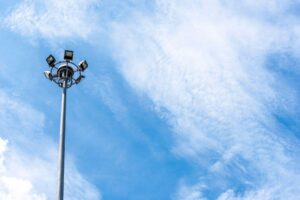
- High-mast multi-head floodlight arrays
- Port and logistics yard
Which Long-Join Photocell Suits Which Floodlight?
Long-Join’s photocell range covers every floodlight power category with models specifically suited to the load requirements, installation format, and environmental demands of each.
Wire-In Controllers
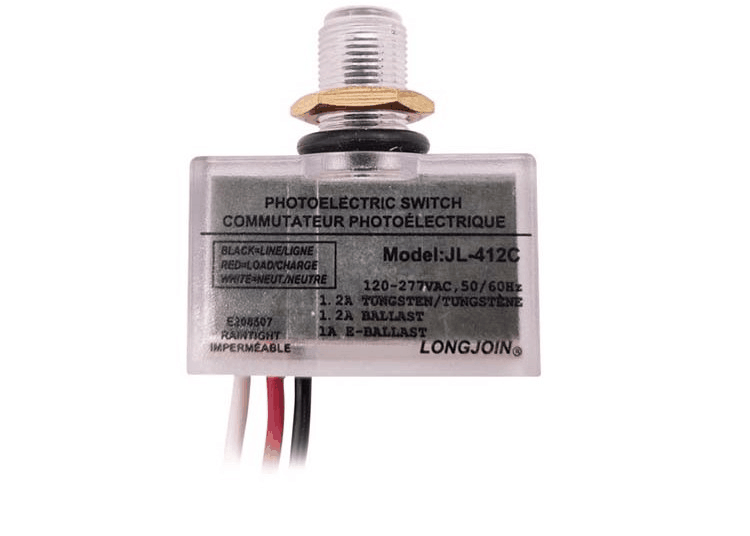
Wire-in photocells mount directly through a knockout hole in the fixture housing, secured with a locknut. They’re the right format for low-power LED floodlights, and some medium-power floodlights without a NEMA receptacle
These photocells are popular among residential and commercial fixtures. Some suitable options for these fixtures are the JL-103A, the JL-403C, and the entire JL-412 series.
Twist-Lock Controllers

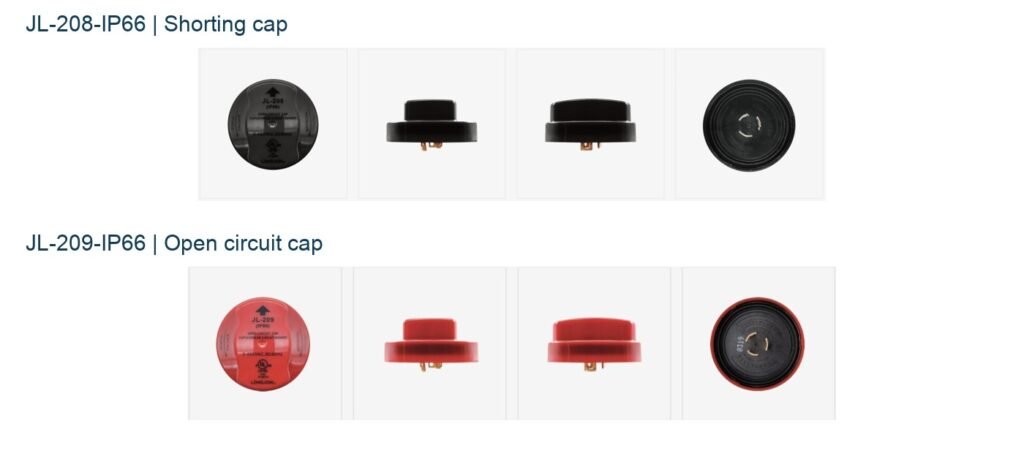
As the name implies, twist-lock photocells plug into NEMA receptacles on the fixture and lock in place with a clockwise rotation. They are reliable for high-powered floodlights running at 100W or higher. Their receptacle installation also allows for tool-free replacement, which is important for fixtures with a high mounting height.
These photocell controllers include the JL-205C, the JL-207C, and the UM-205C, which are standard on street lights and many commercial and industrial floodlights, and it allows tool-free replacement.
How Does Fixture Design Affect Photocell Selection?
Delicate choices such as fixture design, mounting height, and the surrounding environment directly determine which Grado di protezione IP and sensor type are appropriate for each installation.
For example, a photocell that performs well at 3 metres in a sheltered porch position may fail within months at 15 metres on an exposed industrial mast.
Mounting height considerations
- At low heights (2–5m), access for replacement is straightforward, so a lower-cost model with shorter service life may be acceptable
- At medium heights (5–10m), a tool-free twist-lock format reduces maintenance cost and time when replacement is eventually needed
- At high heights (10–25m), durability and long relay life are critical, as every additional maintenance call at height is expensive. The JL-207C’s 10,000+ cycle relay life and zero-crossing protection are particularly valuable here
IP rating by environment
- IP54 — Splash-resistant. Suitable for sheltered positions, residential fixtures under eaves, or fixtures with some overhead protection. Adequate for low-power residential floodlights in most climates
- IP65 — Dust-tight and jet-water resistant. The minimum standard for any fully exposed outdoor floodlight. Required for all medium-to-high-power commercial and industrial applications
- IP67 — Dust-tight and temporary immersion resistant. Required for coastal environments, high-pressure wash-down areas (loading bays, industrial sites), and any application where the photocell may be directly exposed to heavy rain at height
How Do the Models Compare Across Floodlight Power Ranges?
| LED Floodlight Power Range | Representative Fixture Design | Surrounding Protection Level | Recommended Long-Join Models | Application Notes |
| 10W–30W | Small flat panel fixtures | IP54 | JL-103A, JL-412 series | Residential and small commercial areas, low power and energy-saving design |
| 30W–60W | Medium dual-arm wall-mounted lights | IP54 | JL-403C, JL-412 series | Commercial lighting, flexible installation, and higher protection requirements |
| 50W–150W | Large, wide panel or multi-head spotlight fixtures | IP65 | JL-403C, JL-412 series | Medium to large public spaces with stable control and protection requirements |
| 100W–200W | Elevated single-head floodlights | IP65 / IP67 | JL-205C, JL-207C, UM-205C | Industrial parks, stadiums, heavy loads with strong stability |
| Above 200W | Multi-head combined and large high-mast floodlights | IP67 | JL-205C, JL-207C, UM-205C | Large outdoor venues and heavy-duty use, excellent harsh environment resistance |
You can find all the Long-Join designs in Chi-Swear’s full photocell range or specific NEMA-compatible models in the twist-lock photocell section.
Rounding up
Floodlights aren’t like typical outdoor lights, they could have power levels as high as 200W. The wide range of power options makes choosing the right photocell essential, and by considering additional factors such as mounting height, fixture design, and IP ratings, you can find the best match for your fixture on Chi-Swear.