
What Common Failure Modes Should Be Focused on During ANSI C136.10 Testing?

OUTLINE ANSI C136.10 testing doesn’t just verify that a photocell works, it helps procurement teams, lighting engineers, and quality managers systematically expose the ways it can fail. For evaluating photocell suppliers, understanding the failure modes that the standard targets is as important as understanding the passing criteria. A supplier who knows where photocells fail is a supplier who has engineered against those failure points. It helps to learn about the most common failure modes identified during ANSI C136.10 testing, what causes each one, and why they matter for long-term outdoor lighting reliability. Why Does ANSI Testing Target Specific Failure Modes? Most failures that occur with photocells have typical patterns. ANSI […]
UM9900スマート照明管理システム:より安全で、よりスマートで、より効率的な都市

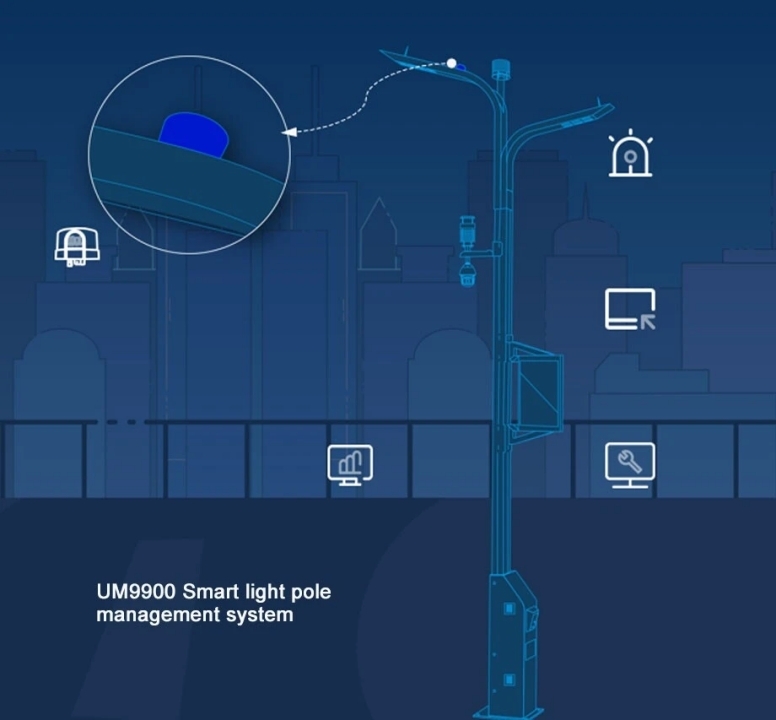
Outline Gone are the days when streetlights served only as passive fixtures on city roads. They now influence energy use and urban intelligence. Municipalities are under an obligation to cut costs while improving public services. Lighting networks are central to this challenge. The UM9900 Smart Lighting Management System responds to this shift. It transforms street lighting into a connected data asset. The result is safer streets and measurable efficiency gains. Why Are Streetlights Becoming Critical Infrastructure in Smart Cities? Because it’s no longer just about lighting roads at night, smart streetlights slash energy use by up to 60%. This is achieved through adaptive LEDs and dynamic controls. They collect real-time […]
スマートフォトセルの解説:ZigBee、LoRa、NB-IoT、WiFi ― 未来はどれか
概要 かつて街灯は、夕暮れ時に点灯し、夜明けに消灯するだけのものでした。しかし今、街灯はよりスマートになっています。都市は、現実世界の状況にインテリジェントに対応するコネクテッド照明システムへとアップグレードしています。この変革の中核を成すのが、スマート光電セルセンサーです。このコンパクトなデバイスは、日光を検知するだけではありません。照明ネットワーク全体と通信し、遠隔制御を可能にします。しかし、複数の通信プロトコルを備えたスマート街灯の未来を真にリードする技術はどれでしょうか?さあ、見ていきましょう。スマート光電センサーとは何か?そして、なぜ現代の照明において重要なのか?照明制御は、シンプルなセンサーの進化形です。基本的な光電セルスイッチは、光に基づいて街灯の点灯/消灯を切り替えるために使用されます[…]
D4iスマート照明規格:屋外用光電セルの革新とスマートシティ開発の促進

Outline LoT, coupled with AI, is revolutionizing smart cities. Regarding urban lighting, the D4i protocols are furthering this revolution with the help of photocells. They enable seamless communication and data sharing between lighting devices. This simplifies integration, supports IoT applications, and allows for advanced analytics. With D4i, municipalities can enhance operational efficiency, minimize energy waste, and improve public safety. As outdoor photocells embrace D4i, the potential for fully automated, data-driven lighting solutions is more promising than ever. What Is D4i Smart Lighting Standard The D4i is an extension of the DALI-2 smart lighting standard. Developed by the DALI Alliance, they enhance the functionality of LED luminaires by integrating intelligence and […]
ゼロクロッシング技術が長寿命の光電セルソリューションを推進

Outline Photocell technology plays a crucial role in our daily lives. These light-sensitive devices serve as the eyes of many systems, detecting changes in light levels and triggering actions accordingly. However, traditional photocell solutions have faced challenges such as sensitivity to ambient light and limited reliability. In response to these challenges, zero-crossing technology emerges as a promising solution, offering improved accuracy and longevity. By precisely detecting when the alternating current crosses zero volts, zero-crossing technology enhances the performance of outdoor photocell sensors, making them more reliable and efficient. This article will delve into the realm of zero-crossing technology and how this innovative approach addresses the shortcomings of traditional photocell technology. […]
屋外照明に最適な光電セルセンサー

Contents Introduction In the realm of outdoor lighting, selecting the best photocell sensor is paramount for achieving optimal performance and energy efficiency. These sensors serve as the backbone of automated lighting systems, regulating when outdoor lights turn on and off based on ambient light levels. The lighting industry continually evolves with advancements in technology and innovation, offering a plethora of photocell sensor options tailored to various outdoor lighting applications. From dusk-to-dawn sensors to motion-activated variants, the choices can be overwhelming. In this guide, we’ll navigate through the landscape of photocell sensors for outdoor lighting, highlighting key features, considerations, and recommendations. Whether you’re illuminating pathways, parking lots, or building exteriors, understanding […]
Zhaga 規格は他の照明ソケット規格と比べてどうですか?

Contents Introduction Within the dynamic realm of lighting technology, the integration of Zhaga sensors into street lighting systems represents a significant advancement. Developed in accordance with the Zhaga Consortium’s rigorous standards, these sensors offer a multitude of technical advantages that are reshaping the landscape of outdoor lighting infrastructure. As municipalities and urban planners strive to enhance the efficiency, safety, and sustainability of street lighting networks, Zhaga sensors provide a compelling solution. Through precise monitoring and control capabilities, these sensors enable dynamic adjustment of lighting levels based on environmental conditions, occupancy, and other parameters, thereby optimizing energy utilization and reducing operational costs. In this article, we will explore the multifaceted benefits […]
街灯に Zhaga センサーを使用する利点は何ですか?

Contents Introduction In urban lighting technology, the integration of Zhaga sensors into streetlight systems stands as a notable advancement, garnering attention within the lighting industry. Zhaga sensors offer a multitude of benefits, ranging from enhanced energy efficiency to improved functionality and reliability in street lighting systems. As municipalities and lighting professionals seek sustainable solutions to illuminate city streets, understanding the advantages of Zhaga sensors becomes essential. In this article, we’ll discover the benefits that Zhaga sensors bring to street lighting infrastructure. From optimizing energy consumption to enabling smart functionalities, we explore how the adoption of Zhaga sensors can revolutionize urban lighting landscapes, paving the way for more efficient and sustainable […]
Zhaga Book 18 規格とは何ですか? スマート シティ センサーではどのように使用されますか?

Outline: What is Zhaga (Product Details: JL-701A Zhaga Book-18 Zhaga Controller) Zhaga is a global consortium that aims to standardize the LED modules used in LED lighting systems. Zhaga’s primary purpose is to ensure exchangeability, which involves achieving interoperability between items produced by different producers. If an LED module you purchased from a manufacturer fails, Zhaga allows you to get and use a module from another manufacturer. Alternatively, if the lighting fixture’s light output falls behind current technology, the corresponding component can be upgraded. The term Zhaga is not an abbreviation, hence it has no meaning. Zhaga is the name of a waterfall in Sichuan Province, China. The Zhaga Consortium was created […]
スマート街灯プロジェクトはどのように作成しますか?

Contents Introduction As the demand for smarter and more efficient urban infrastructure continues to rise, the focus on upgrading street lighting systems has intensified within the lighting industry. Implementing a smart street light project involves a meticulous blend of technology, planning, and collaboration. From integrating sensors and communication networks to optimizing energy consumption and enhancing public safety, the process of creating a smart street light project is multifaceted and requires careful consideration of various factors. In this guide, we’ll delve into the essential steps and considerations involved in making a smart street light project a reality. Whether it’s selecting the right components, designing an effective system, or navigating regulatory requirements, […]
 English
 Spanish
 Russian
 Arabic
 Italian
 Japanese
 Portuguese