
OUTLINE
- 導入
- How Does a Photocell Detect Light and Control a Lamp?
- What Does the JL-103A Wire-In Controller Offer?
- Where Are Photocells Typically Used?
- What Are the Installation and Fault Prevention Guidelines?
- Understanding Light Photocells
- Frequently Asked Questions on Light Photocells
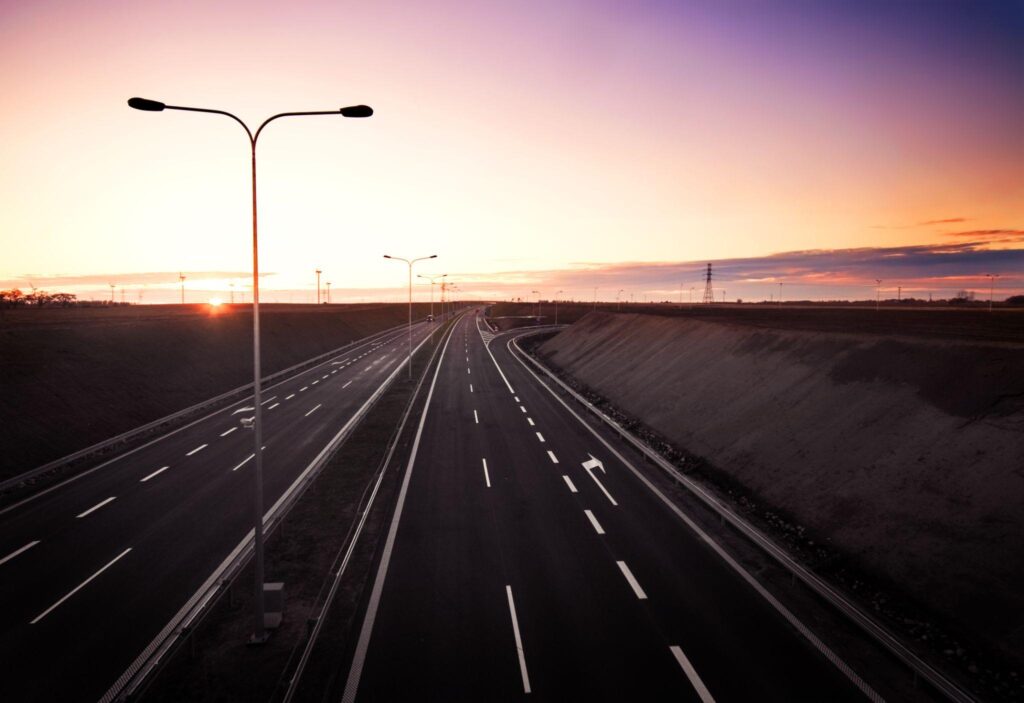
Every time a street light comes on at dusk without anyone flipping a switch, a photocell is doing its job. It reads the ambient light level, compares it to a preset threshold, and triggers the switching circuit.
The whole process of light switch control happens continuously and automatically, every single day, without any manual input.
Long-Join has been manufacturing photocell controllers since 1993, shipping to over 90 countries. Their product range covers everything from basic residential photocells through to smart controllers for city-wide lighting management.
How Does a Photocell Detect Light and Control a Lamp?
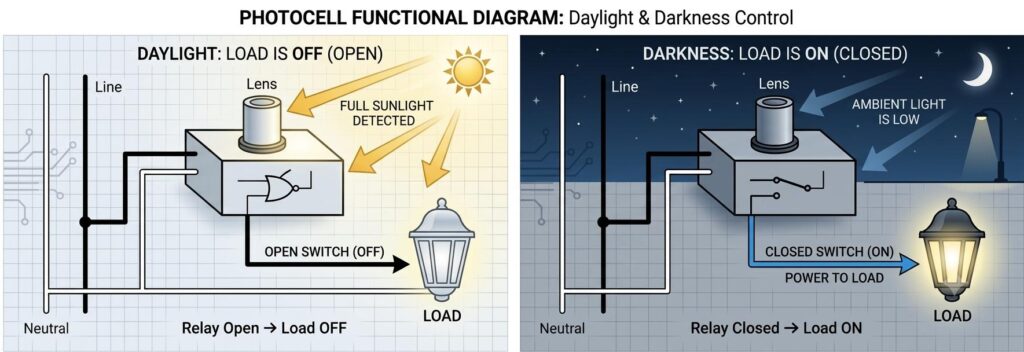
A photocell uses an internal light sensor to monitor light (ambient lux) levels continuously. When the lux level drops below a particular threshold for too long, it switches the connected load on, and then turns off when it rises above the off-threshold at dawn.
Two sensor types are most common in outdoor photocell applications:
- Photodiodes: Convert light directly into electrical current with high speed and sensitivity.
- Phototransistors: Amplify the photoelectric signal internally, providing a stable switching output with higher current than a photodiode but slightly slower response.
Both sensor types monitor ambient light continuously and trigger the relay circuit when the reading crosses either the maximum or minimum threshold.
There is also a built-in time delay that prevents the photocell from reacting to brief light events such as lightning or vehicle headlights. The delay requires the lux reading to hold consistently above or below the threshold for several seconds before switching occurs.
What Does the JL-103A Wire-In Controller Offer?
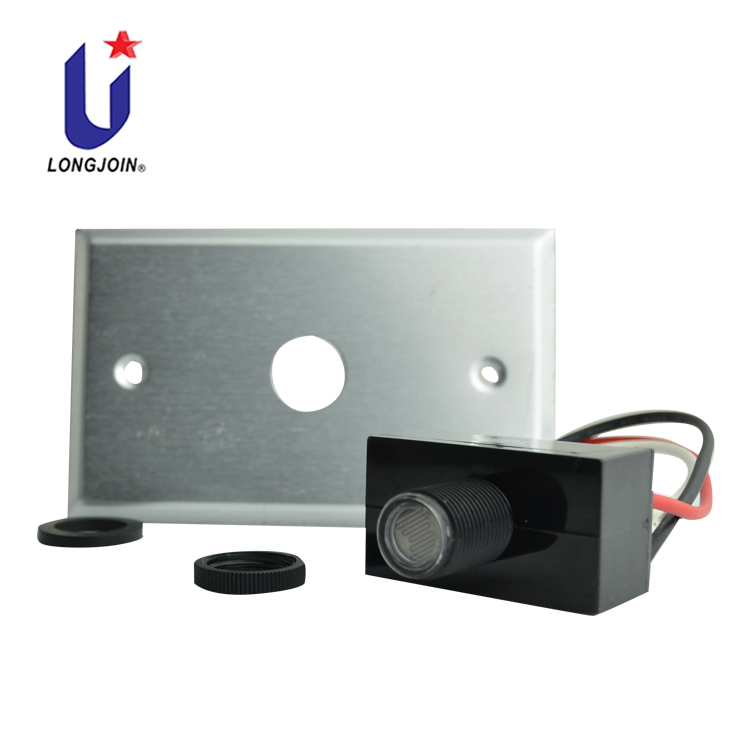
その JL-103A is Long-Join’s standard wire-in button photocell for residential and light commercial outdoor lighting, combining a high-performance phototransistor with UL773A listing and a compact button format suitable for most fixture types.
| パラメータ | Specification Description |
| 定格電圧 | 120VAC |
| 定格荷重 | Up to 500W tungsten / 850VA ballast, compatible with LED and traditional lighting fixtures |
| Photosensitive Sensor Type | High-performance phototransistor, precise response to light intensity changes |
| Wiring Type | 2/3-wire: simplified installation and wiring |
| Protection Mechanisms | Short-circuit protection, EMI resistance, and ensuring stable operation |
| Expected Lifespan | Over 10,000 switching cycles |
The JL-103A’s phototransistor sensing circuit is optimised for LED load characteristics, reducing the false triggering and flicker that occur when older photocell designs are paired with modern LED drivers
It is installed through a standard knockout hole in the fixture housing, making it compatible with wall packs, post lights, and most residential and light commercial outdoor fixtures.
Where Are Photocells Typically Used?
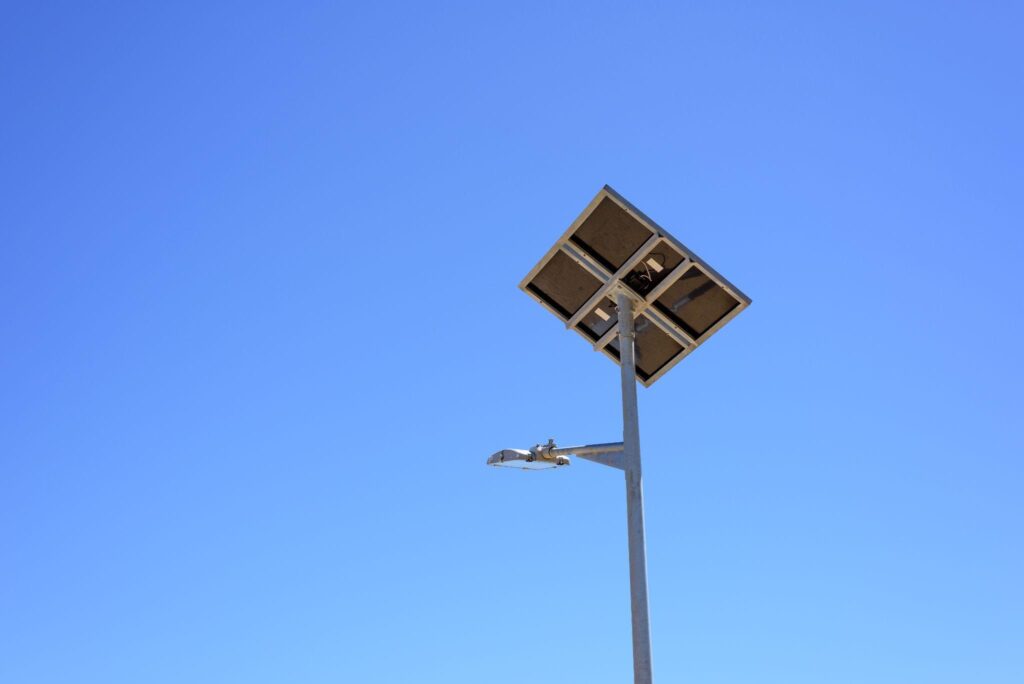
Photocell controllers appear across a wide range of outdoor and indoor applications, wherever automatic light level-based switching is more practical than manual or timer-based control.
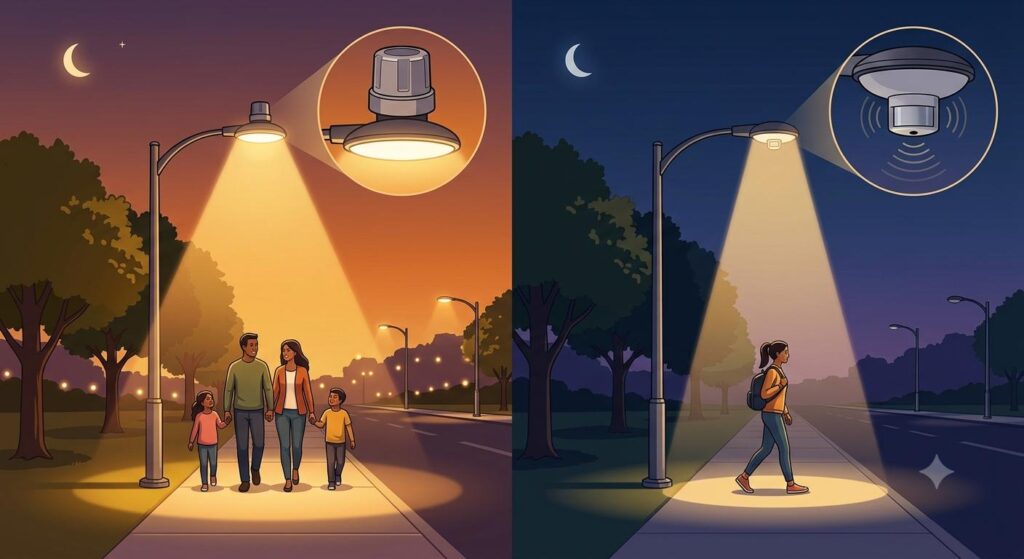
Urban road and public square street lighting is the largest application by volume. Photocell control eliminates the timer drift that causes lights to run into daylight in summer or switch on late in winter, because the sensor responds to actual conditions rather than a preset schedule.
Commercial shopfronts and billboard lighting use photocells to switch on automatically as ambient light falls in the evening.
Smart home and building systems use photocell input as one trigger among several for adaptive lighting control.
Industrial facilities and traffic signal systems use photocells for energy-efficient automatic switching in environments where manual control is impractical.
What Are the Installation and Fault Prevention Guidelines?
Correct installation position and wiring are the two factors that determine whether a photocell performs reliably across its rated service life.
- Position the sensor where it has a clear view of open sky, ideally facing north, away from the fixture’s own light output and any nearby artificial sources.
- A sensor facing a reflective surface or positioned within range of a nearby street light will trigger false switching, either leaving lights on during the day or cycling them on and off during the night.
- Ensure wiring connections are tight, waterproof sealing is applied at all entry points, and supply voltage matches the photocell’s rated voltage exactly.
Common misoperation causes include:
- Sensor shading from obstructions
- Reflective interference from nearby surfaces
- Loose wiring connections.
Long-Join’s anti-interference design and built-in time delay address most of these at the product level, but the correct installation position is the most effective prevention.
Visit Chi-Swear’s wire-in photocell product pages for full JL-103A specifications and wiring diagrams. Full product documentation is also available at ©https://long-join.com/product/long-join-jl-103a/
Understanding Light Photocells
Photocell controllers are the component that turns a standard outdoor fixture into an automatically managed one. Long-Join offers models that cover all outdoor lighting types.
The JL-103A covers the most common residential and light commercial applications with a compact wire-in format, LED-compatible switching, UL773A listing, and a phototransistor sensing circuit that handles the load characteristics of modern LED drivers without the false triggering that older designs produce. Installed correctly in a clear-sky position, it runs reliably without intervention for years.
Frequently Asked Questions on Light Photocells
Q1: How does a photocell detect ambient light and control lamps?
It monitors lux levels through a sensor embedded within the device that triggers the relay when the reading crosses a particular on or off threshold. A built-in time delay also prevents brief light events from triggering the switch.
Q2: Why is the JL-103A suitable for LED loads?
The JL-103A’s sensing circuit and relay design are optimised for LED driver load characteristics, which reduces the flicker and false triggering that occur when older photocell designs are paired with modern LED fixtures.
Q3: How do you ensure long-term stable operation?
Make sure to:
- Install the photocell in an unobstructed position facing open sky
- Confirm all wiring connections are tight and waterproof
- Avoid sensor positions that face reflective surfaces or nearby artificial light sources.
Q4: What are common reasons for photocell failure or misoperation?
The most common contributors to photocell failures are:
- Sensor shading from obstructions
- Reflective interference from nearby light sources
- Loose or corroded wiring connections account for most field problems.
Q5: What is the approximate energy-saving effect of using a photocell?
Automated dusk-to-dawn control typically reduces lighting energy consumption by over 30% compared to uncontrolled or timer-controlled operation. Combined with LED fixtures, the savings are higher.


 Japanese
  English
  Spanish
  Russian
  Arabic
  Italian
  Portuguese