
OUTLINE
- 導入
- How Is the Photocell Sensing Window Designed?
- What Is the Difference Between Transparent and Frosted Windows?
- What Do Market Users Think?
- What Actually Determines Performance — Window or Components?
- Understanding Photocell Windows
- Frequently Asked Questions on Photocell Windows
In product evaluation and procurement, we try to ask why some photocells have a clear lens window while others have a frosted dome.
The two designs look different and perform slightly differently, and understanding the trade-off helps both specifiers and maintenance teams make better product choices.
The short answer is that window design is one factor among several others, and not the most important one. But it does matter, and for specific installation environments the choice between transparent and frosted makes a practical difference.
How Is the Photocell Sensing Window Designed?
The sensing window is the photocell’s optical interface with the environment. It determines how much light reaches the sensing element, from which directions, and how much filtering of reflected or artificial sources occurs before the light is detected.
Long-Join photocells across the range use different window configurations matched to the sensor type and intended application. The JL-205C そして JL-403C series both feature sensing windows that allow direct light transmission to the sensor element. The material and shape of these windows affect how the sensor reads ambient conditions and how susceptible it is to interference from non-ambient sources.
What Is the Difference Between Transparent and Frosted Windows?
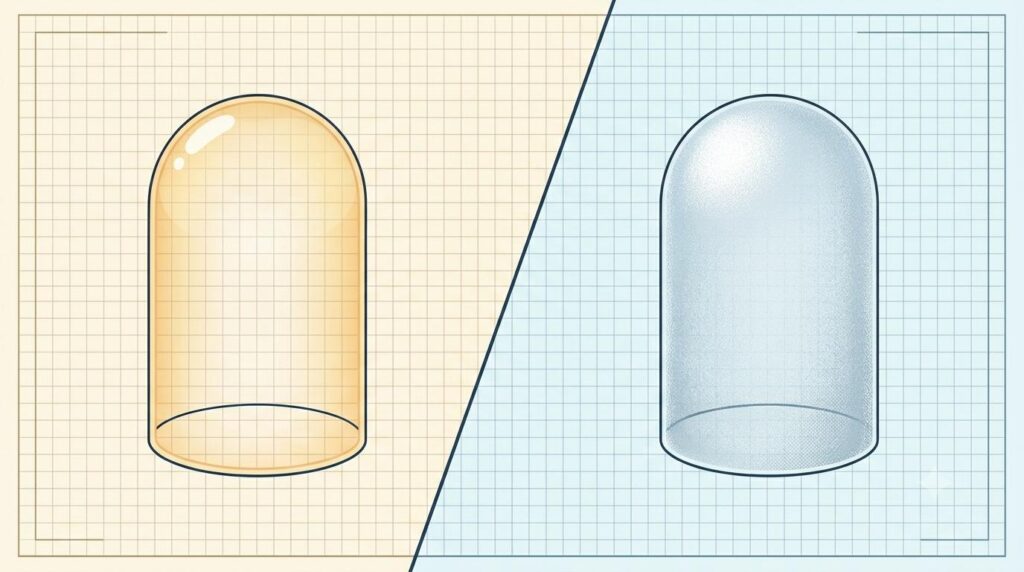
Transparent and frosted windows make different trade-offs between sensitivity and false-trigger resistance, and neither is universally superior; the better choice depends on the installation environment.
Transparent Windows

Transparent windows use durable ポリカーボネート material that allows direct, unfiltered light transmission to the sensor. The advantage is high sensitivity and fast response to genuine light level changes. The disadvantage is that direct reflections from nearby surfaces, vehicle headlights, and adjacent light sources can reach the sensor and create false ambient readings. In installations with significant reflective interference, this produces false triggering.
Frosted Windows
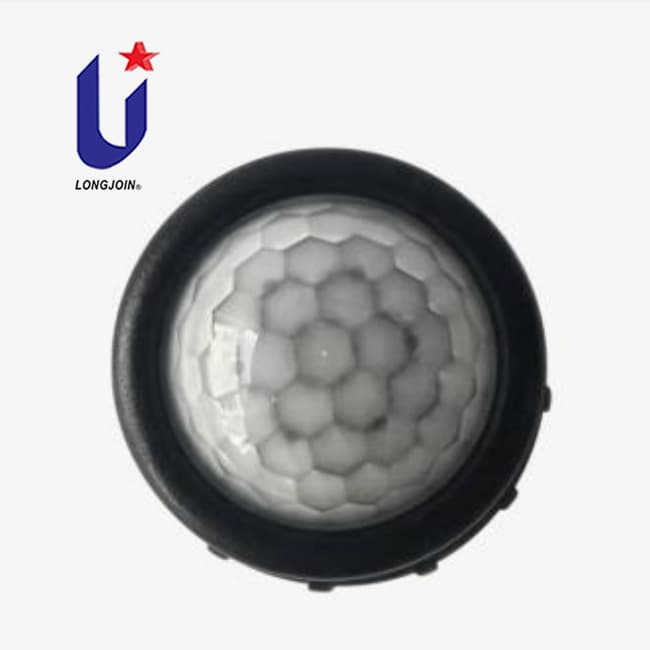
Frosted windows use a dome shape with a frosted top and transparent edges, which diffuses the incoming light before it reaches the sensor. This diffusion averages the light reading across a wider angular range, which reduces the impact of a single direct reflection on the sensor reading. The result is more stable switching in complex light environments, particularly in winter when low sun angles and snow reflection create high-intensity directional light events. The trade-off is a slightly slower response and marginally lower peak sensitivity compared to a direct transparent window.
What Do Market Users Think?
Some buyers trust transparent windows for their sensitivity advantage and accept the need for careful installation orientation to manage the risk of reflections.
Others prefer frosted windows specifically because of their stability in variable weather and their resistance to the false triggering that transparent windows can produce in complex environments.
Both positions have merit. The argument for transparent windows is strongest in controlled environments where the sensor orientation can be precisely managed, and reflection sources are minimal. The argument for frosted windows is strongest in complex outdoor environments with variable light, reflective surfaces, and seasonal extremes.
What Actually Determines Performance — Window or Components?
The window design is one part of the performance equation. Still, the sensing component type and the anti-interference design of the circuit have a greater influence on real-world switching accuracy than window material alone.
Photodiode photocells typically use preset longer delay times to buffer sudden light environment changes, which handle many of the false-trigger scenarios that transparent windows are susceptible to regardless of window design. Phototransistor photocells such as Long-Join’s JL-207C are more sensitive to light with precise lux settings, which demands stricter window performance to avoid over-triggering.
For installations where reflected light interference from transparent windows is a persistent problem, Long-Join’s Zhaga sensor models including the JL-712A3 series offer reflection compensation features that address this at the circuit level rather than relying on window geometry alone. This approach means the photocell can use a sensitive transparent-type window while the circuit compensates for reflection-induced false readings.
| Window Type | Characteristics | 利点 | デメリット | Typical Application or Model |
| Transparent | Made of PC material, direct light entry | High sensitivity, quick response | Prone to reflection interference, higher false trigger risk | JL-205C, JL-403C |
| Frosted | Dome-shaped frosted top with transparent edges | Reduces reflection interference, stable response | Slightly slower response, better winter performance | Certain industrial products, some custom models |
Understanding Photocell Windows
Transparent windows deliver higher sensitivity and faster response at the cost of greater susceptibility to reflection interference. Frosted windows sacrifice some sensitivity for more stable operation in complex light environments and challenging seasonal conditions.
For most outdoor installations, the difference is manageable through correct sensor orientation and appropriate delay settings. Where reflection interference is persistent, the circuit-level compensation in Long-Join’s Zhaga sensor models addresses the problem more effectively than window design alone. The window matters — but the sensor type, circuit design, and delay settings matter more.
Frequently Asked Questions on Photocell Windows
Q1: Which window type has higher sensitivity?
Transparent windows have higher peak sensitivity because they allow direct, unfiltered light to reach the sensor. Frosted windows diffuse the incoming light, which averages the reading across a wider angle and reduces peak sensitivity slightly.
Q2: What are the advantages of frosted window design?
Frosted windows reduce direct reflection interference, provide more stable switching in variable light conditions, and perform better in winter environments where low sun angles and snow reflection create high-intensity directional light events.
Q3: Why are photocells affected by reflected light?
Transparent windows allow direct reflections from nearby surfaces, vehicle headlights, and adjacent luminaires to reach the sensor alongside genuine ambient light. The sensor cannot distinguish between ambient sky light and a direct reflection, so both trigger a response.
Q4: Does window design determine all performance attributes?
No. Sensor type, circuit design, delay settings, and anti-interference features have a greater influence on real-world performance than window material alone. A photodiode photocell with a well-designed circuit outperforms a CDS photocell with an optimally shaped window in demanding environments.
Q5: What reflection compensation capability does the JL-712A3 have?
The JL-712A3 series includes reflection compensation features that reduce false triggering caused by reflected light at the circuit level, allowing the sensor to distinguish more accurately between genuine ambient light changes and short-duration reflection events.

 Japanese
  English
  Spanish
  Russian
  Arabic
  Italian
  Portuguese