
OUTLINE
- Введение
- What Does IP65 Actually Mean?
- What Does the IP65 Water Test Involve?
- Why Do We Need Waterproof Testing for Product Performance?
- How Does Long-Join Achieve IP65 in the JL-207C?
- Rounding Up
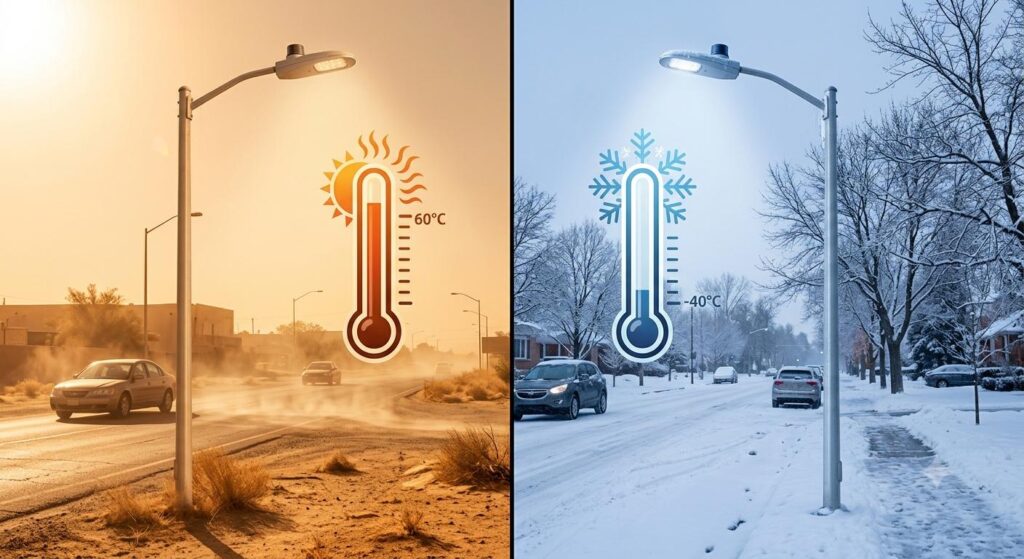
Photocells mounted on street light poles are exposed to all kinds of climates. It sits there through every downpour, fog bank, dust storm, and all manners of temperature swing.
The internal electronics of these photocontrollers are only protected by their housing, the gasket, and the IP rating printed on their datasheet.
IP65 is the minimum waterproof rating required for outdoor photocells in serious applications, and understanding what that rating actually means and how it’s tested tells you a lot about whether a photocell will still be working correctly five years after installation.

What Does IP65 Actually Mean?
A photocell, such as the JL-207C5-F23-HP-P-IP65, has a waterproof rating of IP65, which is defined under МЭК 60529 and represents two independent levels of ingress protection that must be demonstrated through specific physical tests:
- Complete dust-tightness (rated 6)
- Protection against water jets from any direction (rated 5)
The two-digit IP code is not a general quality score. Each digit represents a separate, independently tested protection level against a specific type of ingress:
First digit (Rating 6) — Solid particle protection
This number describes that the housing is completely sealed against the entry of any solid particles, including fine dust. This is the highest rating in the IP solid particle scale. Testing involves placing the device in a chamber with talcum powder under negative pressure for a defined period and confirming no particles have entered the housing afterward
Second digit (Rating 5) — Liquid ingress protection
This number indicates that the housing is protected against water jets from any direction. The photocell must survive water projected by a nozzle from any angle without water entering the housing in quantities that could cause harmful effects
Together, IP65 means the photocell is completely sealed against dust and can withstand sustained, directed water exposure from any angle; the two most relevant environmental threats for a device mounted outdoors in all weather.
What Does the IP65 Water Test Involve?
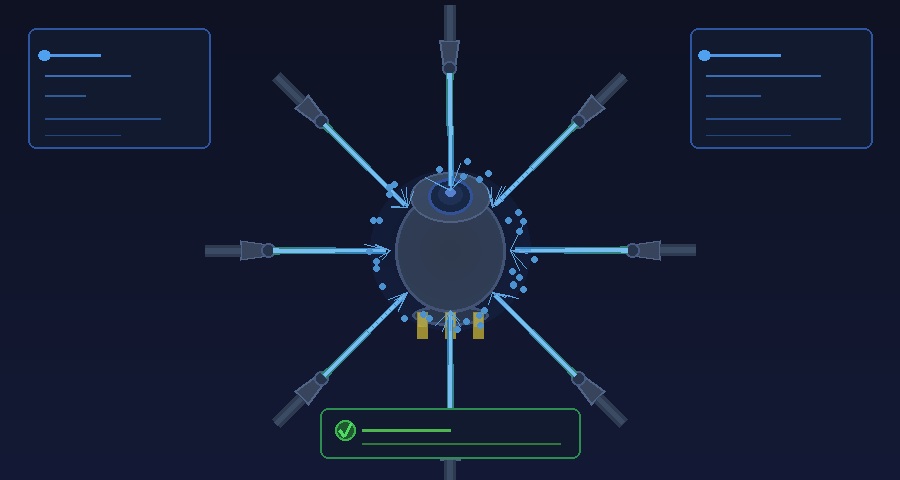
The IP65 waterproof test uses a defined nozzle, a specified water flow rate, and a minimum test duration, with the device tested from all angles simultaneously.
The specific test parameters defined under IEC 60529 for the waterproof testing are:
- Nozzle inner diameter: 6.3mm
- Water flow rate: 12.5 litres per minute
- Test duration: Minimum 3 minutes
- Water jet direction: All angles
To ensure they pass the test, no water may enter the housing during or after the test. The device must continue to function normally after the test is complete, and internal inspection must show no water ingress or condensation
This is a significantly more demanding test than it might sound. 12.5 litres per minute from a 6.3mm nozzle doesn’t just spray but generates a focused, pressurised jet. It simulates the kind of direct water exposure a photocell might encounter in wind-driven rain, pressure washing of luminaire housings, or high-precipitation environments.
What the test does not cover
One situation that the IP65 does not cover is immersion. In installations that require the photocell to be submerged, waterproof ratings such as IP67 or IP68 should be specified depending on the depth of immersion. The JL-207C is available in IP65 and IP67 variants.
Why Do We Need Waterproof Testing for Product Performance?
A photocell that fails IP65 water testing is not suitable for exposed outdoor installation. Water ingress at any point in the housing creates a cascade of failure risks that typically end the photocell’s service life well before its rated lifecycle.
What happens when water enters a photocell housing:
- Immediate short circuit risk
- Progressive corrosion
- Sensor lens contamination
- Insulation degradation
In procurement terms:
Many municipal and commercial lighting tenders now specify IP65 as a minimum qualification criterion for photocells included in the bill of materials. A product without a valid IP65 rating is disqualified at the documentation review stage, regardless of its other specifications.
How Does Long-Join Achieve IP65 in the JL-207C?
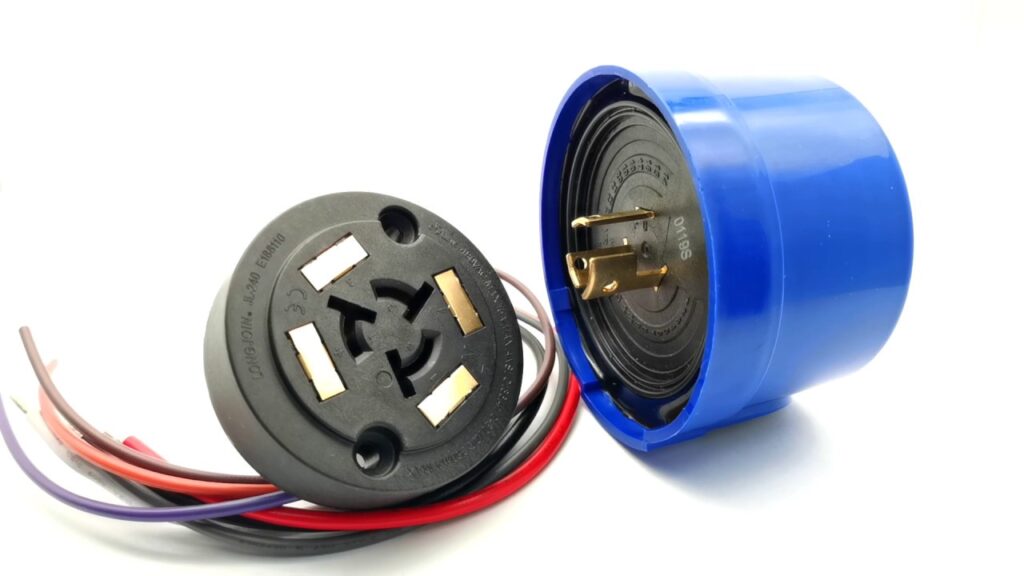
IP65 compliance in the JL-207C comes from a combination of housing material selection, precision-fit gasket design, and cable entry sealing — each of which addresses one of the three main paths through which water and dust can enter a photocell housing.
Housing material:
- The JL-207C5-F23-HP-P-IP65’s “-P-” designation specifies UV-stabilised polypropylene as the enclosure material
- Polypropylene offers good chemical resistance and UV stability compared to standard polycarbonate, resisting the brittleness and micro-cracking that can open ingress paths after years of outdoor UV exposure
- The housing is moulded to tight dimensional tolerances to ensure consistent gasket compression across production batches
Gasket design:
- The sealing gasket between the housing halves provides the primary barrier against ingress at the housing join
- Gasket material selection and compression depth are critical — too little compression leaves gaps; too much causes premature compression set that opens gaps over time
- Long-Join’s ISO 9001:2015-certified production process (GB/T 19001-2016) includes gasket compression verification as part of production quality control
Cable entry sealing:
- The wire entry points where the three leads exit the housing are a common ingress path in poorly designed photocells
- Moulded cable entries with defined sealing radii prevent water from travelling along the cable sheath into the housing — a failure mode that is not covered by the housing gasket alone
Corrosion resistance:
- The brass twist-lock terminals are treated to resist the oxidation and galvanic corrosion that can occur at the photocell-receptacle interface after extended outdoor exposure
- Terminal corrosion that increases contact resistance is a separate failure mode from IP rating failure, but it often occurs alongside it in photocells with marginal environmental protection
Rounding Up
IP65 is not a marketing claim. It is a specific, physically tested performance standard with defined test parameters, defined pass criteria, and defined consequences for failure. For a photocell mounted on an exposed street light pole in any real outdoor environment, it is the minimum acceptable rating, not a premium feature.
The JL-207C5-F23-HP-P-IP65 is one of the фотоэлементы с поворотным замком on Chi-Swear that achieves this rating through housing material selection, gasket engineering, and cable entry sealing that are verified through IEC 60529-compliant testing and maintained across production batches through ISO 9001:2015-certified manufacturing processes.


 Russian
  English
  Spanish
  Arabic
  Italian
  Japanese
  Portuguese