Gliederung
- Einführung
- How do Microwave and Infrared Sensors Differ?
- How Does Long‑Join Utilize Infrared and Microwave Technologies in Its Lichtsteuerung?
- What Sensor Technology Is Integrated into JL‑245 and JL‑246 NEMA Controllers?
- How Does the JL‑712A2H Zhaga Controller Use Microwave for True Smart Sensing?
- Which Sensor Performs Better in Different Lighting Scenarios?
- Why Is Microwave Sensing Emerging as the Preferred Standard?
- Integration with IoT Protocols
- How Do JL‑245/246 and JL‑712A2H Compare in Terms of Technical Specs?
- What Factors To Consider When Choosing Between Microwave and Infrared Light Photosensors?
- Why Trust Long‑Join for Smart Lighting Solutions?
- Schlussworte
Why do some outdoor lights respond faster than others? They work flawlessly in rain or fog, while others miss motion altogether.
The answer lies in the Fotozellensensor technology, specifically, microwave vs infrared. As cities move toward smarter lighting, choosing the right sensing tech matters more than ever. This article explores how Long-Join uses both technologies to power intelligent light controllers.
How do Microwave and Infrared Sensors Differ?
Beide Lighting control sensors have their distinct characteristics. Mikrowellensensoren are active devices. They emit 5.8 GHz radio waves and detect motion by analyzing the Doppler shift in reflected signals. Infrared (PIR) sensors are passive. They detect heat changes from moving bodies using pyroelectric elements.
Here is a detailed comparison table.
| Besonderheit | Microwave Sensor | Infrared (PIR) Sensor |
| Detection Method | Measures reflected microwave signals | Measures variation in thermal radiation |
| Penetration | Passes through thin obstacles | Needs direct line-of-sight, no obstacles |
| Erfassungsbereich | Wide coverage, can be up to several meters | Typically 6–10 m, narrow field of view |
| Accuracy & False Triggers | High sensitivity; can filter noise and adjust false positives | Prone to false alarms from heat sources or drafts |
| Environmental Stability | Stable in various environments | Affected by ambient temperature and sunlight |
Real-World Performance Under Environmental Conditions
Temperature Variations
- Mikrowelle Fotokontrollbuchsen maintain steady performance in –35 °C to 70 °C environments.
- PIR outdoor LED light sensors lose sensitivity in high heat; they may also trigger incorrectly during rapid temperature shifts.
Weather and Obstructions
- Microwaves penetrate almost every barrier, making them reliable outdoors.
- PIR sensors fail behind glass or barriers and suffer false positives from direct sunlight filtering through windows.
False Trigger Management
- Advanced microwave designs include algorithms to reduce false alarms triggered by wind or moving foliage.
- PIR sensors struggle more to distinguish relevant human motion from pets, drafts, or heat reflections.
How Does Long‑Join Utilize Infrared and Microwave Technologies in Its Lichtsteuerung?
Long‑Join offers two primary lighting controller families:
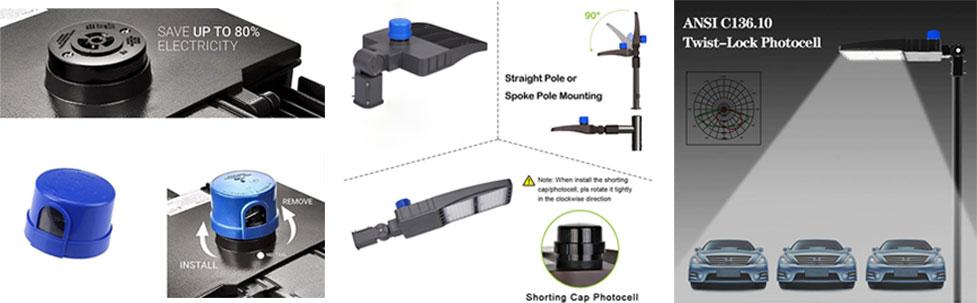
- NEMA-Serie: JL‑245 and JL‑246 twist‑lock models.
- Zhaga-Serie: JL‑712A2H under Zhaga Book‑18 interface standards.
These are not just different Fotozellen—they’re tailored tools. The IR-enabled NEMA controllers simplify configuration across large lighting projects. The microwave‑enabled Zhaga model delivers intelligent, motion-responsive control in dynamic outdoor environments.
What Sensor Technology Is Integrated into JL‑245 and JL‑246 NEMA Controllers?
JL‑245/246 use IR-filtered phototransistors, not for motion detection, but for remote configuration. The IR filter ensures reliable reception of commands via handheld remotes.

Vorteile
- Settings for on/off lux threshold, dimming output, and hold time can be changed at ground level using an IR remote.
- Models like JL‑246CG include ZigBee or LTE modules for integration into IoT lighting systems.
- They meet ANSI/UL C136.41 standards and mount on 3/5/7‑pin twist‑lock NEMA bases, streamlining retrofit installations.
Einschränkungen
These controllers do not detect motion. Their phototransistors sense ambient light only. They do not offer any adaptive dimming based on presence or movement.
How Does the JL‑712A2H Zhaga Controller Use Microwave for True Smart Sensing?
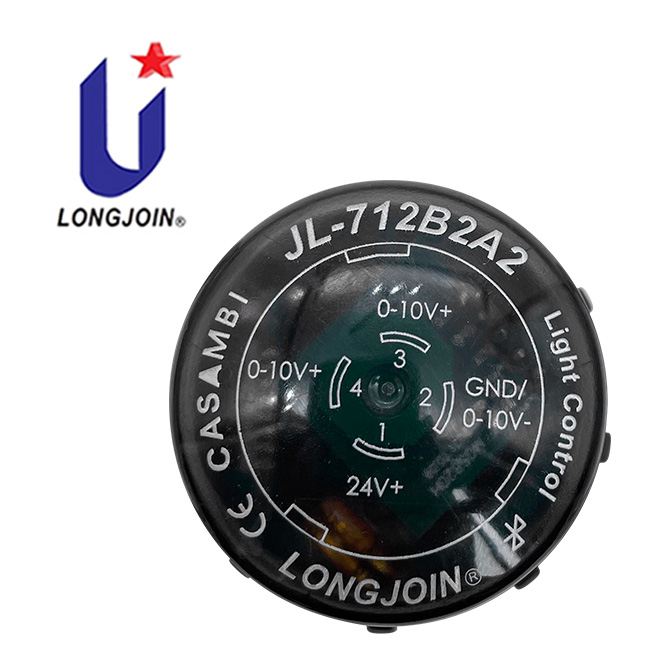
JL‑712A2H integrates a 5.8 GHz microwave sensor with a filtered ambient light detector. It supports dual-mode operation: maintains low-level “standby” light and switches to full brightness when motion is detected.
Hauptmerkmale
- Users can adjust sensitivity, standby brightness, and hold time via the IR remote.
- Der Fotosensoren default to gradual transitions with <200 ms activation time and programmable dimming schedules for optimal energy use.
- Rated for mounting up to 15 m, with detection radius ≥10 m—ideal for street, park, and warehouse lighting.
- Built to Zhaga Book-18, provides 0–10 V dimming and durable IP66 housing for high-resilience environments.
Which Sensor Performs Better in Different Lighting Scenarios?
| Anwendungsszenario | Best Sensor | Warum |
| Street lighting retrofit | Infrared (PIR) | Simple and cost-effective; works well with clear sightline setups |
| Smart parks & courtyards | Mikrowelle | Penetrates foliage; picks up movement day/night |
| Industrial yards & warehouses | Mikrowelle | Detects through barriers; reliable at height |
| Tunnels & pedestrian paths | Mikrowelle | Works in rain, fog, darkness; covers wide zones |
| Apartment/community lighting | Infrared (PIR) | Effective in small, controlled environments |
In summary, choose PIR when you need a budget-friendly solution for small areas. Opt for a microwave when you require wide-area coverage even under challenging conditions.
Why Is Microwave Sensing Emerging as the Preferred Standard?
Resistance to Weather & Temperature Interference
Mikrowelle outdoor LED light photocells work unaffected by rain, fog, dust, snow, or wind. They detect motion through obstacles, keeping performance steady in harsh conditions. Their operating range spans extreme temperatures—from well below freezing to over 55 °C—while PIR Fotokontrollbuchsen often falter in heat or cold.
Superior Outdoor & Industrial Performance
Mikrowelle Lichtsensoren offer strong outdoor and industrial performance. Here is why they are best:
- Motion detection through glass and plastic, and even through foliage.
- Ideal for a variety of applications.
- These sensors have no moving parts. That means less wear and fewer failures.
- Their rugged design ensures long life.
- They need little upkeep over time.
- For harsh or busy sites, microwave sensors are a smart, reliable choice.
Integration with IoT Protocols
Modern microwave-based Lichtsteuerung easily support Zigbee, NB-IoT, Und LoRa for smart city integration. These protocols provide long-range, low-power communication, perfect for scalable lighting networks.
Alignment with International Standards
Microwave Zhaga modules meet Zhaga Book 18 guidelines, ensuring seamless plug-and-play with compatible drivers and light heads. They also meet IP66 waterproofing standards and NEMA brightness control, ensuring durability and compliance in outdoor and industrial installations.
How Do JL‑245/246 and JL‑712A2H Compare in Terms of Technical Specs?
| Spezifikation | JL‑245 / JL‑246 NEMA | JL‑712A2H Zhaga |
| Schnittstelle | 3/5/7‑pin NEMA twist‑lock | Zhaga Book 18 4‑pin socket |
| Sensor Function | IR‑filtered phototransistor for remote config only | 5.8 GHz microwave + ambient light detection |
| Motion Detection | No motion sensing; ambient-only | Real motion detection + dual light levels |
| Fernbedienung | IR remote; Zigbee/Wi‑Fi/LTE/LoRa on JL‑246CG | IR remote for sensitivity, dimming, and hold-time |
| Dimmausgang | 0–10 V analog | 0–10 V analog |
| Mount Height & Range | Standard pole height; no range spec | Up to 15 m mount height; ≥10 m detection radius |
| Schutzart | IP65 (NEMA devices) | IP66-rated Zhaga module |
| Operational Temp Range | –40 °C to +70 °C | Compliant with IEC standards; similar rating |
Use‑Case Suitability & Environmental Durability
- JL‑245/246 are ideal for retrofitting large streetlamp banks where uniform light threshold and scheduled dimming are needed, with an IR-based tool-free config.
- JL‑712A2H fits dynamic areas—parks, warehouses, tunnels—where motion-triggered lighting saves energy and enhances safety. Its IP66 housing makes it rugged for harsh weather.
What Factors To Consider When Choosing Between Microwave and Infrared Light Photosensors?
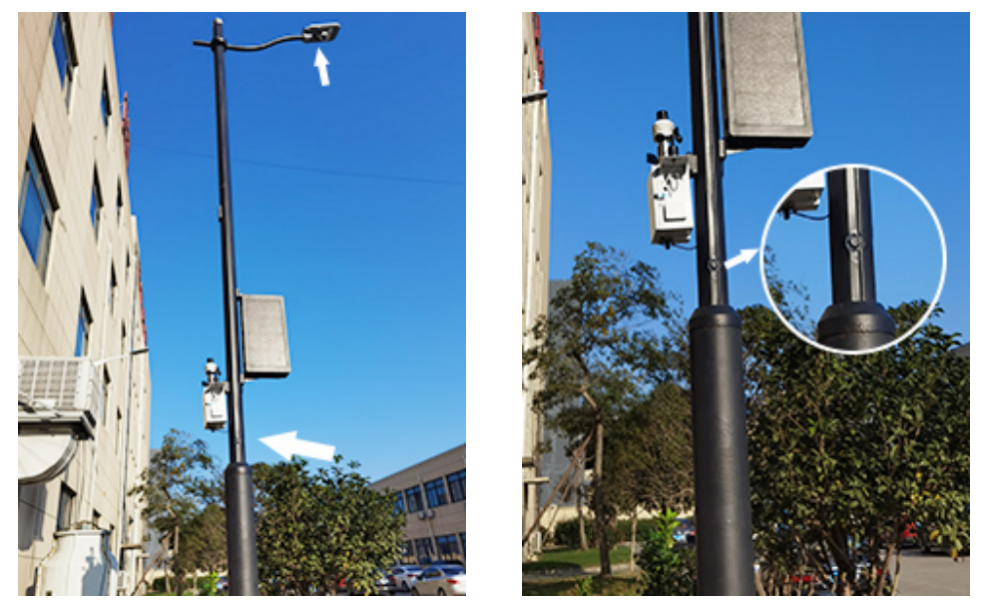
- Detection Needs: For motion-triggered events, choose microwave. Need simple day/night sensing, the infrared will be suffices.
- Mount Height & Coverage: Microwave works from high mounts (10–15 m) with wide detection. PIR performs best at 6–10 m and in narrow zones.
- Environmental Challenges: In challenging weather, the microwave stays reliable. PIR struggles with sunlight, heat, and drafts.
- Configuration Complexity & Energy Savings: Microwave setups need sensitivity fine-tuning, but cut energy by dimming based on motion. PIR is simpler and cheaper but less efficient in dynamic environments.
Why Trust Long‑Join for Smart Lighting Solutions?
- 23+ years of experience in intelligent lighting and Lichtsteuerungen.
- Offers both IR and microwave sensor options, covering retrofit and adaptive lighting use cases.
- Products meet UL, ANSI/NEMA, Zhaga Book 18, IP65/IP66, ensuring rugged, compliant designs.
- Proven installations, delivering scalable and reliable lighting networks.
- Supports multiple IoT protocols for smart grid integration.
- Provides controller customization services for OEMs and municipalities with specific sensor, interface, or casing needs.
- Built-in features like remote configuration and adaptive dimming to improve energy savings.
- Strong global supply chain and partnerships ensure stable product availability and fast response to project demands.
Schlussworte
Infrared and microwave sensors serve different lighting needs. Choosing the right one depends on the environment, accuracy, and control goals. For durable and smart-ready Long-Join photocells, Chi‐Swear bleibt ein vertrauenswürdiger und erfahrener Lieferant.
Externe Links
- https://www.sciencedirect.com/topics/earth-and-planetary-sciences/microwave-sensor
- https://en.wikipedia.org/wiki/Passive_infrared_sensor
- https://www.seeedstudio.com/blog/2019/12/13/which-arduino-motion-sensor-to-use-microwave-or-pir-sensor/
- https://www.nema.org/
- https://www.zhagastandard.org/index.php
- https://en.wikipedia.org/wiki/Lux
- https://en.wikipedia.org/wiki/Zigbee
- https://www.nema.org/standards/technical/ansi-c136-series-standards-for-roadway-and-area-lighting-equipment
- https://en.wikipedia.org/wiki/0-10_V_lighting_control
- https://www.gsma.com/solutions-and-impact/technologies/internet-of-things/narrow-band-internet-of-things-nb-iot/
- https://en.wikipedia.org/wiki/LoRa