Índice
- Introducción
- What Sensor Technologies Are Used in Photo Control Sensors?
- What Are the Main Long-Join Twist-Lock Models?
- What Are the 3 Tips That Matter When Choosing a Twist-Lock Photocell?
- Esperanza de vida
- Frequently Asked Questions on Twist-lock Photocell Selection
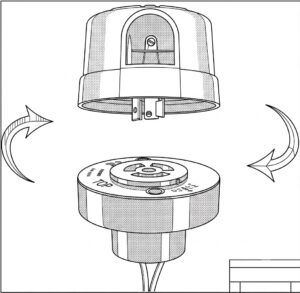
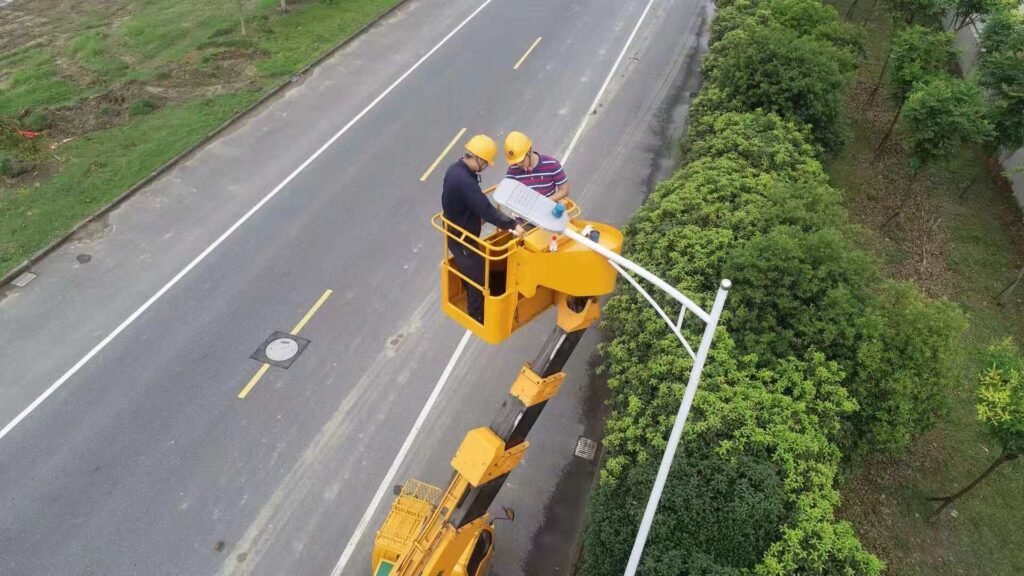
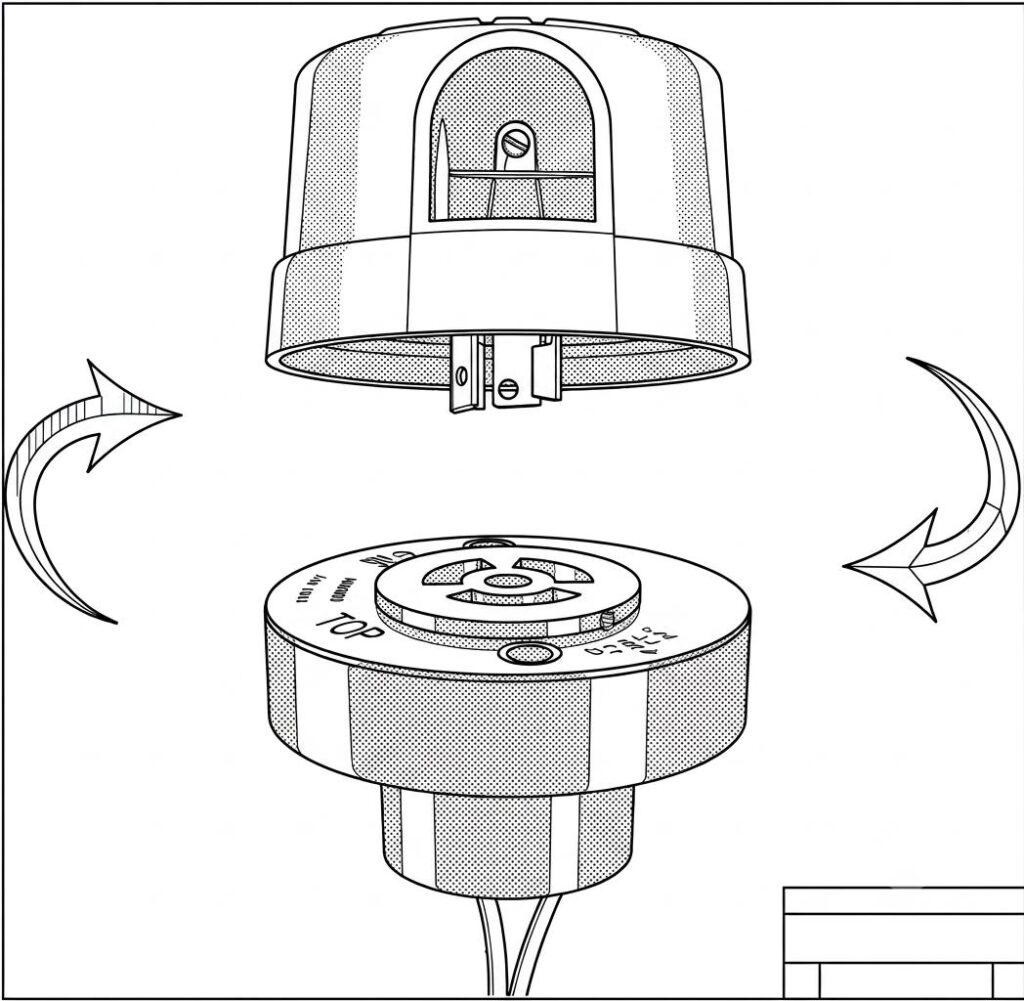
A twist-lock photocell plugs into a NEMA receptacle on a lighting fixture and locks in place with a quarter-turn rotation. That format distinction matters more than it might seem.
The structure means the photocell can be replaced without rewiring, without tools, and in under a minute, even when the fixture is mounted at the top of a street light pole.
For municipal networks and commercial lighting with hundreds of fixtures, that maintenance difference compounds into significant cost savings over time.
Long-Join’s twist-lock range covers the main voltage and application environments across four models. You need to be well-aware of the criteria to consider before making a decision.
What Sensor Technologies Are Used in Photo Control Sensors?
Five sensing technologies are found across the photocell market, each with distinct speed, accuracy, and interference characteristics.
Photodiodes
Photodiodes convert light directly into electrical current with a very fast response and high sensitivity. This makes them adequately suited to high-precision applications.
Silicon Photosensitive Elements
When looking for a sensor that offers strong stability, silicone-based sensor technologies are usually considered. Theyare commonly used in general photocontrol applications.
Bimetallic Strips
Bimetallic strips follow the physics of temperature changes, and in light sensors, they use a mechanical structure that responds to temperature changes from light exposure, producing slow but reliable switching.
Phototransistors
A standard phototransistor amplifies the photoelectric signal with low noise and strong adaptability, and is the most widely used sensing type across some of the most popular models.
IR-filtered Phototransistors
As an upgrade to phototransistors, these sensor types block infrared-heavy artificial sources like vehicle headlights while responding accurately to natural daylight, making them well-suited to highway and parking lot environments.
What Are the Main Long-Join Twist-Lock Models?
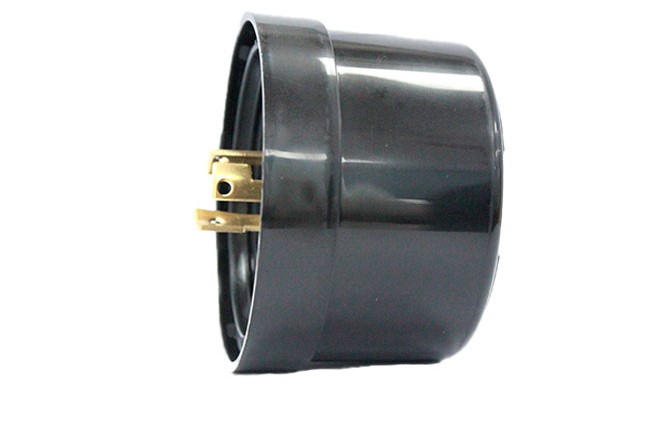
Four models cover the voltage range from standard North American and international AC through to 480VAC industrial and high-voltage applications.
| Modelo | Voltaje de operación | Protección contra sobretensiones | Main Application Scenarios | Características |
| JL-205C | 110-277 VCA | Includes MOV | Smart lighting, outdoor lights in industrial areas | High-performance surge protection |
| JL-207C | 120-277 VCA | High-quality surge suppressor | Traditional street and park lighting control | Multi-condition applicable, easy installation |
| JL-202A | 120-277 VCA | Standard MOV | Residential and commercial lighting control | Cost-effective type |
| JL-207F | 480 VCA | Enhanced surge protection | Industrial parks and smart city public lighting | High interference resistance, long lifespan |

Looking deeply into their specification comparison with verified values:
| Modelo | Voltaje nominal | Capacidad de carga | Surge Protection Component | Suitable Environment | Typical Lifespan |
| JL-205C | 110-277 VCA | 1,000W tungsten / 1,800VA ballast | High-quality MOV | Smart street lighting, park lighting | 20,000+ cycles |
| JL-207C | 120-277 VCA | 1,000W tungsten / 1,800VA ballast | High-quality surge protector | Public lighting, industrial areas | 10,000+ cycles (50,000+ HP) |
| JL-202A | 120-277 VCA | 1,000W tungsten | Standard MOV | Residential and commercial use | Más de 10.000 ciclos |
| JL-207F | 208-480VAC | 1,000W tungsten / 1,800VA ballast | Strong surge protection device | Smart cities and high-demand scenarios | Más de 10.000 ciclos |
What Are the 3 Tips That Matter When Choosing a Twist-Lock Photocell?
Based on experience, three specifications separate a photocell that performs reliably in the field from one that creates maintenance problems.
Working Voltage
This is the starting point. A photocell specified for the wrong voltage range will either fail to operate or create a safety hazard.
El JL-205C y JL-207C cover the 110-277VAC range that suits most North American and international AC street lighting. The JL-202A covers 120-277VAC for residential and commercial applications. The JL-207F is specifically designed for 480VAC industrial and high-voltage infrastructure, where the other models simply cannot operate.
MOV Quality and Surge Arrester Effectiveness
El Varistor de óxido metálico is the component that absorbs surge energy from lightning strikes and grid switching transients before it reaches the relay and control circuit. A poorly rated or low-quality MOV fails under high-energy surge events, leaving the photocell unprotected.
Long-Join’s MOV options range from standard protection on the JL-202A through to the enhanced surge protection on the JL-207F, with the JL-205C and JL-207C carrying high-quality MOV specifications appropriate for outdoor infrastructure applications. Zero-crossing technology in the JL-207C further reduces the internally generated switching transients that accelerate contact wear over thousands of daily switching cycles.
Esperanza de vida
At two switching events per day, a photocell with a 10,000-cycle relay rating covers approximately 13 years of theoretical switching life. The JL-207C HP variant at 50,000-plus cycles covers over 68 years.
What higher cycle ratings provide in practice is headroom against the inrush current spikes, grid transients, and environmental stress that reduce actual service life below the theoretical maximum. For municipal networks where maintenance access is expensive, specifying the HP relay from the start is often more cost-effective than replacing standard relay units more frequently.
Frequently Asked Questions on Twist-lock Photocell Selection
Q1: What is the difference between twist-lock and traditional hard-wired photocells?
Twist-lock photocells plug into a NEMA receptacle and lock with a quarter-turn, requiring no tools and no rewiring for replacement. Hard-wired photocells connect through a knockout hole and require wiring disconnection to replace. On pole-mounted fixtures, the time saving from twist-lock replacement is significant.
Q2: How do you determine the correct voltage for a twist-lock photocell?
Check the supply voltage at the installation point and confirm it falls within the photocell’s rated operating range. The JL-205C and JL-207C cover 110-277VAC. The JL-207F covers 208-480VAC. Using a model outside its rated voltage range will cause failure or create a safety hazard.
Q3: What does the MOV do?
The MOV clamps transient voltage spikes from lightning and grid switching events, absorbing the surge energy before it reaches the photocell’s internal components. Without it, a single high-energy surge can destroy the relay and control circuit permanently.
Q4: Why does lifespan matter when selecting a photocell?
A photocell switches twice every day. Over ten years, that is 7,300 switching events. A relay rated for 10,000 cycles covers that comfortably. One rated for 50,000 cycles provides substantial headroom against the real-world stress that reduces actual life below the theoretical maximum, which matters most on networks where replacing a unit requires expensive access equipment.
Q5: What are the main advantages of the JL-207C?
The JL-207C supports 120-277VAC across a wide application range, incorporates high-quality surge protection, uses an IR-filtered phototransistor for reduced false triggering in complex light environments, and includes zero-crossing switching technology that extends relay contact life. The HP variant raises the relay cycle rating to over 50,000 cycles.