Contour
- Introduction
- How are wireless communication protocols reshaping outdoor street lighting systems?
- How are smart lighting systems improving energy management?
- How will augmented reality (AR) change the outdoor lighting experience?
- What breakthroughs in materials will extend the outdoor lighting lifespan?
- How will customization services evolve to meet diverse customer needs?
- Mots de la fin

Wondering how outdoor lighting is changing in 2025? While bulbs are history now, LED lighting is also going through a major transformation. New technologies are reshaping how we light up our personal and public spaces. Intelligence-induced energy efficiency and advanced materials are leading the way.
So, what will 2025 bring for outdoor lighting? This article highlights five major technological transformations to watch for that are
- Wireless communication adoption
- Adoption of capteurs de photocellule de lumière
- Smarter energy management
- Integration of augmented reality
- Breakthroughs in materials
- Uptick in demand for customized lighting solutions
Understanding these trends is key for anyone looking to stay ahead in this rapidly changing market.
How are wireless communication protocols reshaping outdoor street lighting systems?
These protocols are at the forefront of modernizing outdoor lighting with capteurs photoélectriques crépusculaires. Each offers distinct advantages tailored to specific urban needs. The table below includes some of the most commonly employed ones and outlines their specifications.
| Protocole | Gamme | Consommation d'énergie | Topology | Cas d'utilisation idéaux |
| ZigBee | Short (10–100 meters) | Faible | Engrener | Dense urban areas, short-range communication |
| LoRa | Long (up to 15 km) | Très faible | Étoile | Wide-area coverage, rural or expansive urban settings |
| NB-IoT | Long (up to 35 km) | Faible | Étoile | Deep indoor penetration, areas with existing cellular infrastructure |
Benefits of Interconnected Lighting Networks
Integrating these protocols into outdoor lighting systems offers several tangible benefits. For example, with photocontrol receptacles, operators can oversee lighting performance in real-time, identifying issues promptly. Immediate alerts enable swift responses to malfunctions, enhancing public safety. And most importantly, data analytics forecasts potential failures. This allows for proactive maintenance and reduces downtime.
Case Examples of Wireless Lighting Deployments
Several cities worldwide have adopted these technologies to enhance their lighting infrastructure:
Montevideo, Uruguay: The city implemented a LoRaWAN-based system. It covers an area of around 200 square kilometres, managing 70,000 smart streetlights. This project aims to reduce carbon emissions by up to 80% and serves over 1.3 million residents.
Thane, India: Here, the deployed protocol is again LoRaWAN. It manages 35,000 lights across 67 square kilometres, serving approximately 1.2 million people. The system’s prominent features are fault detection and real-time monitoring.
San Diego, USA: Adopted a ZigBee-enabled smart lighting system, resulting in a 40% reduction in energy consumption. The system adjusts lighting based on pedestrian and vehicular activity, enhancing safety and sustainability.
Norway: Launched an NB-Iot-based smart contrôleur d'éclairage public that simplifies installation and control, reduces energy consumption, and enables lights to report irregularities and maintenance needs automatically.
How are smart lighting systems improving energy management?
Cloud-Based Energy Optimisation
Cloud platforms enable centralised control of street lighting systems. Operators, with the help of capteurs de lumière, can remotely adjust lighting based on occupancy and weather conditions. Moreover, these platforms facilitate predictive maintenance. This proactive approach reduces downtime and maintenance costs.
Energy Savings and Sustainability Impacts
The adoption of smart lighting systems has led to substantial energy savings. A study by the Connected Places Catapult is a vital testament to this. This reveals that integrating LED technology with a central management system can increase energy savings from 50% to 80%.
Los Angeles is a real-world example of this implementation. The city is saving $9 million annually with a reduction of 60,000 metric tons of CO2 emissions.
Intégration des villes intelligentes
The modern cities do not operate as they used to. By employing technology-based infrastructure, they are becoming smart. A key example is photoelectric-based smart lighting systems. For example, Philips’ Interact system allows cities to network their entire lighting infrastructure. This facilitates the integration of new smart city applications without replacing existing streetlights.
How will augmented reality (AR) change the outdoor lighting experience?

Augmented Reality is about to give outdoor lighting a serious upgrade. By merging physical lighting with digital interaction, cities and public spaces are creating environments that feel alive and deeply engaging. Here are some quick highlights:
- AR lighting will transform static parks and plazas into dynamic, interactive zones.
- Public art installations will merge with AR layers to tell visual stories at night.
- Smart streetlights integrated with fotocellula will project real-time information, blending data with ambience.
- Cultural heritage sites can offer guided AR light tours without needing extra hardware.
- Event spaces will use AR lighting to create customized environments for each event.
- AR will allow real-time visual updates to lighting designs without physical changes.
- Tourist hotspots will enhance visitor experience with AR-driven interactive maps.
- Local governments can host virtual festivals using AR-integrated lighting systems.
Some Early-Stage AR Lighting Projects to Watch
| Project Name | Emplacement | Key Highlights |
| Lightform LFC Kit | États-Unis | Projects AR visuals onto existing surfaces using projectors |
| Luminous Pathway | Montreal, Canada | Pathway lights that interact with pedestrians via AR overlays |
| Bright Nights Festival | London, UK | Uses AR projections on trees and landmarks for immersive walks |
| AR Light Playground | Tokyo, Japan | Children’s park with AR light games blending physical and virtual |
| Dubai Smart City Pilot | Dubai, UAE | Integrating AR data overlays into city lighting infrastructure |
What breakthroughs in materials will extend the outdoor lighting lifespan?
Moisture, extreme temperature, and UV radiation are primary factors inducing the decay of lighting fixtures. Nanocoatings are one possible solution. These are ultra-thin layers applied to LED, including capteurs photoélectriques, to enhance durability. They are highly effective against the con cerns mentioned earlier.
Further, modern anti-corrosion technologies are also in use. They involve the application of green nanoparticles. These have been designed to shield lighting fixtures from severe environmental conditions.
These protective measures get multiple benefits on the table that include:
- More reliable lighting systems
- Improved performance and longevity
- Durée de vie prolongée
- Significantly reduced maintenance requirements
- Moins de temps d'arrêt
- Lower operational costs
- Contribute to environmental sustainability through waste reduction
- Higher energy efficiency leading to lower carbon footprints
How will customization services evolve to meet diverse customer needs?
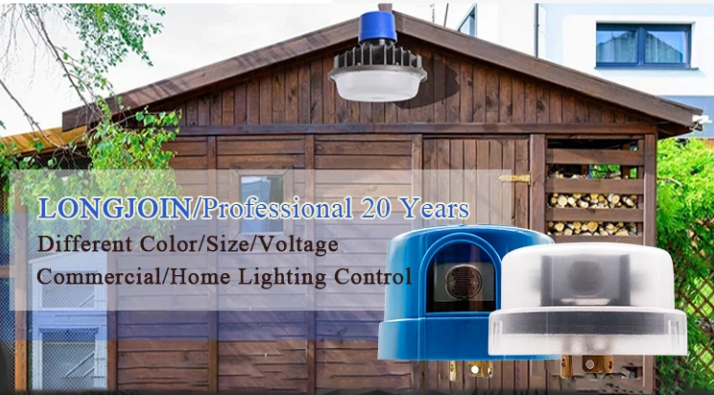
In 2025, outdoor lighting is moving beyond generic solutions. There is an increased demand for niche-specific lighting. In this regard, companies like LongJoin specializes in crafting bespoke contrôle de l'éclairage solutions for luxury residential and commercial projects.
This approach is not helpful in energy conservation, but also in unlocking new markets. The global outdoor lighting market is projected to reach USD 22.6 billion by 2031, with a compound annual growth rate of 5.6%. In summary, the customization solutions have the potential to revolutionise the smart lighting industry.
Mots de la fin
The outdoor lighting industry is entering a new era shaped by intelligence and durability. 2025 will reward those who adapt quickly and innovate boldly. For smart, future-ready lighting solutions, Chi-Swear’s trusted photocells and systems are a reliable choice to power your next project.
Liens externes
- https://en.wikipedia.org/wiki/Zigbee
- https://en.wikipedia.org/wiki/LoRa
- https://en.wikipedia.org/wiki/Narrowband_IoT
- https://resources.lora-alliance.org/lora-alliance-blog/uruguay-to-deploy-one-of-lorawan-s-largest-smart-street-lighting-projects-in-the-world-powered-by-actility-and-nnnco
- https://www.iotinsider.com/smart-cities/lorawan-smart-street-lighting-systems/
- https://gaotek.com/product/zigbee-enabled-smart-cities/
- https://www.rcrwireless.com/20171005/nb-iot/nb-iot-based-smart-street-lighting-launched-norway-tag23
- https://cp-catapult.s3.amazonaws.com/uploads/2021/06/The-Future-of-Street-Lighting.pdf
- https://lalights.lacity.org/connected-infrastructure/led_program.html
- https://www.kissimmee.gov/My-Government/News-Alerts/Augmented-Reality-Art-Now-on-Display-at-Kissimmee-Lakefront-Park
- https://www.alliedmarketresearch.com/outdoor-lighting-market