Contour
- Introduction
- Why Is Adequate Nighttime Lighting at Bus Stops Essential?
- What Challenges Do Traditional Lighting Systems Face?
- Comment Capteurs à cellule photoélectrique Transform Bus Stop Lighting?
- Quels sont les meilleurs Capteurs photoélectriques Configurations for Bus Stops?
- How Are Cities Worldwide Implementing Photocell-Controlled Lighting?
- Why Should Municipalities and Contractors Invest in Interrupteurs à cellule photoélectrique?
- En résumé
Bus stops are more than waiting points—they’re gateways to the city experience. But what happens when the sun sets?
Poorly lit stops can feel unsafe and unwelcoming. Clear lighting reassures passengers that the city cares.
Traditional lighting often fails, relying on timers or manual switching that waste energy and cost more to maintain. The solution? Smarter, automated lighting systems designed for efficiency and safety.

Why Is Adequate Nighttime Lighting at Bus Stops Essential?
Safety & Visibility
Bus stops without good lighting are hotspots for accidents and crime. A recent study of 596 bus stop locations in the U.S. found that the absence of lighting is one of the significant risk factors for higher crash frequencies.
Public road data confirms that nighttime fatality rates are three times higher than daytime, largely because pedestrians and objects are harder to see. Good ambient illumination offers a saving hand.
Security & Perception
Dark or poorly lit bus stops increase the fear of victimization. In Malmo, Sweden, for example, people reported avoiding certain stops because they felt unsafe due to dim lighting and surrounding darkness.
Route Maps, Signage & Advertising Clarity
Passengers must read schedules, maps, route signage, and digital displays at stops. Without lighting, information is illegible. This leads to confusion, missed buses, or people getting off wrong. Lights make these displays usable after dark.
Shared Visibility
Not just passengers: drivers approaching a bus stop need to see people waiting at the curb. Pedestrians crossing to reach the stop benefit when the area is well-lit.
Studies of crosswalk lighting show improvements in driver yielding and reduced crash severity when ambient vertical and horizontal illuminance meet certain thresholds.
Branding, Public Satisfaction & Urban Image
Well-lit stops signal care, investment, and modern infrastructure. Citizens report higher satisfaction with transit systems when stops are clean and visibly maintained.
In research from China and Europe, cities that invest in lighting and well-designed shelters see greater ridership and public trust.
What Challenges Do Traditional Lighting Systems Face?
Higher Operational Costs
Many older bus stop and street lighting systems use basic timers or manual switches. These can’t adjust for seasonal changes and waste energy with less effective outcomes.
One survey in Bangladesh showed existing streetlight management systems could reduce energy costs by ~60% with better controls.
Increased Maintenance Burden
Manual systems require frequent human checks and adjustments. Malfunctions or wrong timer settings often go unnoticed until citizens report them. Further, replacement of outdated components (timers, manual switchgear) tends to be more frequent and more costly.
Risk of Lights Being Left On or Off at the Wrong Times
Because manual or timer control is rigid, lights may remain off when ambient light is low (e.g., heavy cloud cover or dusk) → reducing safety.
Similarly, lights might stay ON during bright periods (daytime or early morning), creating needless electricity use and increasing cost.
Comment Capteurs à cellule photoélectrique Transform Bus Stop Lighting?

Commandes d'éclairage are light-sensitive devices that detect ambient light and automatically switch lighting fixtures on at dusk and off at dawn. These are often called dusk-to-dawn controllers ou contrôles photoélectriques. Here’s how they transform bus stop lighting.
- They switch lights on and off automatically based on sunlight levels.
- Time-delay functions stop lights from flickering during brief twilight or passing clouds.
- Capteurs de lumière keep lights from staying on during the day. This saves energy and reduces unnecessary wear.
- Moderne interrupteurs à cellule photoélectrique are built for tough outdoor conditions. They are reliable even in rain, dust, or direct sunlight.
- Many meet IP54 or IP66 protection ratings. Their housings are UV-stabilized, so the casing and lens resist damage from sunlight.
- They are designed for long life. Cycle counts reach tens of thousands of ON/OFF operations. Frequent switching is not a common failure point.
Quels sont les meilleurs Capteurs photoélectriques Configurations for Bus Stops?
To optimize photocell street lighting for bus stops, certain configurations and components are becoming standard among up-to-date installations. These reduce maintenance, improve reliability, and ensure compatibility with smart infrastructure.
Recommended Control Types
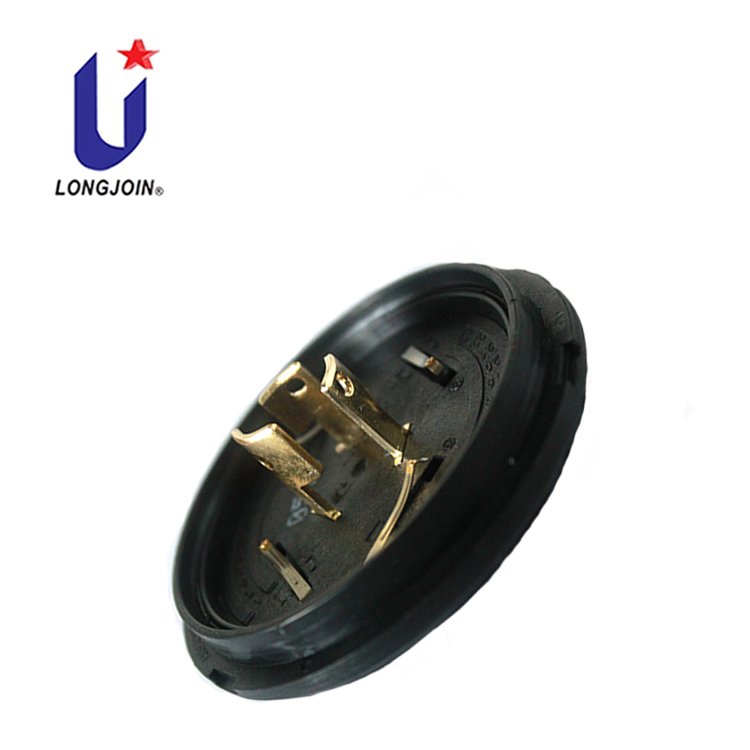
- Twist-lock photocell sensors using NEMA receptacles are widely used in bus stop lighting for easy replacement. LongJoin offers twist-lock photocell switches rated for 120-277 VAC using NEMA 3-pin or 7-pin bases.
- Wire-in (direct wire) photocontrols, such as button-type or swivel-stem types, are suitable when adding controls to existing luminaire wiring without needing receptacle bases.
Here is a table comparing photocell control types for bus stops.
| Control Type | Application typique | Avantages | Limites |
| Câble dans | Fixed shelters, permanent wiring | Low cost, simple installation | Harder to replace |
| Verrouillage par rotation | Modular bus stops, retrofit projects | Easy replacement, standardized | Slightly higher cost |
| Livre 18 de Zhaga | Smart city deployments | Compact, future-proof, digital interface | Requires a compatible base |
Light Sensitivity Ranges
- Common thresholds for activation are in the range of 10-20 Lux for lights turning ON.
- Deactivation (“turn OFF”) thresholds are often set higher, around 30-50 Lux, so that lights are off during sufficiently bright conditions.
Here is a table for key capteur de commutation photoélectrique sensitivity settings.
| Type de paramètre | ON Lux Range (Typical) | OFF Lux Range (Typical) | Cas d'utilisation optimal |
| Standard | 10–20 Lux | 30–50 Lux | General street/bus stop lighting |
| High-sensitivity | 5–10 Lux | 20–30 Lux | Overcast regions, shaded stops |
| Adaptatif | Programmable | Programmable | Smart city projects with variable needs |
Voltage & Compatibility for LED Drivers
Photocell controllers must support wide AC inputs (for legacy or grid lighting) and/or DC low voltage when using LED drivers, especially in smart lighting setups. Many Zhaga Book 18 interfaces provide DC supplies.
Twist-lock variants generally work on the standard AC range (120-277 VAC) to match existing infrastructure.
Useful Add-ons & Design Features
- Protection contre les surtensions helps protect sensors and drivers against voltage spikes from grid irregularities.
- Delay-off function prevents lights from toggling rapidly during fluctuating light (e.g., passing clouds)
- Ensure impact-proof casing.
- Indices de protection IP and weather resistance are important to ensure longevity in outdoor settings.
Integration with Standards
- NEMA receptacles with twist-lock bases are a mature standard in many jurisdictions (especially North America). They support AC mains, and some newer NEMA versions (ANSI C136.41) also support dimming and smart modules.
- Livre Zhaga-18 is emerging as the standard interface for smart outdoor luminaires. It provides a standard mechanical base, allows plugin sensor modules (including photocells), supports signal/power lines (e.g., DALI, DC), and ensures compatibility across manufacturers.
How Are Cities Worldwide Implementing Photocell-Controlled Lighting?

Here are specific, recent examples and trends showing how cities are applying photocell-automation in bus stops and outdoor lighting, including off-grid integration. Here is a table showcasing some global examples of photovoltaic cells at bus stops.
| City/Region | Implementation Type | Highlighted Benefit |
| Hangzhou, China | Photocell + smart shelter | Reduced energy bills, improved safety |
| Los Angeles, États-Unis | Twist-lock controllers | Easy upgrade to smart lighting |
| Amsterdam, EU | Zhaga-based modular lighting | Seamless smart city integration |
| Nairobi, Kenya | Solar + photocell shelters | Off-grid reliability, nighttime visibility |
Chine
The company “Intelligent Bus Station” in China has rolled out 10,000+ intelligent bus stop units in over 200 cities. In Zhejiang Province, a “smart photovoltaic bus station” converts solar energy to power lighting.
USA & EU
The Zhaga Book-18 standard is increasingly adopted in Europe and the USA as the mechanical and electrical interface for sensor and control modules in street lighting.
Off-grid Integration
Off-grid or remote bus stops are using combined solar + photocell + LED systems to ensure autonomy through the night without supervision.
Why Should Municipalities and Contractors Invest in Interrupteurs à cellule photoélectrique?
rapport coût-efficacité
Photocell-controlled lighting cuts electricity waste. 30-70% energy savings are expected compared to traditional lighting systems. Here is a table outlining durability requirements for bus stop photocells.
| Facteur | Minimum Standard | Importance |
| Température de fonctionnement. | -40°C à +70°C | Ensures function in extreme climates |
| Protection contre les infiltrations | IP65+ | Resists dust and rain exposure |
| Protection contre les surtensions | ≥ 10 kV | Shields against lightning & grid surges |
| Impact Resistance | IK08+ | Prevents damage from vandalism |
Improved Energy Efficiency
Capteur photoélectrique adapts to actual ambient light levels. They avoid lighting during bright twilight or overcast daytime. That improves efficiency.
Enhanced Passenger Experience
Well-lit stops boost safety perception. Passengers feel safer waiting at night. Research shows safety and comfort rank among the top factors driving transit satisfaction.
Future-Proof Infrastructure
Street light controllers integrate easily with IoT and smart lighting systems. They enable:
- Télécommande
- Monitoring
- Alerting
- Analyse des données
With standards like Zhaga or modular receptacles, sensor-based upgrades are easier. Replacing or retrofitting photocell modules is cheaper than replacing entire luminaires.
En résumé
Nighttime bus stop lighting is not just a utility. It improves safety, visibility, and public trust in city services. For reliable solutions, LongJoin smart photocontrollers from Chi-Swear deliver proven performance. They are durable, efficient, and backed by expert support.
Liens externes
- https://arxiv.org/abs/2410.22253
- https://www.fhwa.dot.gov/innovation/everydaycounts/edc_7/nighttime_visibility.cfm
- https://d-nb.info/116125918X/34
- https://www.ltrc.lsu.edu/pdf/2020/19-01TA-SA.pdf
- https://arxiv.org/abs/2211.00074
- https://www.nema.org/
- https://en.wikipedia.org/wiki/Lux
- https://journals.sagepub.com/doi/full/10.1177/1687814015573826