
Outline
- Introduction
- What Is Driving the Transformation of the Global Photocell Lighting Sensor Market in 2025–2030?
- How Is the Global Photosensor Market Expected to Grow Across Regions?
- Why Are Government Policies Increasing Demand for Light Sensor Switches?
- How Are Photocells Evolving from NEMA to Zhaga to Smart IoT?
- Which Standards and Certifications Matter Most for Global Buyers?
- Where Are Photo Switch Sensors Used in 2025–2030?
- Who Is Leading the Market? A Case Study on Long-Join
- What Opportunities Exist for Distributors, EPC Contractors, and Municipal Buyers?
- Which Strategic Actions Will Shape Market Success by 2030?
- Why Is the Photocell Market Poised for a Breakthrough by 2030?
- Final Words

Gone is the time for conventional lighting. Cities are no longer focused only on illumination. They want energy, carbon reduction, and smarter infrastructure.
Light photocells are at the center of this shift. These small devices automate lighting. However, their role is rapidly expanding. From basic sensors to IoT controllers, photocells now influence maintenance city planning.
Governments are investing. Manufacturers are innovating. This will entail new contours of the photocell switch market by 2030. This article explores what’s changing and where the biggest opportunities exist.
What Is Driving the Transformation of the Global Photocell Lighting Sensor Market in 2025–2030?
Why are photocells suddenly so important? Because:
- There is a growing need for energy efficiency and carbon neutrality.
- Governments and cities want lower power bills.
Outdoor photocell light sensors automatically switch lights based on daylight. This cuts wasted energy and boosts LED efficiency.
Smart cities need more than simple ON/OFF sensors; they want real-time control and connectivity. Integration with IoT and networked lighting systems is reshaping what a “photocell” can do. Cities also care about public safety. Well-lit streets reduce crime and accidents.
Finally, organizations are watching operational costs closely. Photocells now help reduce maintenance and power spending while supporting sustainability goals.
How Is the Global Photosensor Market Expected to Grow Across Regions?

The light sensor market is growing fast worldwide. Analysts project strong growth. However, markets vary by region:
- North America leads in total value thanks to mature smart infrastructure and smart city funding.
- Europe follows closely. The sustainability targets and green urban policiesare driving demand.
- Asia-Pacific is at the top regarding demand. Primary drivers of this growth are massive infrastructure investments in China and Southeast Asia.
- Latin America and the Middle East are emerging quickly as governments modernize public lighting.
Overall market growth rates align with predictions of an 8–10% CAGR through 2030 as smart street lighting systems become standard in cities worldwide.
Why Are Government Policies Increasing Demand for Light Sensor Switches?
Government policies are a major force behind photocell adoption. Below are some initiatives in this regard.
● U.S
Federal and state programs fund LED streetlight retrofits that require automatic controls to meet efficiency targets. Cities use these funds to curtail power use, ultimately lowering their bills.
● EU
The Green Deal pushes sustainability and smart infrastructure. This makes interoperable Zhaga-D4i controllers a standard preference in public tenders.
● Middle East
Vision 2030 initiatives focus on sustainable urban environments, driving smart lighting upgrades in new cities.
● Asia
China and India’s smart-city programs tie streetlight upgrades to IoT platforms for remote control and analytics. Automated light switching and dimming can deliver 20–30% energy savings in public lighting systems, a key metric in policy evaluation.
How Are Photocells Evolving from NEMA to Zhaga to Smart IoT?
Photoelectric sensors are no longer simple light switches.

Stage 1: NEMA (ANSI)
Traditional twist-lock photocells and dimmable receptacles dominate in retrofit markets, especially in North America. They ensure reliable on/off control and support basic dimming interfaces, compatible with legacy LED drivers.
Stage 2: Zhaga Book 18 / D4i
These modular interfaces support plug-and-play smart controllers with standardized power and data connections. Zhaga enables compact design and easier smart lighting integration, especially in Europe.
Stage 3: Smart IoT Photocontrol Receptacle
Modern units go beyond light sensing. They communicate over advanced protocols and connect to city networks for adaptive dimming and diagnostics. Products like digital photocells with sensor fusion and remote monitoring exemplify this trend, turning street lights into smart network nodes.
The table below illustrates which socket or system type supports which tech stage and upgrade path.
| System Type | Compatible Socket | Data Capability | Upgrade Path |
| Traditional ON/OFF | NEMA 3-Pin | None | Replace for smart control |
| Dimming Control | NEMA 5-Pin | Basic | Modular upgrade possible |
| Smart/IoT Nodes | NEMA 7-Pin / Zhaga 18 | Full data + remote control | Ready for a smart city |
Which Standards and Certifications Matter Most for Global Buyers?

Light photocell sensor buyers must focus on certification and compliance first.
In North America, UL773 and UL773A are essential safety standards that ensure electrical safety and outdoor reliability for photocontrols. Without them, products are often rejected in municipal bids.
ANSI C136.10 defines plug-in and dimmable interfaces for NEMA sockets. These ensure physical and electrical compatibility with street lighting hardware.
Zhaga-D4i is critical in Europe and smart cities because it guarantees compatibility with DALI and IoT-ready LED drivers and modular sensor ecosystems.
CE, RoHS, and ISO mark products fit for global export, covering safety, environmental, and quality systems.
Compliance is non-negotiable for municipal procurement and EPC contracts because uncertified photocells risk project disqualification, failed inspections, and warranty rejection. Certified products smooth approvals and long-term operations.
Further, here is a table explaining these certifications.
| Standard / Region | Key Requirement Focus | Typical Documentation Required | Impact on Photocell Design |
| UL 773 (USA) | Safety & performance | UL Test Report, Labeling | Material selection, relay rating |
| CE (Europe) | EMC & Low Voltage Directive | DoC, Technical File | Surge protection, PCB layout |
| Zhaga-D4i | Interoperability | Certification ID | Connector compatibility |
| cUL | Canada safety standard | Marking & Report | Thermal limits |
Where Are Photo Switch Sensors Used in 2025–2030?
Lighting controls are found in many lighting sectors.
- Municipal roadway lighting remains the core application. Cities deploy photocells to automate control. This boosts safety and cuts costs.
- Industrial parks and logistics facilities use photocells for large areas. Here, reliable automatic control avoids wasted energy and lowers maintenance.
- In smart cities, photocells become part of centralized lighting systems with remote diagnostics and integration with IoT networks.
- Commercial and residential lighting also adopts photocells for simple automatic control. This improves security and convenience.
Across these segments, photocells improve ROI by reducing energy use and lowering operational costs. Here is a lifecycle cost breakdown table for photosensors.
| Cost Category | Without Smart Photocell | With Smart Photocell | Comments |
| Annual maintenance | High (manual inspection) | 50–70% reduction | Remote monitoring saves labor |
| Energy consumption | Fixed usage | Adaptive dimming optimizes | Cuts waste in off-peak hours |
| Asset failure response | Reactive repairs | Predictive maintenance | Longer equipment lifespan |
Who Is Leading the Market? A Case Study on Long-Join

Long-Join has over 20 years of specialization in photocell and lighting control manufacturing. Its products are developed on in-house intellectual property with dozens of utility and invention patents, giving it a technological edge.
The company’s portfolio carries major international certifications, including UL, CE, RoHS, ISO9001, and more, making it suitable for global projects.
Long-Join operates large automated facilities and smart factories that serve international demand. It maintains strategic partnerships with major lighting brands and system integrators. This strengthens its market reach.
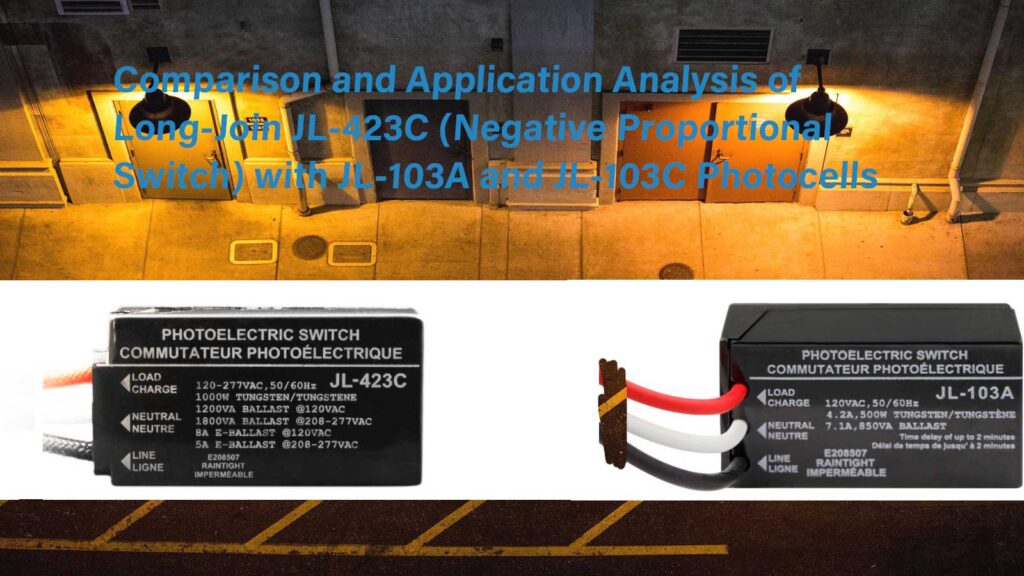
Its spotlight products include:
These products offer traditional control with smart city capabilities.
What Opportunities Exist for Distributors, EPC Contractors, and Municipal Buyers?
OEM/ODM customization configures light sensor controls to exact project specs and project fit. Reliable supply chains from certified manufacturers ensure product lifetime value and fewer field failures. This reduces service costs.
Smart city lighting plans are expanding, creating demand for connected lighting solutions that integrate photocells with network platforms. Municipal buyers can leverage regional funding and retrofit incentives.
These incentives often offset initial capital costs and improve ROI.
Further, investing in interoperable and certified photocells is a wise decision. This makes infrastructure adaptable to evolving requirements.
Which Strategic Actions Will Shape Market Success by 2030?
This depends on adapting ahead of regulation and demand. Early alignment with Zhaga-D4i and IoT ecosystems prevents future incompatibility and retrofit delays.
Prioritizing UL, CE, and Zhaga-certified suppliers avoids compliance failures that can disqualify bids and halt EPC execution. Data analytics and remote diagnostics must be planned from day one.
Sensors generate maintenance alerts, energy profiles, and dimming schedules that can cut operating costs immediately. Market leaders will plan product integration for interoperability, not isolation. This includes choosing photocells compatible with NEMA today and scalable to Zhaga or IoT tomorrow.
The winning strategy is simple: build infrastructure that won’t need to be replaced when standards evolve.
Why Is the Photocell Market Poised for a Breakthrough by 2030?
The market’s breakthrough is driven by regulation and economics. Government policies demand energy reduction. The photocells deliver 20–30% savings without redesigning the lighting network.
Technology is shifting from analog control to IoT-enabled systems. This makes photocells the entry point to smart-city infrastructure. Interoperability standards like ANSI, UL, and Zhaga-D4i remove compatibility risks and accelerate municipal approvals.
Photocells are no longer optional; they are critical enablers of carbon neutrality goals, lower OPEX, and public safety improvements. For buyers and distributors, the opportunity is now.
Access the full outlook report, request performance samples, or explore OEM/ODM collaboration with Long-Join to build solutions aligned with the next decade of infrastructure demand.
Final Words
The global photocell market is set for strong growth through 2030. Smart, certified, and interoperable photocells will drive energy savings and smart-city adoption. Partnering with Chi-Swear ensures access to high-quality Long-Join photocontrollers, reliable supply, and future-ready solutions for every lighting project.
External Links
- https://marketintelo.com/report/photocell-controls-market
- https://dataintelo.com/report/photocell-controls-market
- https://en.wikipedia.org/wiki/European_Green_Deal
- https://www.nema.org/
- https://www.ansi.org/
- https://www.zhagastandard.org/books/overview/smart-interface-between-outdoor-luminaires-and-sensing-communication-modules-18.html
- http://www.julixing.com.cn/en/new/new-58-907.html
- https://europa.eu/youreurope/business/product-requirements/labels-markings/ce-marking/index_en.htm
- https://en.wikipedia.org/wiki/RoHS
- https://www.iso.org/home.html



 English
  Spanish
  Russian
  Arabic
  Italian
  Japanese
  Portuguese