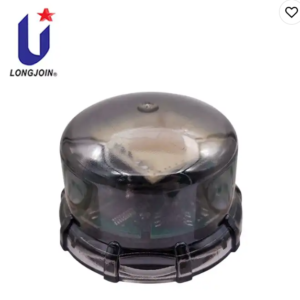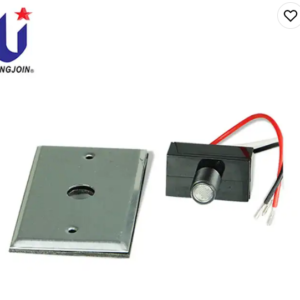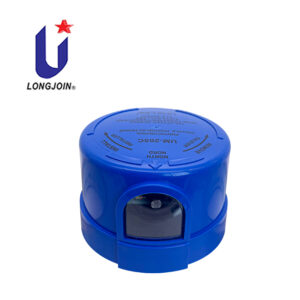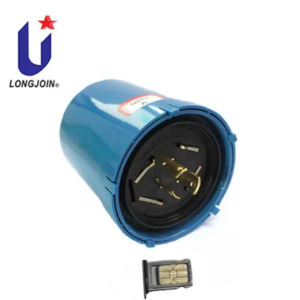
Zhaga standard socket solution
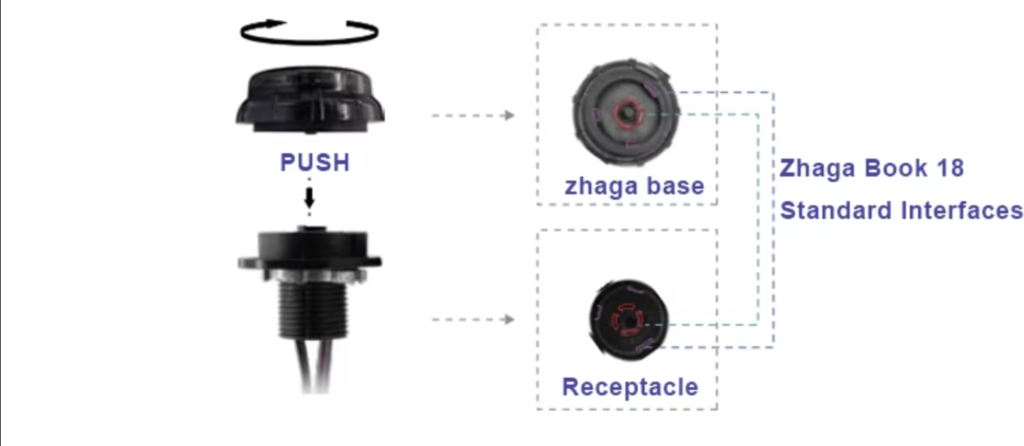
Zhaga socket, as a standard interface solution in the intelligent lighting industry, enhances the compatibility, flexibility, and maintenance efficiency of lighting systems

- Interface compatibility - Select matching socket, controller and luminaire models. Verify mechanical dimensions, pin assignments, electrical requirements and the relevant certification scope before integration.
- Environmental protection - Check the specified IP rating for the selected model and assembled configuration, including the mating controller or cap and sealing requirements.
- Modular maintenance - Use compatible replaceable controllers or caps and follow the model’s installation instructions. Confirm whether replacement requires isolation of the power supply.
- Control and communication options - Confirm the electrical interface supported by the selected socket, luminaire and controller. Dimming and wireless functions depend on the controller model and system configuration.
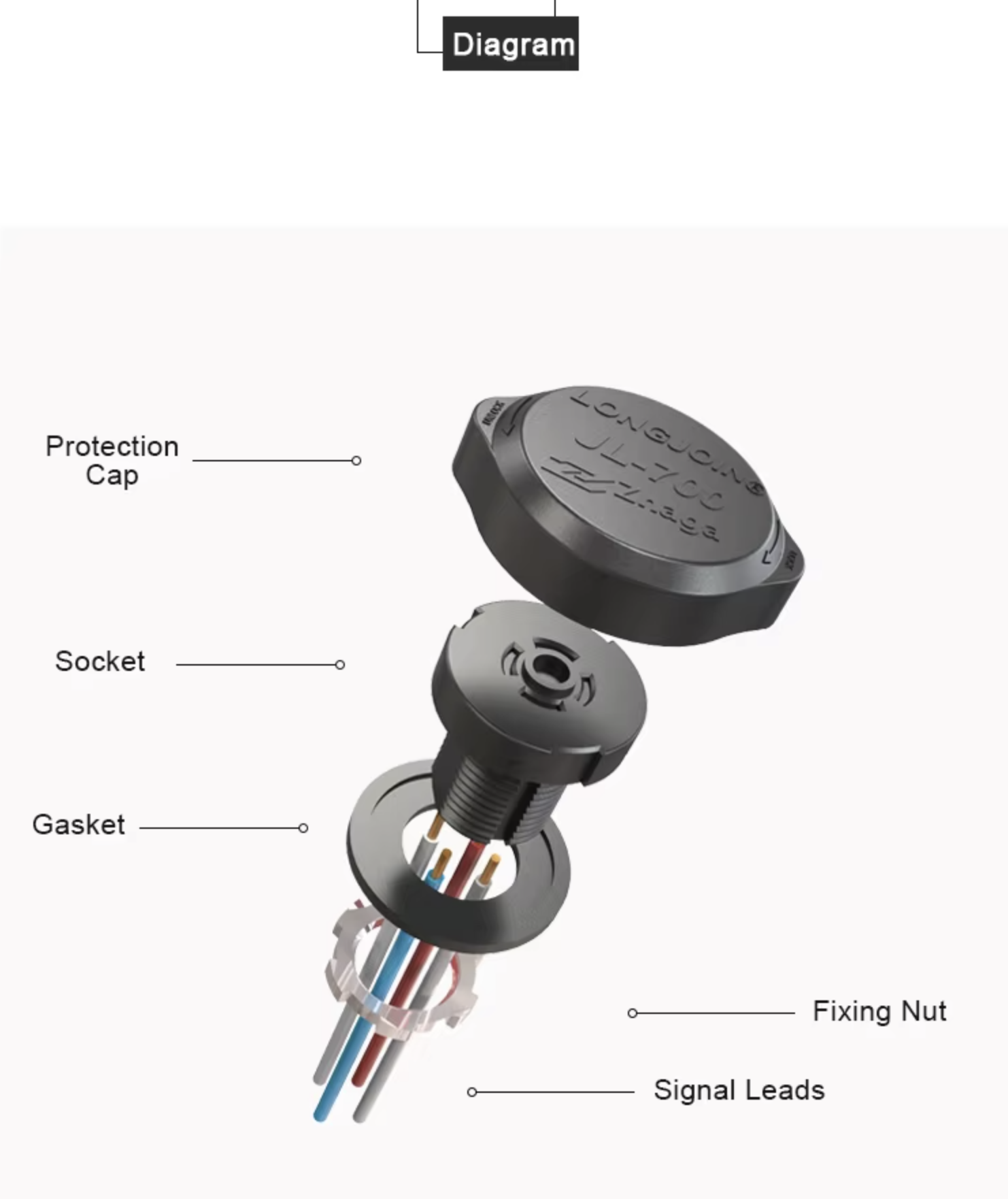
Zhaga socket product
-

Double-hole Leadless Version Zhaga Book-18 Photocell Receptacle JL-700W2
Read more -

Zhaga Socket Classifieds Full Episodes
Read more -

JL-700M Class zhaga Book 18 lock socket for 0-10v dimming scheme
Read more -

JL-700L Zhaga Book-18 Receptacle (Cable version)
Read more -

JL-700K4, JL-700K5 Zhaga Socket with Panel Bracket
Read more -

JL-700W Zhaga book-18 No Wires Connect Zhaga Photocell Receptacle
Read more -

JL-700 Zhaga Socket Long-join
Read more -

JL-710 Zhaga Book 18 4 PIN Connector Switching DC-AC Receptacle
Read more
Product related video display:
Installation plan

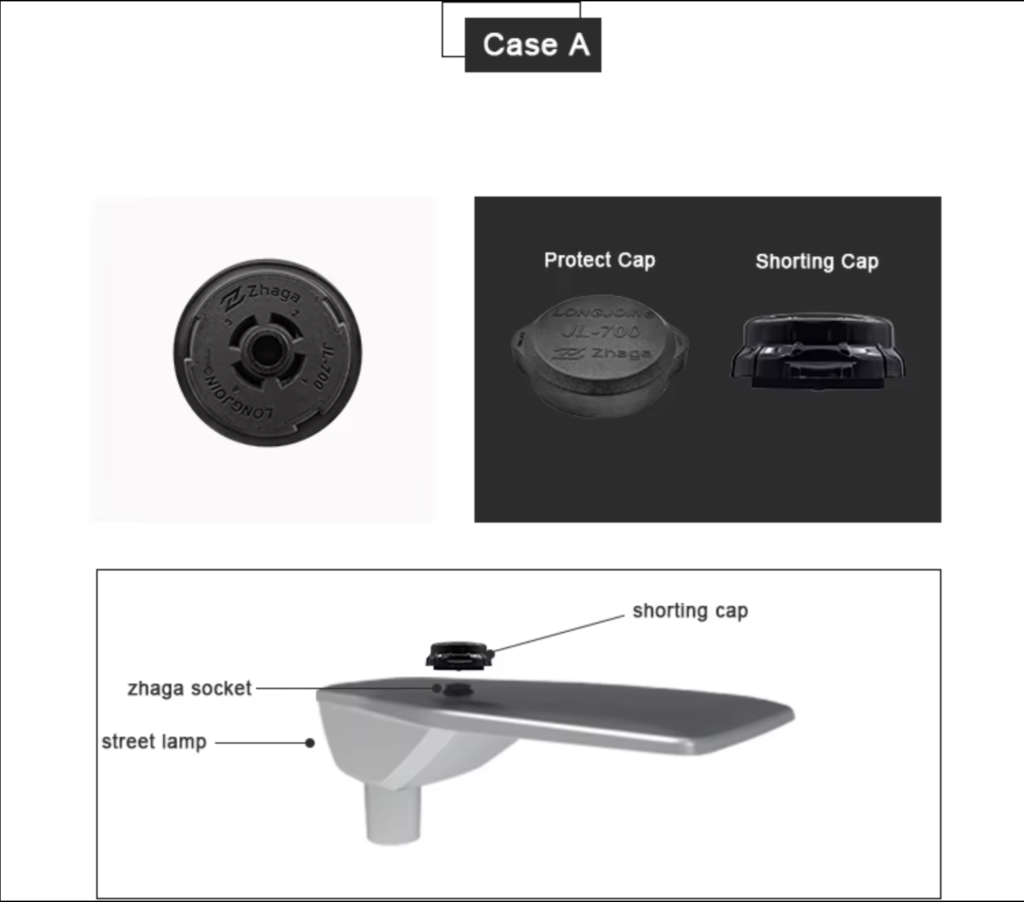
For a luminaire prepared for a Zhaga socket, select a compatible protective cap or controller according to the project requirements. A protective cap and a shorting cap may have different functions; check the specified model and wiring diagram before selection. For a retrofit, verify mounting dimensions, electrical connections, driver compatibility and sealing requirements. Compare the complete installed solution when assessing cost.

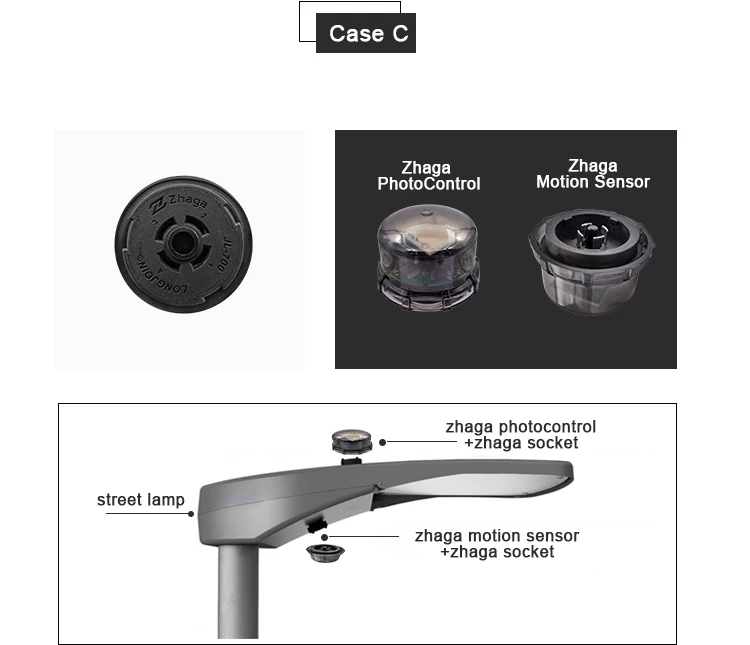
Select the controller for the required outdoor lighting functions, such as ambient-light switching, motion sensing or remote management. Confirm compatibility with the socket, driver and luminaire, including supply requirements and the supported control interface. Follow the model-specific instructions for mounting, wiring and sealing. Suitability for an indoor project must be established separately from the outdoor Book 18 interface.
Application of Zhaga socket with different light controllers

Ambient-light control: A compatible photocontrol can switch lighting in response to ambient light according to its specified settings. Verify the controller’s switching thresholds, electrical ratings and compatibility with the socket and luminaire. Compare project costs using the selected components and installation requirements.

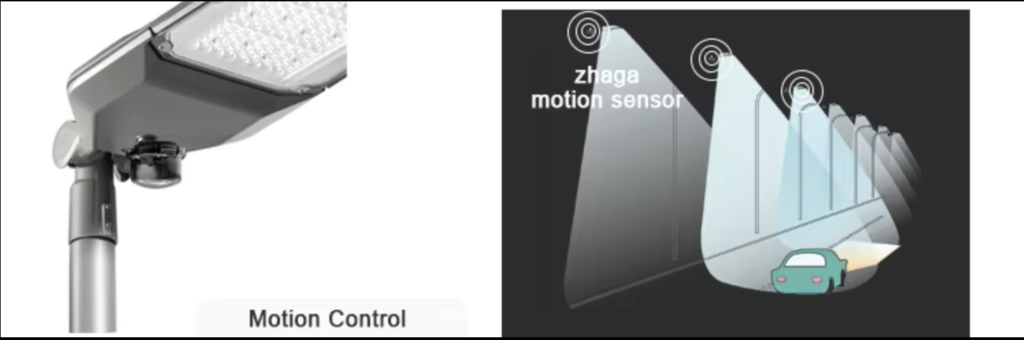
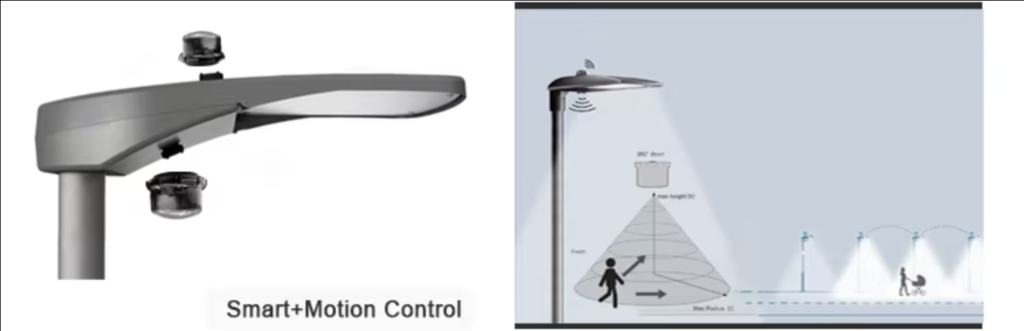
Motion-based control: Confirm whether the selected controller uses infrared or microwave sensing; these are different sensing technologies. Check its detection range, coverage, installation position and supported control behavior. Lighting response and energy use depend on the sensor settings, driver, site conditions and operating schedule.

Combined sensing and dimming: Some controller models combine ambient-light and motion sensing. Verify the sensing technology and supported output, such as DALI, in the model datasheet, and select a compatible driver and luminaire. Check the required settings and environmental ratings for the intended outdoor application. The socket alone does not provide these control functions.
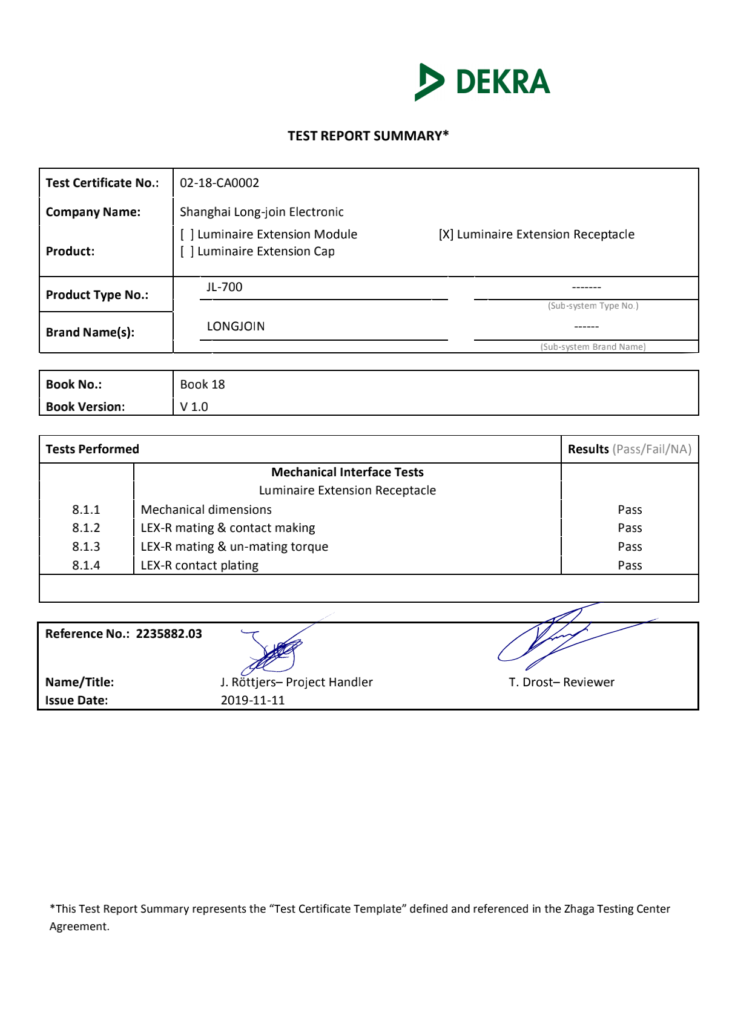
zhaga book 18 Certificate
Zhaga develops standardized interfaces for LED lighting components.
Zhaga Book 18 defines the interface between outdoor LED luminaires and sensing or communication modules, including mechanical fit, electrical connections, power and communication requirements. For a specific socket and controller combination, verify the model specifications and the relevant certification scope. Zhaga-D4i interoperability requires certified luminaires and certified sensing or communication nodes on both sides of the interface.


FAQ
Zhaga Book 18 covers the interface between outdoor LED luminaires and sensing or communication modules. Typical project settings include roads, parks and outdoor parking areas, subject to the selected models and installation conditions. Check the socket, controller and luminaire specifications for the intended application. Do not infer suitability for indoor luminaires or every lamp type from the connector shape alone.
For an outdoor installation, select a compatible socket, controller or protective cap, and luminaire assembly. Verify the model’s temperature limits, electrical ratings and specified IP rating in the assembled configuration. Follow the installation instructions for mounting, wiring and sealing, and check any stated requirements for UV exposure or corrosion resistance. Suitability for a harsh environment must be supported by the relevant model specifications and test data.
Evaluate the socket as part of the complete luminaire assembly. Check the model’s operating-temperature limits, electrical ratings and installation requirements, together with the thermal requirements of the luminaire and controller. A socket does not by itself guarantee that the LED module will remain within its temperature limits. Confirm the assembled system’s suitability for the intended operating environment before selection.
The electrical connections depend on the specific socket, controller and luminaire models. Use the model datasheets and wiring diagrams to verify pin assignments, supply voltage, polarity, current ratings and the supported control or communication interface before connection. Do not assume that every Zhaga-style socket supports DALI, DMX or a protective-earth connection. Select a compatible combination and follow the installation instructions for each component.
Service life depends on the specific model, operating conditions, installation and maintenance. Request the model’s durability or reliability test data and warranty terms for your project. Assess temperature, moisture, UV exposure, electrical loading and mating cycles against the stated specifications. A fixed service life cannot be assigned to every Zhaga socket without model-specific evidence.
Safety depends on selecting compatible components and installing them within their stated ratings. Check the model’s electrical ratings, insulation requirements, temperature limits, environmental protection and applicable test reports or certifications. Follow the socket, controller and luminaire installation instructions, including wiring, sealing and mounting requirements. Assess safety at the complete luminaire-system level; a standardized connector alone is not a guarantee of safe operation.
The socket provides an interface for a compatible sensing or communication module; the controller, driver and system determine the available functions. Check the supported interface and model specifications for functions such as ambient-light switching, dimming, motion sensing or remote management. Do not assume that every socket supports DALI, DMX, color-temperature adjustment or wireless communication. Verify the complete component combination before specifying a project.
Check compatibility for the specific socket, controller and luminaire models before installation. Compare mounting dimensions, pin assignments, supply requirements and the supported communication interface using the model datasheets. A matching connector shape alone does not establish electrical or functional compatibility. For Zhaga-D4i interoperability, verify that both the luminaire and the sensing or communication node are certified and that the certification covers the intended combination.
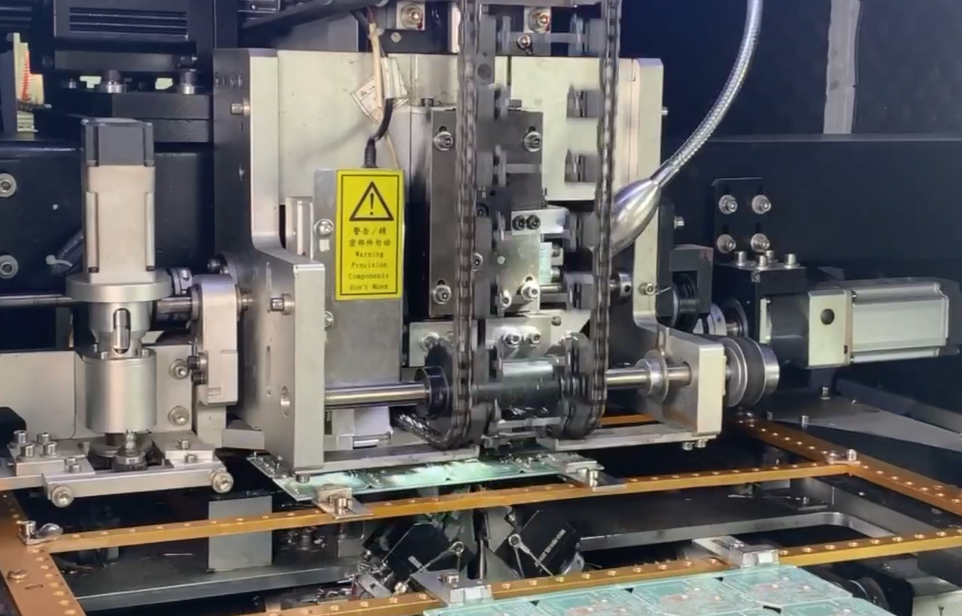
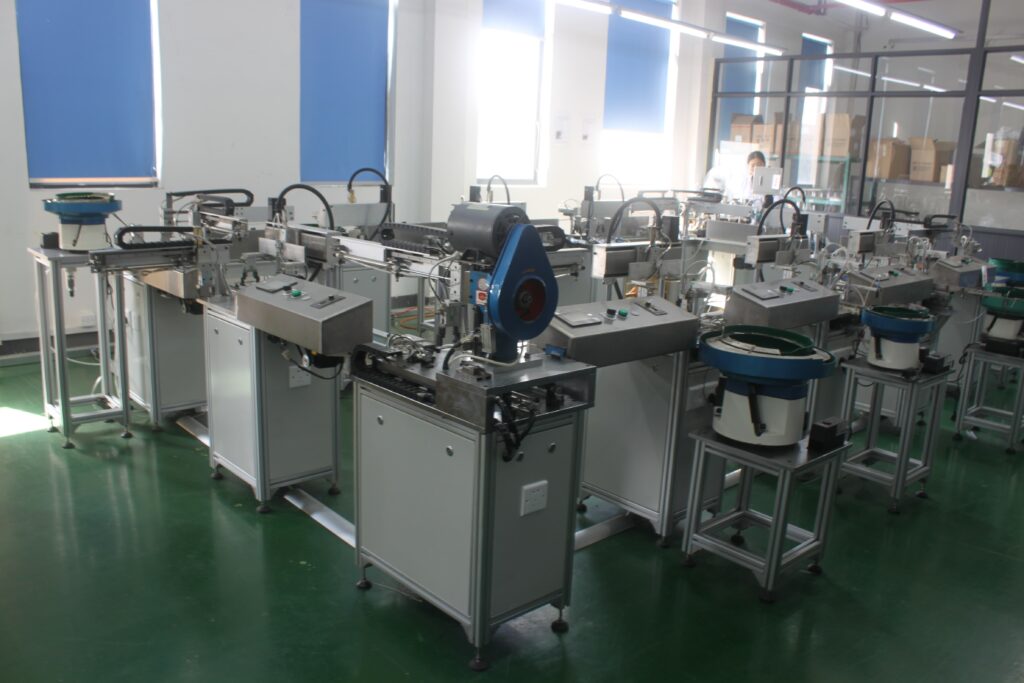
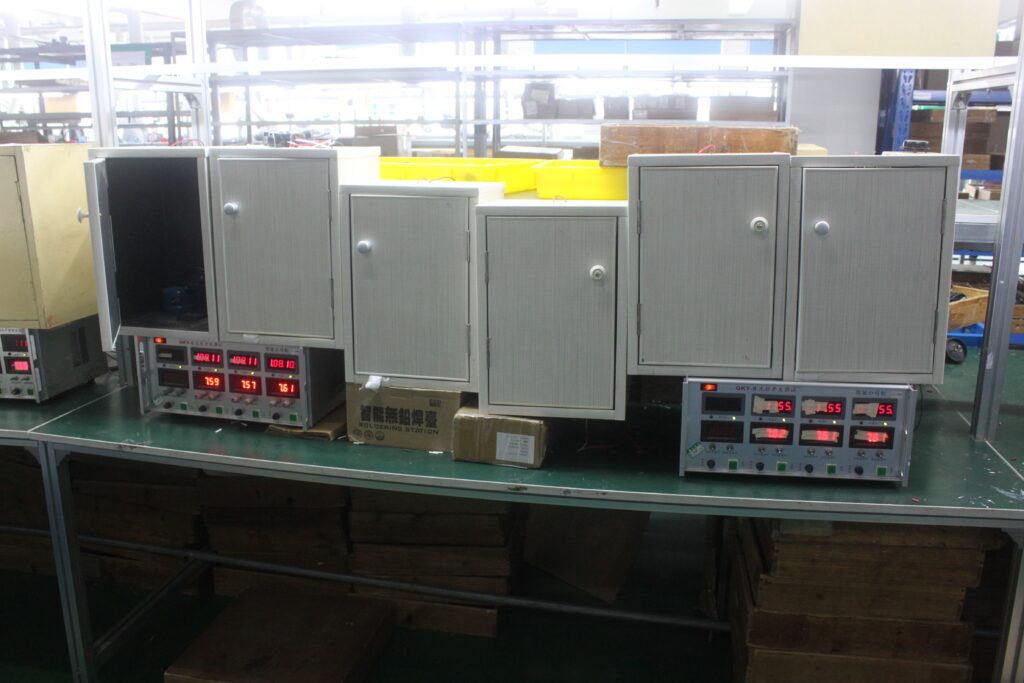
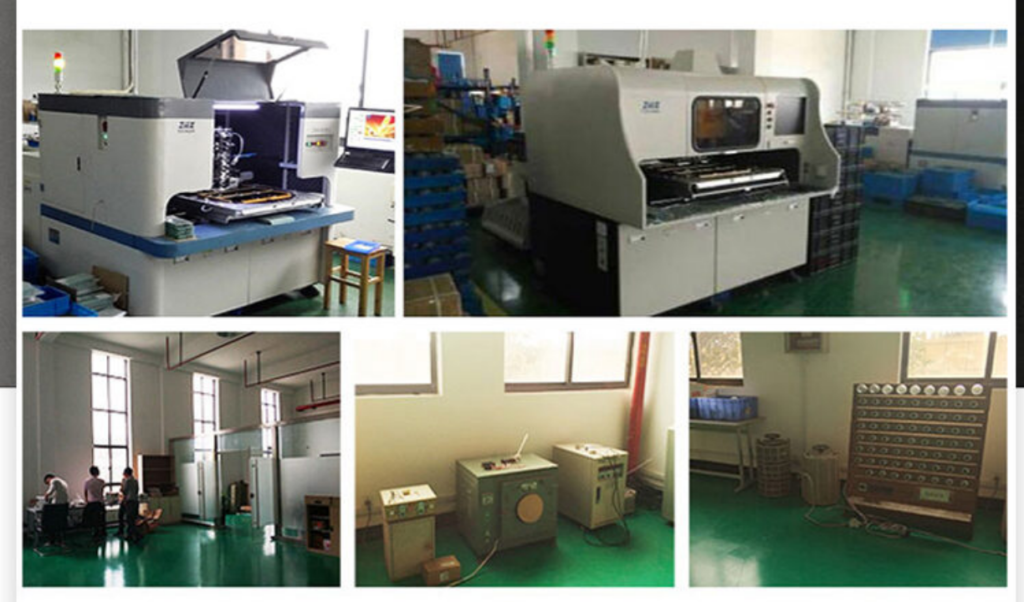
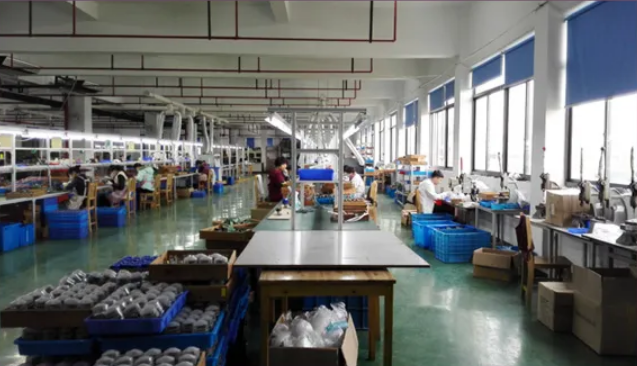
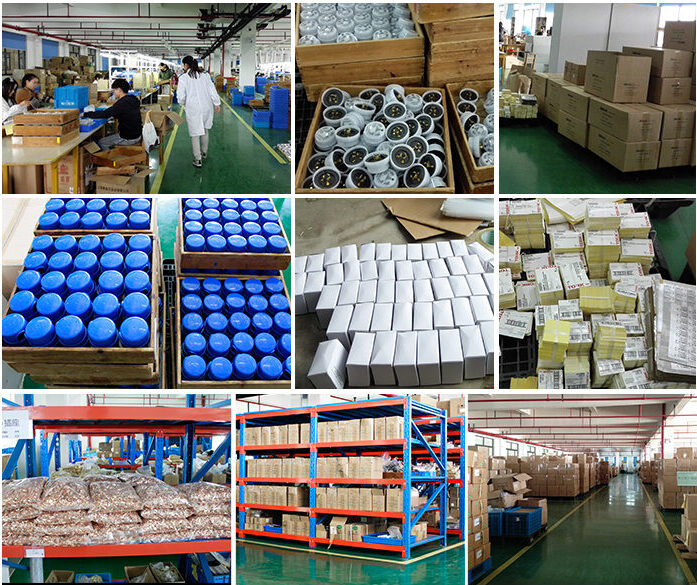
Production Workshop


Articles related to ZHAGA

Embracing Standardization: NEMA and Zhaga Interfaces in Photosensor Technology
Outline Owing to the rapid evolution of smart lighting systems, their standardization to ensure compatibility and seamless integration has become critical. Among these advancements, photosensor

Zhaga vs. NEMA: Which Lighting Control System Holds the Future in South America’s Growing Market
Outline As South America’s urban infrastructure develops rapidly, the need for intelligent lighting control systems is rising. Both Zhaga and NEMA standards have gained prominence

Do Zhaga Light Control Connectors Support Plug-and-Play Modular Upgrades, and How Do They Simplify Maintenance and Updates for Outdoor Lighting Systems?
Outline In the world today, smart outdoor lighting designs are becoming increasingly popular. This is due to their energy efficiency, low cost, and sustainability. Despite
Exploring the Choice between Wired and Wireless Zhaga Controller Sockets: Which Solution Fits Your Needs?
Outline Zhaga controller sockets play a pivotal role in modern lighting systems, offering standardized interfaces for connecting smart control modules. These sockets enhance the functionality and

Streamlining Installation: How Zhaga’s Foolproof Design Transforms Lighting Setup
Outline Large-scale lighting projects that include buildings, warehouses, and urban lighting setups often face challenges in installation and maintenance i.e complex wiring configurations, ongoing troubleshooting,

Future of Outdoor Lighting: How NEMA and Zhaga Standards Drive Smart City Innovations
Outline Streetlights have always been essential for safety and security and for creating a visually appealing cityscape. But for our modern cities, the use of