
OUTLINE
- 導入
- Why Is 240V the Standard for Mexico Industrial Projects?
- Where Are 240V Dusk-to-Dawn Sensors Used in Mexico?
- Which Long-Join Models Cover 240VAC Mexico Projects?
- Why Does the JL-207C Suit Mexico Industrial Projects Specifically?
- What Do Mexico Lighting Tenders Typically Require?
- What Happens When Low-Quality 240VAC Photocells Are Specified?
- Getting a Photocell in Mexico
- Frequently Asked Questions
Mexico’s industrial sector is expanding rapidly. New industrial parks, logistics centres, and manufacturing facilities are coming online across Monterrey, Guadalajara, Tijuana, and the Bajio region, driven by nearshoring investment from North American manufacturers reshoring supply chains.
Every one of these facilities needs outdoor lighting, and most of them run on 220-240VAC power systems.
For contractors and project integrators specifying outdoor lighting control for these environments, the photocell isn’t a minor line item.
It determines whether the lighting system runs reliably through years of heat, UV exposure, seasonal heavy rain, and the kind of grid instability that industrial zones are known for.
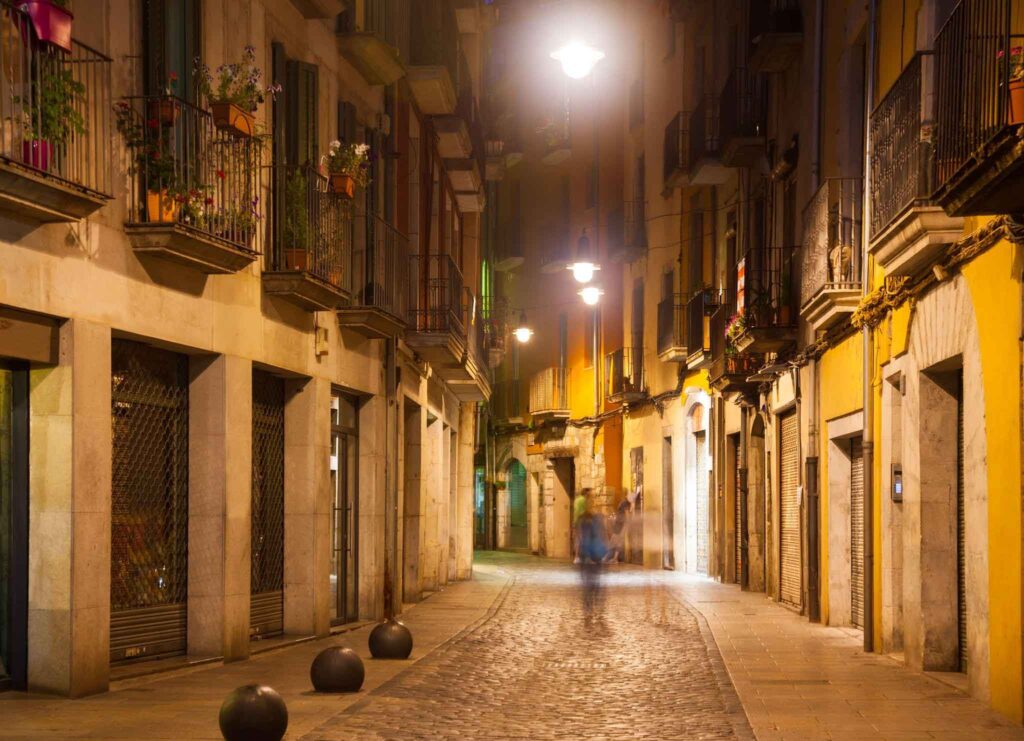
Why is 240V the Standard for Mexican industrial projects?
Unlike residential lighting in North America, which typically runs on 120V, Mexico’s industrial and commercial facilities commonly operate on 220-240VAC systems, and a photocell that isn’t rated for this voltage range simply won’t work reliably on these circuits.
This voltage standard is found across factories, parking lots, roadway lighting, industrial warehouses, and transportation infrastructure throughout Mexico. It is also consistent with the wider Latin American industrial norm, making 240VAC-compatible photocontrols the correct specification for the majority of commercial and industrial projects in the region.
Where Are 240V Dusk-to-Dawn Sensors Used in Mexico?
Mexico’s industrial lighting applications span five main environments, each with specific demands on the photocell controlling it.
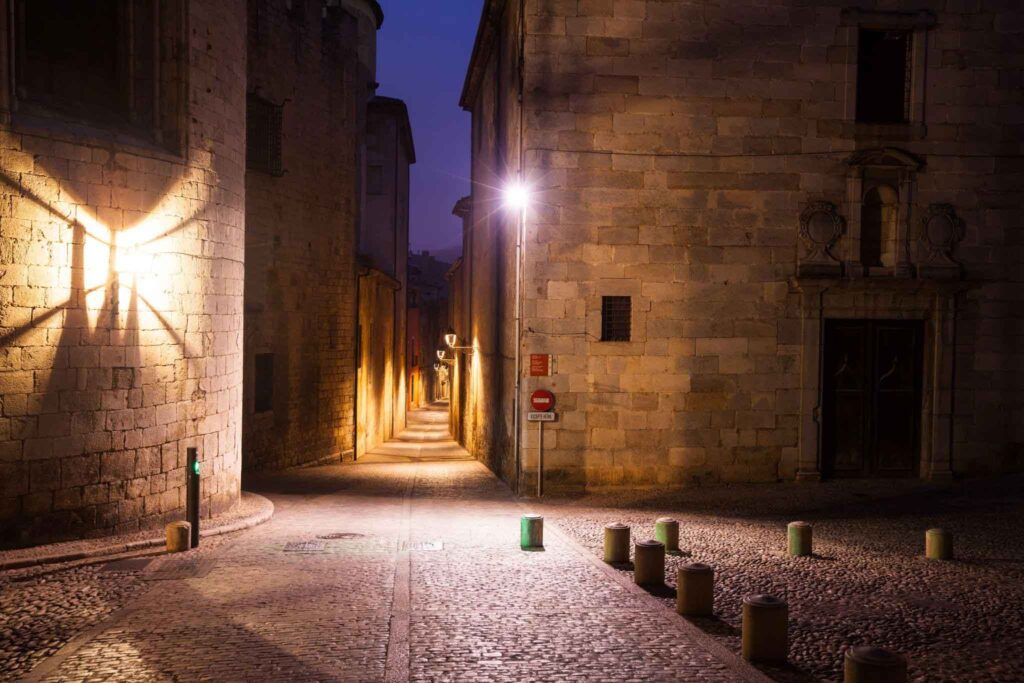
Industrial park roadway lighting
Industrial parks operate continuously, which means the photocell is switching twice every day across 365 days a year. Automatic lighting switching, energy waste reduction, and low maintenance costs are the priorities.
その JL-205C そして JL-207C both suit this application, with the JL-207C being the better choice where surge exposure or grid instability is a concern.
Warehouse and logistics centre lighting
Mexico’s logistics industry is growing sharply with nearshoring investment. Outdoor warehouse lighting needs to operate reliably through the night, handle LED driver loads without flickering, and survive the surge events common in industrial power environments.
The JL-207C and JL-215C both suit this application. The JL-215C’s 0.5W standby consumption gives it an energy efficiency advantage in large warehouse networks where many photocells are running simultaneously.
駐車場照明
Commercial and industrial parking areas need dusk-to-dawn automation, security lighting reliability, and anti-flicker LED compatibility. Precise ルクス sensing and stable relay switching matter here because a photocell that triggers too early or too late relative to actual dusk wastes energy or leaves the area dark when it should be lit.
The JL-207C suits this application well.
Municipal and highway lighting projects
Municipal roadway projects in Mexico increasingly include formal tender requirements covering IP65 minimum protection, UV-resistant housing, UL or CE certification, 20,000 or more switching cycles, and NEMA receptacle compatibility.
The JL-207C meets all of these criteria and is widely specified in Latin American municipal tenders.
Smart city and infrastructure projects
Modern lighting projects increasingly require smart-ready photocontrol systems that can be upgraded to IoT management without fixture replacement. The JL-245CN NB-IoT smart photocell provides remote monitoring and fault detection from day one.
For projects using NEMA receptacle infrastructure, the JL-240XA 7-pin receptacle base enables smart lighting integration with 0-10V and DALI dimming capability while maintaining standard twist-lock photocontrol compatibility.
Which Long-Join Models Cover 240VAC Mexican Projects?
| モデル | 電圧範囲 | 典型的なアプリケーション | 主な利点 |
| JL-205C | 120-277VAC | General outdoor lighting | Cost-effective LED control |
| JL-215C | 120-277VAC | Commercial and warehouse lighting | Stable outdoor switching |
| JL-207C | 120-277VAC | Industrial and municipal projects | IP65, long relay life, IR filter |
| JL-245CN | Smart NB-IoT | スマートシティ照明 | Intelligent upgrade ready |
Why Does the JL-207C Suit Mexico Industrial Projects Specifically?

The JL-207C’s combination of IP65 protection, UV-resistant housing, long relay life, and LED compatibility directly addresses the four main failure risks in Mexico’s industrial lighting environments.
Mexico industrial projects see heavy seasonal rain, outdoor dust, and humid conditions that push IP54 photocells to fail within a few years. The JL-207C’s dust-tight, water-jet-resistant IP65 housing handles these conditions across a full service life. Its UV-resistant engineering material prevents the housing from brittleness and cracking that the tropical sun causes in standard plastic enclosures.
The relay life question matters particularly in industrial settings where maintenance access to pole-mounted fixtures is expensive and disruptive. The JL-207C standard relay is rated at 10,000 working cycles, and the HP variant exceeds 50,000. At two switches per day, the standard model covers over 13 years before relay replacement becomes a consideration.
LED compatibility is increasingly non-negotiable in Mexico industrial projects as older HID fixtures are replaced. The JL-207C’s IR-filtered phototransistor and zero-crossing switching technology prevent the false triggering and contact wear that cause LED flickering in photocells not designed for modern driver loads.
What Do Mexico Lighting Tenders Typically Require?
Latin American public and industrial lighting tenders now commonly specify technical requirements that rule out lower-grade photocells from the qualification stage.
| Tender Requirement | Common Level |
| Waterproof rating | IP65 minimum |
| 紫外線耐性 | Required |
| Operating voltage | 220-240VAC |
| 認証 | UL, CE, RoHS |
| Switching lifespan | 20,000 cycles minimum |
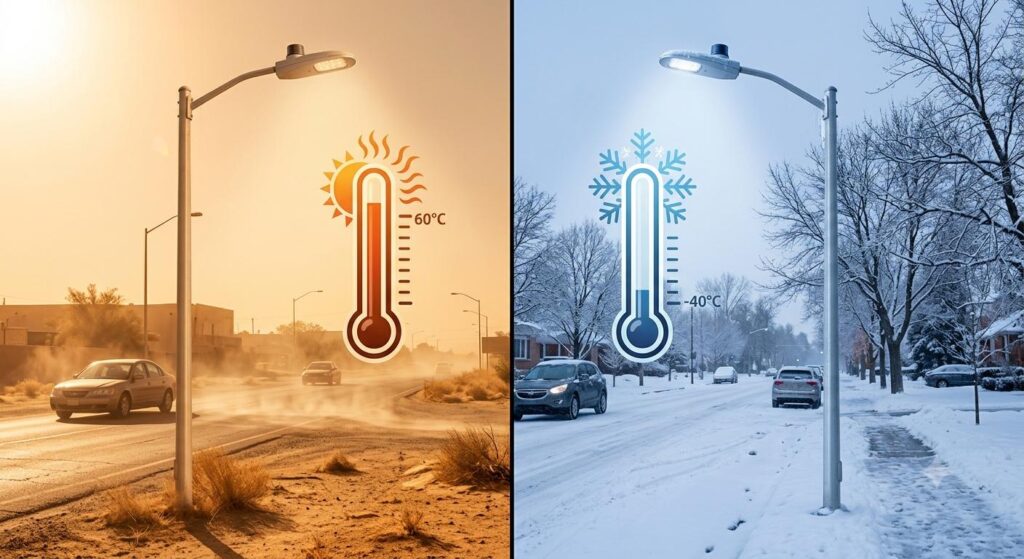
| Temperature resistance | High-temperature capable |
| LED compatibility | 必須 |
The JL-207C meets all of these requirements. For smart city tenders that additionally require remote monitoring and IoT readiness, the JL-245CN covers those requirements with NB-IoT connectivity.
What Happens When Low-Quality 240VAC Photocells Are Specified?
Low-cost photocontrols used in Latin American industrial projects commonly fail due to weak sealing, poor UV resistance, unstable LED switching, and short relay lifespan. These failures lead to maintenance cost increases, project delays, and, in municipal applications, public complaints about dark roadways.
For industrial projects where lighting downtime affects operations, reliability is always a more important procurement criterion than minimum upfront unit cost.
Sample testing before large-volume procurement is strongly recommended. Full specifications for all models are available on Chi-Swear’s outdoor photocell range.
Getting a Photocell in Mexico
As Mexico’s industrial lighting projects continue modernising, reliable 240VAC dusk-to-dawn sensors are a core infrastructure requirement, not an afterthought. The JL-207C stands out as the best-matched photocontrol for industrial parks, municipal roadway lighting, logistics facilities, and smart city projects across Latin America, combining IP65 protection, UV-resistant housing, stable LED compatibility, and a relay life that exceeds most tender requirements from the start.
Frequently Asked Questions
Q1: Why are 240VAC photocontrols commonly used in Mexico industrial projects?
Mexico’s industrial and commercial power infrastructure commonly runs on 220-240VAC systems, consistent with the wider Latin American standard. A photocell rated for 120V only will not operate correctly on these circuits and risks relay failure or erratic switching.
Q2: What makes the JL-207C suitable for outdoor industrial lighting?
Four factors make it well-matched: IP65 protection covers the dust and rain exposure of industrial outdoor environments; UV-resistant housing prevents the cracking that tropical sun causes on standard plastics; the IR-filtered phototransistor prevents false switching from vehicle headlights and industrial light sources; and the relay life of 10,000+ cycles (50,000+ on the HP variant) reduces maintenance visit frequency.
Q3: What are the common tender requirements for outdoor photocontrols in Latin America?
Most public and industrial tenders now require IP65 minimum, UV-resistant housing, operating voltage covering 220-240VAC, UL or CE certification, a minimum of 20,000 switching cycles, and confirmed LED compatibility. Smart city tenders additionally require IoT or remote monitoring capability.
Q4: Can low-quality photocells cause LED flickering or switching failure?
Yes. LED drivers have different inrush current and load characteristics than the HID ballasts and older photocells were designed for. A photocell without proper LED compatibility can cause the relay to stick, the light to cycle repeatedly on and off, or the driver to flicker. IR-filtered phototransistor sensing and zero-crossing switching technology, as used in the JL-207C, both reduce this risk significantly.
Q5: Which Long-Join photocontrol is best for smart city lighting upgrades?
The JL-245CN NB-IoT smart photocell is the primary recommendation for smart city applications. It connects directly to a cloud management platform via cellular infrastructure, providing real-time fault detection, remote dimming control, and scheduled switching without a local gateway. For projects using NEMA receptacle infrastructure, the JL-240XA 7-pin receptacle base enables smart lighting integration alongside standard photocontrol operation.


 Japanese
  English
  Spanish
  Russian
  Arabic
  Italian
  Portuguese