
概要
- 導入
- What Are the Key Technical Differences Between Long-Join JL-723A1H 光電セル and Timer PIR Motion Sensors?
- How Do Their Working Mechanisms and Energy-Saving Strategies Compare?
- Which Application Scenarios Are Best Suited for Each Product?
- How Do Installation, Compatibility, and Maintenance Requirements Differ?
- What Are the Final Selection Recommendations Based on Application Needs?
- 結論
Intelligent lighting is no longer just about turning lights on and off. It is about control and energy efficiency. Motion detection and time-based management are now shaping modern lighting systems.
Among these solutions, Long-Join JL-723A1H 光電セルセンサー and timer PIR motion sensors stand out. Both aim to reduce energy waste. Both improve automation. But they work in different ways.
So how do they compare technically? And more importantly, which one fits your project scenario better?
This article breaks down their features, working logic, and suitable applications to help you make the right choice.

What Are the Key Technical Differences Between Long-Join JL-723A1H 光電セル and Timer PIR Motion Sensors?
| 特徴 | Long-Join JL-723A1H | Timer PIR Motion Sensor |
| センサータイプ | PIR + Ambient Light (dual) | PIR only |
| Output | アダプティブディミング | On/Off switching |
| 制御ロジック | Motion + light + network dimming | Motion + timed hold |
| エネルギー効率 | High (light level adapts) | Medium (fixed delay) |
| 統合 | ダリ/ジャガ ecosystem | Stand-alone application |
Technical Advantages Of Long-Join JL-723A1H
This is a Zhaga/DALI-compatible lighting controller that fuses PIR motion sensing with live light level feedback for dimming control. It detects human presence via passive infrared and measures ambient light simultaneously.
This dual sensing lets it adjust output dynamically. They dim lights in response to both movement and daylight levels, and not just switching them on/off. That makes lighting more precise and responsive to actual conditions. This reduces unnecessary power use.
Its integration with digital dimming protocols like DALI also supports smooth brightness changes and interoperability with automated systems.
Key Integrated Advantages
- Combines motion and light sensing in one controller
- Adapts the dimming level based on detected activity and outdoor light
- Supports advanced digital lighting networks for automated scenes
Core Functions Of a Timer PIR Motion Sensor
これ 照明制御 focuses on simple presence detection with time-based lighting control. When a person enters the PIR detection zone, it triggers the lights on. Once motion stops, it holds the lights on for a preset delay period before switching off.
A separate ルクス setting determines whether the sensor should work only at dusk/night or during both day and night. This basic lux threshold helps save energy by avoiding daytime activation.
Typical sensors allow adjustment of:
- Time delay — how long lights remain on after motion ends
- Lux threshold — ambient light level to enable or disable activation
- Sensitivity — how far motion is detected and how easily it triggers lights
Operational Logic that Sets It Apart
- Motion triggers a fixed duration on/off cycle
- Time period control is pre-defined, not adaptive to changing ambient conditions
- Dimming is usually not part of logic — lights are simply on or off
In contrast to JL-723A1H’s dual sensing and digital dimming, timer PIR sensors deliver motion-activated switching with time holding and basic lux gating only.

How Do Their Working Mechanisms and Energy-Saving Strategies Compare?
JL-723A1H 光電セルスイッチ and timer PIR sensors both save energy, but they do it very differently. Triggering methods in each system define how and when lights respond to activity.
Triggering & Time Control Logic
JL-723A1H 光電セル照明センサー uses continuous dual sensing. It monitors both movement and ambient light. Lights adapt brightness based on real conditions and not just motion alone. This reduces unnecessary lighting when natural light is present.
Timer PIR motion sensors trigger lights only when motion is detected and then rely on a preset off-delay timer. Lights stay on for that fixed period regardless of actual ambient brightness.
Energy Management & Flexibility
JL-723A1H 屋外用光電セル光センサー adjusts in real time and can dim lights when there’s enough daylight or low activity. It integrates well with network dimming protocols for smarter energy use throughout the night.
Timer PIR sensors offer fixed runtime after motion and basic lux gating, but no adaptive dimming. They are simpler and less flexible than dual-sensing controllers.
Quick Comparison
- For adaptive response, the JL-723A1H 光制御 excels.
- For a simple motion trigger, the Timer PIR is good to go.
- Regarding energy use, the JL-723A1H often saves more in dynamic lighting conditions because it avoids unnecessary full output and adjusts to real environmental changes.
Which Application Scenarios Are Best Suited for Each Product?
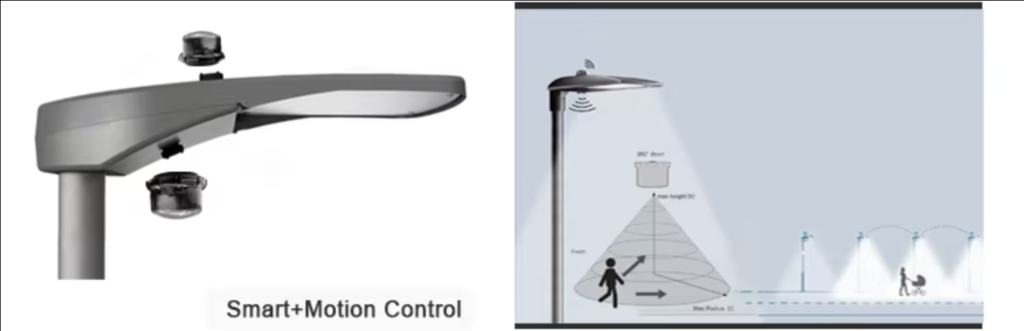
Applications Where the Long-Join JL-723A1H 光センサー is Most Suitable
これ 光制御レセプタクル excels in places where activity and light conditions vary constantly. Its dual sensing of occupancy and ambient light makes it highly effective for environments such as:
- Public squares & plazas — heavy footfall at random intervals.
- Mall entrances and walkways — fluctuating natural light and people flow.
- Community roads and shared outdoor zones — where both motion and daylight change rapidly.
その 光電センサー adapts lighting brightness based on real conditions, not just motion or schedule. This means no wasted full-power lighting during daylight or low-activity periods.
Such adaptive control brings energy savings and comfort together. Dual sensing is especially valuable in intelligent venues that demand both presence detection and a consistent visual experience.
Situations Where a Timer PIR Motion Sensor is the Better Choice
Timer PIR motion sensors shine in areas with predictable, intermittent use. They trigger lights only on detected motion and hold them on for a set time before shutting off. Typical scenarios include:
- Residential corridors and stairwells — brief and repeated passages.
- Warehouses and storage aisles — activity occurs in isolated zones.
- Parking entries or service rooms — lighting required only during presence.
Here, scheduled motion control improves energy use by avoiding constant illumination in areas that are empty most of the time. A timer PIR is a solid choice where strict time-based lighting control is the priority and ambient light variations are less critical.
How Do Installation, Compatibility, and Maintenance Requirements Differ?
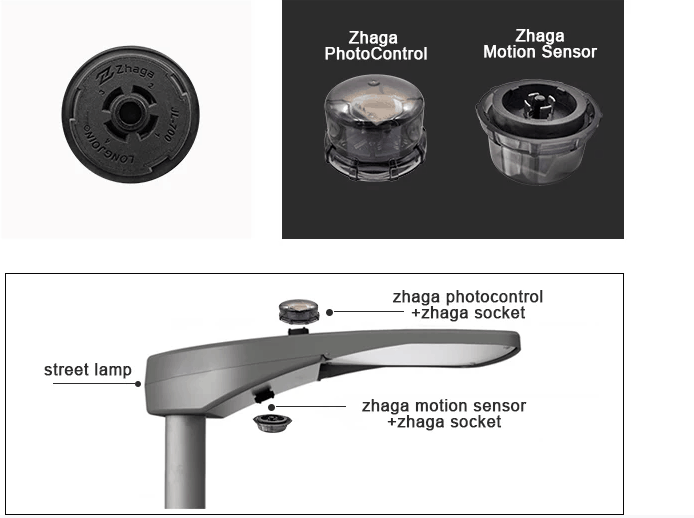
To help compare, here’s a quick look:
| 要素 | JL-723A1H | Timer PIR Motion Sensor |
| インストールの複雑さ | Requires integration with lighting drivers and controllers | Usually, plug-and-play or simple wiring |
| 互換性 | Works with digital dimming protocols like DALI and smart lighting systems | Typically standalone or basic relay switch |
| Size & Retrofit Ease | May need controller cavity and compat panel | Compact, easy retrofit for standard fixtures |
| メンテナンス費用 | Slightly higher due to system integration and configuration | Lower and simpler to replace or adjust |
| System Upgrades | Supports network updates and scene management | Limited upgrade path — mostly hardware replacement |
What Are the Final Selection Recommendations Based on Application Needs?
When choosing between the Long-Join JL-723A1H 光電セルセンサー and a timer PIR motion sensor, focus on how each meets specific site needs rather than picking one by default.
JL-723A1H フォトスイッチセンサー shines in adaptive and intelligent control due to its dual sensing logic. It responds to both human presence and ambient light. It adjusts illumination levels dynamically. This means smarter energy use and less wasted runtime in places with variable use and varying daylight conditions. Its integration with digital lighting systems adds extended operational value for sophisticated projects.
By contrast, a timer PIR motion sensor is ideal when lighting needs are predictable. It triggers lights on motion and holds them on for a preset duration. This makes it suitable for corridors and spaces with clearly defined occupancy windows. These sensors are simpler to install and deliver reliable control where adaptive dimming isn’t critical.
Quick Recommendation Checklist
Choose JL-723A1H if:
- You need adaptive dimming based on real activity and daylight.
- The space has dynamic foot traffic and varied lighting conditions.
- Integration with smart lighting networks is required.
Choose Timer PIR if:
- Lighting patterns follow predictable schedules.
- Simplicity and low maintenance are key.
- The space benefits more from fixed ON/OFF sequences than adaptive dimming.
結論
JL-723A1H delivers adaptive sensing intelligence for dynamic environments. Timer PIR sensors provide simple motion control for predictable spaces. The right choice depends on site complexity and control expectations. For reliable Long-Join photocontrollers, チ・スウェア offers proven products and professional support. Partnering with an experienced supplier ensures stable performance and confident project execution.


 Japanese
  English
  Spanish
  Russian
  Arabic
  Italian
  Portuguese