
Contorno
- Introdução
- What Are the NEMA and Zhaga Fotossensor Interface Standards?
- How Do the Electrical Architecture and Performance of NEMA and Zhaga Differ?
- How Do NEMA and Zhaga Differ in Interoperability and Electrical Contact Design?
- How Do NEMA and Zhaga Compare in Dimming Support and Auxiliary Power Capabilities?
- How Do the Input Voltage Requirements of NEMA and Zhaga Interfaces Differ?
- What Are the Innovation Potentials and Application Selection Considerations for NEMA vs Zhaga?
- How Do Installation Methods Differ Between NEMA and Zhaga Interfaces?
- Palavras finais
Smart lighting systems rely on more than just sensors and software. The interface standards are yet another critical aspect. They play a critical role in how devices communicate and perform.
NEMA and Zhaga are the two dominant options used worldwide today. Each follows a different design philosophy. Each suits different project needs.
This article compares Long-join’s NEMA and Zhaga controle de iluminação interfaces to help you choose the right standard for your lighting design.
What Are the NEMA and Zhaga Fotossensor Interface Standards?
NEMA
It stands for the Associação Nacional de Fabricantes de Equipamentos Elétricos. It is a U.S. standards body that defines electrical interfaces used in outdoor lighting controllers.
NEMA interruptor fotocélula connectors started with simple photocell control sockets and evolved through ANSI to the advanced 7-pin sockets. The added pins are for dimming and future services as lighting gets smarter.
Zhaga
This is a global lighting industry consortium founded in 2010. Its mission is to standardize interfaces for LED luminaires and communication modules to ensure true interoperability.
Zhaga specifications are known as Books. They are updated to support modular smart lighting components and digital communication standards like DALI/D4i.
The design philosophies differ:
- NEMA prioritizes high-voltage compatibility and backward support for legacy outdoor systems.
- Zhaga sensores de iluminação fotocélula have low-voltage consuming auxiliary power and intelligent control.
Together, they reflect the industry’s shift from traditional power-centric control to connected, scalable smart lighting.
How Do the Electrical Architecture and Performance of NEMA and Zhaga Differ?
NEMA and Zhaga take opposite approaches to electrical architecture, shaping performance, safety, and intelligence in smart lighting systems.
NEMA Architecture (Direct AC Mains)
The NEMA sensor de luz fotocélula externo connects directly to the AC mains before the luminaire. The controller becomes the first node in the power chain.
It must include:
- Proteção contra surtos
- AC/DC conversion to power internal electronics
- Load switching for on/off and dimming functions
- This makes NEMA robust for high-power environments.
Zhaga Architecture (Low-Voltage Support)
Soquetes Zhaga carry low-voltage DC auxiliary power from the LED driver, not mains. The luminaire driver handles high-voltage tasks like surge protection and energy metering.
Controllers are simpler and safer because they avoid a direct mains connection.
Comparing Stability, Safety & Intelligence
● Stability
NEMA fotocélula para iluminação pública face mains transients; Zhaga avoids mains stress.
● Safety
Low-voltage Zhaga reduces shock risk and simplifies safety compliance.
● System Intelligence
Zhaga’s standardized D4i/DALI-2 data enables richer diagnostics and interoperability.
How Do NEMA and Zhaga Differ in Interoperability and Electrical Contact Design?
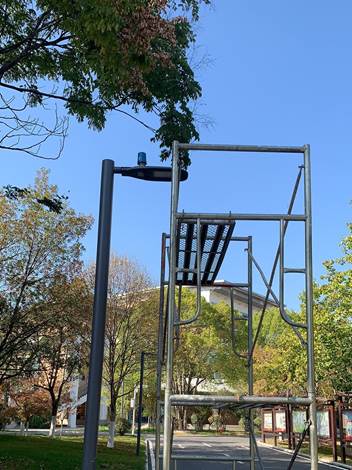
NEMA Pin Configurations and Contact Materials Designed for Reliability
NEMA interruptores fotocélula do sensor de luz come in 3-, 5-, and 7-pin versions to support a range of lighting control needs.
- The 3-pin design is the original mains and basic control interface.
- The 5-pin adds dimming signals.
- The 7-pin adds extra contacts for future IoT use or enhanced signals.
These pins combine power and control in one rugged package. Power and signal pins are often made from phosphor bronze for strength.
Signal contacts use nickel plating and then gold plating to reduce oxidation and ensure low contact resistance. Power contacts use thicker bronze strips to handle high-voltage loads and ensure durability.
This design supports legacy systems but can vary between manufacturers, affecting full plug-and-play interoperability.
Zhaga’s 4-Pin Low-Voltage Contact Design Improves Compactness and Safety
Zhaga tomadas e interruptores use a standardized 4-pin layout focused on low-power-consuming auxiliary power and DALI communication. The pins carry:
- A 24 V DC auxiliary supply
- Two DALI data lines
- An optional digital I/O for future expansion
Contacts are made from phosphor tin plating strips. This enhances corrosion resistance and improves contact quality in outdoor environments.
The compact 4-pin design allows smaller connectors and simpler wiring. Reduced size and low voltage also lower shock risk and improve installation safety.
Key differences in contact interoperability:
- NEMA’s varied pin counts allow flexible features. However, they can hinder guaranteed interoperability between controllers and luminaires.
- Zhaga’s unified 4-pin standard promotes true interoperability across compliant devices.
How Do NEMA and Zhaga Compare in Dimming Support and Auxiliary Power Capabilities?
NEMA sensor fotocélula de luz supports 1–10V analog dimming and DALI. But the approach needs heavy hardware.
Analog dimming uses separate control wires routed through the luminaire. DALI is possible, yet it often requires additional wiring paths and careful isolation from mains power.
Analog dimming has clear limits, including:
- Voltage drop affects accuracy.
- Small signal noise causes uneven light output.
- Fine-grained dimming below low levels becomes difficult in large outdoor networks.
Zhaga takes a different path. It supports native digital DALI-2 / D4i over a standardized low-voltage interface.
Power and data are delivered together from the driver. No extra control wiring is needed. Communication is precise and designed for smart diagnostics and energy reporting.
This makes Zhaga better suited for intelligent, data-driven lighting control. The table below further outlines control and data capabilities beyond basic dimming.
| Capability | NEMA Interface | Zhaga Interface |
| Energy metering support | Limited, controller-dependent | Native with D4i drivers |
| Asset identification | Opcional | Standardized |
| Sensor data handling | External or limited | Integrated and digital |
| Firmware upgrade support | Varies by vendor | Standard-friendly |
| Diagnostic data depth | Básico | Detailed, driver-based |
How Do the Input Voltage Requirements of NEMA and Zhaga Interfaces Differ?
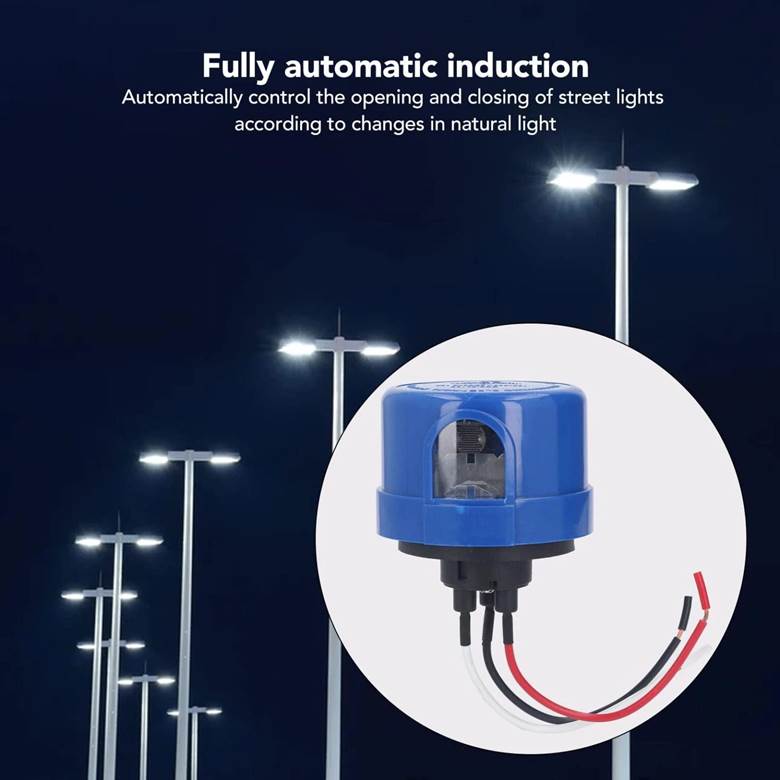
NEMA Suitable for Direct High-Voltage Lighting Applications
When using a NEMA interface, the sensor de fotointerruptor connects straight to the 120–277 V AC mains before the luminaire and driver. This means the controller gets full grid power and can directly switch and protect loads.
Such a design is ideal for high-power street lights and legacy systems where stable mains power is expected. It supports robust outdoor installations and simplifies connections in traditional power grids because no step-down conversion is needed.
NEMA’s mains approach contributes to broad compatibility with standard lighting infrastructure in the Americas and other regions.
Zhaga Optimized for Low-Voltage Modular Smart Lighting Systems
Zhaga interfaces are built around a low-voltage design supplied by the LED driver inside the luminaire, not the mains. The driver steps down the high AC voltage internally and feeds the Soquete Zhaga with 24 V DC auxiliary power for controls and data.
This separation makes Zhaga ideal for modular smart lighting, where digital communication and auxiliary power are required without adding high-voltage circuits outside the luminaire.
It reduces controller complexity and enhances safety in compact smart lighting architectures.
What Are the Innovation Potentials and Application Selection Considerations for NEMA vs Zhaga?
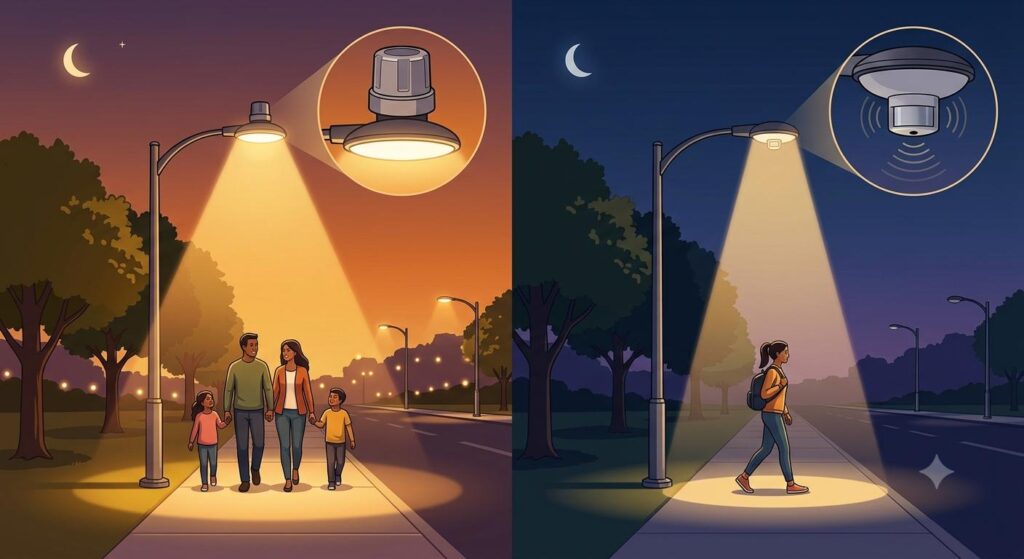
NEMA interfaces offer strong legacy support. They plug easily into existing high-voltage outdoor lighting systems. Installers and utilities already know them. But NEMA’s core standard has limited space for modern smart features.
It was not originally designed for digital interoperability and IoT-level data exchange. Thus, the innovation flexibility is constrained compared with newer frameworks.
By contrast, Zhaga is an open, evolving industry standard. It aligns with D4i and DALI ecosystems to support smart city functions, sensor modules, and networked controls. This makes Zhaga systems more future-ready and interoperable across brands.
For project selection:
| Fator de seleção | NEMA Fit | Zhaga Fit |
| Existing infrastructure reuse | Excelente | Moderado |
| Budget sensitivity | Forte | Moderado |
| Future IoT expansion | Limitado | Forte |
| Multi-vendor interoperability | Moderado | Alto |
| Long-term smart city roadmap | Weak | Forte |
Hybrid or adapter solutions also exist. They let systems bridge NEMA and Zhaga, easing transitions in retrofit or phased upgrades.
How Do Installation Methods Differ Between NEMA and Zhaga Interfaces?
| Fator | NEMA | Zhaga |
| Installation time | Moderado | Faster |
| Need for mounting accessories | Often required | Cru |
| Field replacement complexity | Mais alto | Mais baixo |
| Tool dependency | More tools | Fewer tools |
| Maintenance downtime | Longer | Shorter |
NEMA Interface Bases are typically installed in Outdoor Luminaires
NEMA receptáculos de fotocontrole are usually mounted on the top and side of luminaire housings. They interface directly with the fixture’s wiring harness and connect to the controller or sensor using a twist-lock mechanism.
Installation is straightforward on fixtures designed for NEMA integration.
However, irregular shapes or non-standard housings often need additional brackets and adapters to hold the socket securely and maintain waterproof sealing.
Shorting caps are required when no controle do sensor de luz is installed to ensure the circuit remains closed. This method fits retrofits and standard streetlights well, but may complicate fixtures with unconventional bodies.
Zhaga Enable More Flexible and Maintenance-Friendly Installation
Zhaga controles de iluminação are designed for versatile mounting — top, side, or even pole brackets. They are smaller than NEMA sockets, allowing compact placement without altering luminaire design.
The standardized 4-pin interface requires no additional wiring to cater to high voltage outside the luminaire.
This not only improves safety but also lets technicians quickly plug and replace modules without tools in many cases.
Because Zhaga follows a uniform standard, maintenance is easier across sites and brands, boosting uptime and lowering service costs.
Palavras finais
Understanding the differences between NEMA and Zhaga helps you choose the right interface for your project. Each has unique strengths in voltage, dimming, and installation flexibility. For reliable Long-Join photocontrollers and expert guidance, Chi-Swear offers proven quality and support for smart lighting solutions.
Links externos



 English
 Spanish
 Russian
 Arabic
 Italian
 Japanese
 Portuguese