
Outline
- Introduction
- Why Are Photocells Switches Essential for Smart Street Lighting?
- How to Choose the Right Outdoor Photocell Light Sensor for Projects?
- Why Is JL-103 Still the Most Trusted Classic Wire-In Photocontrol?
- How Does JL-205 Provide Reliable Fail-On Protection for Standard Street Lighting?
- Why Is JL-206 the Ideal Smart-Ready Light Sensor for Future Upgrades?
- How Does JL-207 Meet the Demands of Heavy-Duty Urban LED Street Lighting?
- Why Is JL-245C the Flagship Smart Dimming Photocell for Smart Cities?
- Why Do Global Lighting Manufacturers Trust Long-Join Photocells?
- How Can You Choose the Right Long-Join Light Photocell Sensor for Your 2025 Lighting Projects?
- What Makes Long-Join the Right Partner for Future-Ready Street Lighting Solutions?
- The Bottom Line
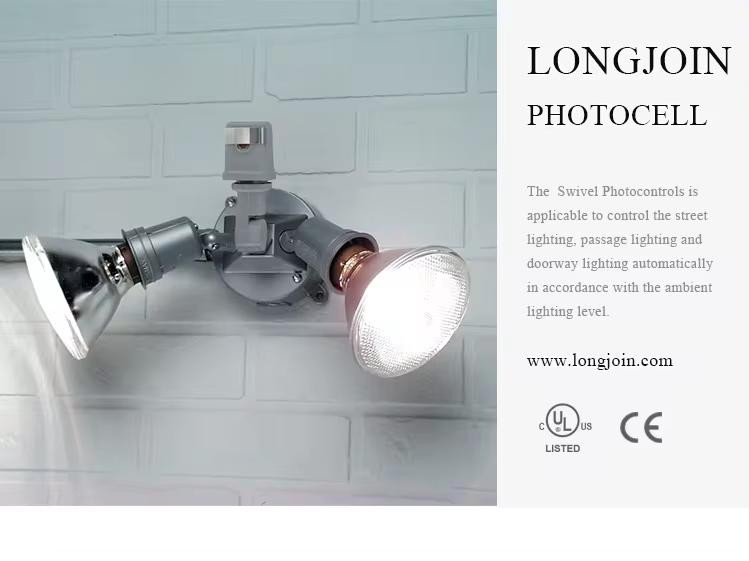
Cities are pushing for smarter infrastructure. Energy costs are rising. Carbon reduction targets are getting stricter. This puts pressure on lighting systems to operate only when needed. That’s where reliable photocells come in.
But not all photocells perform the same. Different projects demand different levels of control and intelligence. This article highlights five proven photocell sensor models trusted by manufacturers and city planners worldwide.
Why Are Photocells Switches Essential for Smart Street Lighting?
The answer is simple. Photosensors automate lighting based on ambient light. They switch LED streetlights on at dusk and off at dawn without timers. This curtails energy waste resulting from manual control.
Another important aspect of lighting controls is adjusting illumination live. They cut wasted power during daylight and dim when little light is needed.
Modern designs integrate with smart city systems. This enhances adaptive control and proactive maintenance while reducing downtime.
Automated switching boosts energy savings that leads to reduced electricity use and lowered carbon emissions. This makes photocell lighting sensors a cornerstone of efficient and sustainable LED street lighting.
How to Choose the Right Outdoor Photocell Light Sensor for Projects?
Start by checking electrical compatibility. Voltage range must match the fixture and system. Products with multi-voltage support improve flexibility.
Surge protection is critical outdoors. Look for built-in MOVs or high surge ratings to protect against lightning and grid spikes.
Response accuracy and sensor type also matter. Solid-state electronic light sensor photocell switches outperform old thermal models with faster, more reliable switching.
Match photocell types to the project scale:
- Simple wire-ins for small lights.
- NEMA or smart photocells for urban street networks.
Finally, always prefer products with recognized certifications, that too from reputable manufacturers. Some important certifications in this regard are outlined in the table below. This ensures quality and reduced field failures.
| Certification | Issued By | Scope | Why It Matters |
| UL773 / UL773A | UL (USA) | Safety & performance for photocontrols | Required for U.S. projects |
| ANSI C136.10 / C136.41 | ANSI (USA) | NEMA interface & pin/fit standards | Guarantees socket compatibility |
| CE | EU | Product safety & compliance | Mandatory in the EU |
| RoHS | EU | Hazardous substance limits | Eco-safe materials |
| ISO9001 | ISO (Global) | Manufacturing quality standards | Consistent product quality |
| FCC (where applicable) | FCC (USA) | Electromagnetic interference control | Prevents signal interference near IoT systems |
Why Is JL-103 Still the Most Trusted Classic Wire-In Photocontrol?
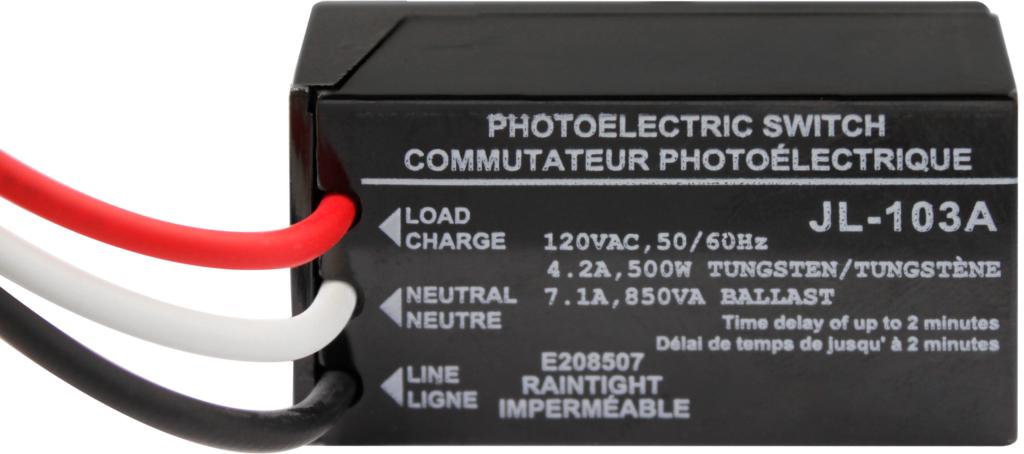
The JL-103 is widely used for outdoor lighting in passageways and small fixtures. A number of reasons could be stated for its widespread use.
At first comes its broad voltage range. This is from 120 VAC to 480 VAC in different variants. The product also supports multiple power systems. This makes it flexible for projects worldwide.
Next is its integrated 20–120 second time delay. This prevents false switching caused by passing cars or lightning. The sensor is also certified with UL773A.
With this, compliance for non-industrial lighting control is ensured. Other specifications include:
- An operating range of −40 °C to +70 °C
- Low power consumption of around 1.5 W
- High IP ratings to avoid moisture ingress
These combined features make the JL-103 a cost-effective, high-reliability bestseller across lighting projects.
How Does JL-205 Provide Reliable Fail-On Protection for Standard Street Lighting?
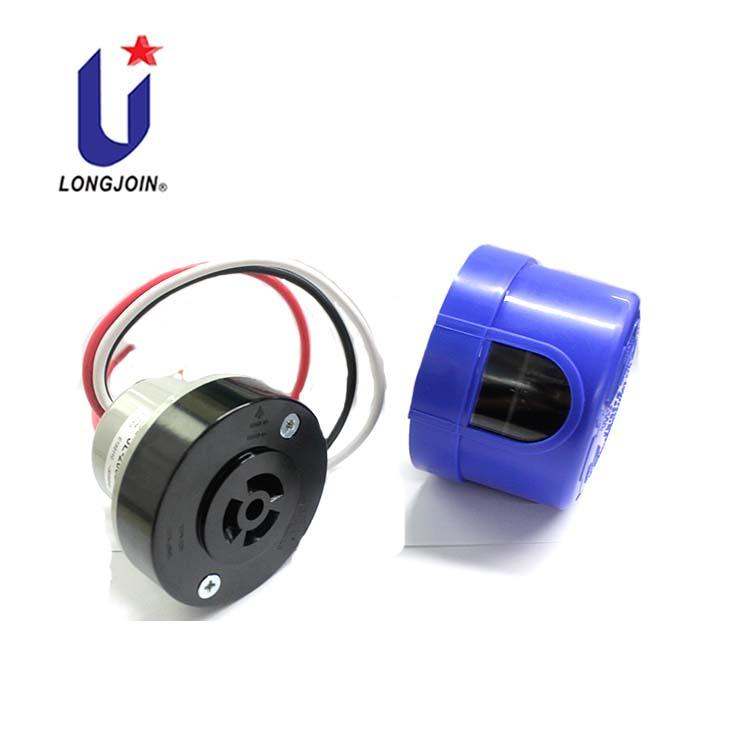
The JL-205 uses a fail-safe design, keeping lights illuminated in case of sensor failure — a critical safety measure for roads and public areas.
It follows ANSI C136.10 and UL773 standards for twist-lock photocontrols used in area lighting, ensuring compatibility with common street-lighting interfaces.
With a wide voltage range of 105–305 VAC and a built-in surge arrester (MOV), it handles grid spikes and variable power conditions. The 3–20 second delay minimizes nuisance switching.
The product is rated for 1000 W tungsten or 1800 VA ballast. So it supports robust LED fixtures.
EPC contractors favor the JL-205 for medium-scale projects due to its combination of electrical reliability and compliance with major lighting standards.
Why Is JL-206 the Ideal Smart-Ready Light Sensor for Future Upgrades?


The JL-206 uses a microprocessor controller with IR-filtered sensing to read real light levels accurately. It supports reverse lux logic — turning on at 24 lux and off at 16 lux — which reduces flicker and improves stability around dawn/dusk.
Zero-cross technology inside minimizes electrical stress during switching. This increases relay lifespan and reduces failures. The light sensor switch supports both fail-on and fail-off modes, giving project teams control over behavior if the sensor fails.
Built-in surge protection and UV-stable housing withstand urban electrocution spikes and weather extremes. With flexible logic and rugged design, JL-206 bridges traditional photocells and smart lighting upgrades.
How Does JL-207 Meet the Demands of Heavy-Duty Urban LED Street Lighting?
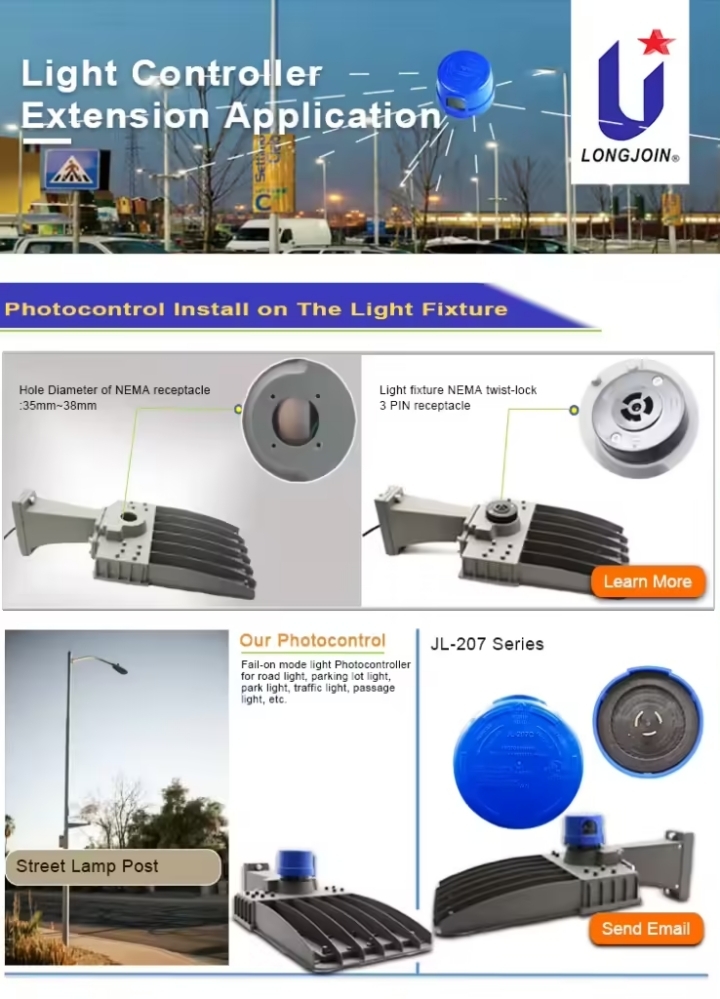
The JL-207 series is built to handle high loads and frequent switching. Its relay supports heavy current and long life, often exceeding 10,000 cycles with optional armor reinforcement.
It meets ANSI C136.10 and UL773 standards for twist-lock street lighting photocontrols. Zero-cross technology and integrated surge arresters protect against electrical spikes and extend service life.
The photoelectric sensor operates reliably from −40 °C to +70 °C. This diverse temperature range maintains stability in extreme climates. Optional adaptive control and midnight dimming help cities reduce power in low-activity hours without affecting safety.
JL-207 is engineered for heavy-duty use and minimal field faults.
Why Is JL-245C the Flagship Smart Dimming Photocell for Smart Cities?

The JL-245C is designed for modern and connected street lighting. It supports 0–10 V dimming. This makes it compatible with advanced LED drivers that use analog dim control. Smooth dimming and better energy use are the results.
Its ZigBee communication module enables remote control and networked lighting systems, ideal for dense urban grids. The product has integrated surge protection and IP67 readiness. Thus, it is built to withstand weather and electrical stress.
Smart dimming strategies like adaptive dimming and midnight dimming help cut energy use without sacrificing safety. The JL-245C fits smart city projects where remote management, IoT readiness, and energy savings are crucial.
Why Do Global Lighting Manufacturers Trust Long-Join Photocells?
Long-Join has 20+ years of manufacturing experience in lighting controls and photocell technology. This gives the company deep technical credibility. Its products carry international certifications assuring compliance in major markets. The certifications include:
- UL
- CE
- RoHS
- FCC
- IEC standards
This broad certification base makes integration into global lighting systems easier for OEMs. The company has built a strong market presence in North America, where smart lighting adoption and energy standards are high.
Long-Join also offers OEM/ODM customization, including firmware, housing, and communication protocols tailored to partners’ needs.
Finally, strategic collaborations with lighting brands and smart city integrators help Long-Join stay relevant and trusted worldwide. Here is a table outlining various Longjoin photocontrol receptacles along with their certifications.
| Photocell Model | JL‑103 | JL‑205 | JL‑206 | JL‑207 | JL‑245C |
| UL Certification | UL773A | UL773 | UL773 | UL773 | UL773 |
| ANSI / C136.10 | Yes | Yes | Yes | Yes | Yes |
| CE | Yes | Yes | Yes | Yes | Yes |
| RoHS | Yes | Yes | Yes | Yes | Yes |
| ISO9001 | Yes | Yes | Yes | Yes | Yes |
| FCC | No | No | No | No | Yes |
How Can You Choose the Right Long-Join Light Photocell Sensor for Your 2025 Lighting Projects?

Start by matching your project requirements with Long-Join’s photocell lineup. For basic dusk-to-dawn control, choose JL-103. For wired street lighting with fail-on safety, select JL-205.
If you need smart readiness with flexible operation modes, go for JL-206. If your main need is heavy urban lighting with optional dimming, JL-207 fits best. For full smart city integration with networked control and multiple protocols, JL-245C leads. Consider cost vs performance carefully.
Entry-level models are affordable, but smart units save more energy long-term. Early planning lets you integrate IoT, dimming, and control standards without rework. This reduces future upgrades and increases reliability over the lighting system’s lifespan.
The following table further outlines which photocell will be best depending on your project type.
| Application Type | Recommended Model | Why |
| Residential streets | JL-103 | Basic automation, low cost |
| Municipal roads | JL-205 | Fail-ON safety for public lighting |
| Smart-ready districts | JL-206 | Upgrade path to IoT |
| Heavy traffic highways | JL-207 | High current & long relay life |
| Smart city networks | JL-245C | Dimming + IoT communication |
What Makes Long-Join the Right Partner for Future-Ready Street Lighting Solutions?
Long-Join supports sustainable, standardized outdoor lighting with products designed to meet UL, CE, ROHS, and ISO9001 requirements. Its photocells control lights based on real light levels and adapt to energy-saving strategies.
The company offers technical consultation, product samples, and project support to help distributors and contractors integrate solutions smoothly.
Long-Join’s experience in the field has shaped smart city lighting infrastructure by combining traditional photocontrol with smart IoT readiness and remote communication protocols like ZigBee, LoRa, and NB-IoT.
With decades in the industry, global certifications, and strong export markets, Long-Join is positioned as a reliable partner for 2025 street lighting rollouts.
The Bottom Line
The future of street lighting depends on smart automation and scalable energy savings. Choosing the right photocell today ensures long-term performance and fewer maintenance costs. For procurement, Chi-Swear makes sourcing simple with verified Long-Join models. If you need guidance or samples, Chi-Swear can support your next project naturally and professionally.
External Links
- http://www.julixing.com.cn/en/new/new-58-907.html
- https://www.ansi.org/
- https://single-market-economy.ec.europa.eu/single-market/goods/ce-marking_en
- https://en.wikipedia.org/wiki/RoHS
- https://www.iso.org/standard/62085.html
- https://www.fcc.gov/
- https://en.wikipedia.org/wiki/Lux
- https://en.wikipedia.org/wiki/0-10_V_lighting_control
- https://en.wikipedia.org/wiki/Zigbee
- https://www.ul.com/solutions
- https://iec.ch/homepage


 English
  Spanish
  Russian
  Arabic
  Italian
  Japanese
  Portuguese