
Outline
- Introduction
- Why Are Streetlights Becoming Critical Infrastructure in Smart Cities?
- What Is the UM9900 Smart Lighting Management System?
- How Does UM9900 Ensure Compatibility with Global Smart Lighting Standards?
- Why Do Cities Choose UM9900 for Energy Savings and Operational Efficiency?
- How Does Single-Lamp Smart Control Improve Road Safety and Lamp Performance?
- How Does UM9900 Turn Lighting Data into Actionable Urban Intelligence?
- How Does Automatic Fault Detection Reduce Risks and Downtime?
- How Flexible Is UM9900’s Remote Lighting Control Strategy?
- How Does Intelligent O&M Transform Streetlight Maintenance Operations?
- Where Can UM9900 Deliver the Most Value in Real-World Applications?
- How Does UM9900 Support the Future of Smart City Development?
- Why Is UM9900 a Foundation for Safer and More Efficient Cities?
- Final Words
Gone are the days when streetlights served only as passive fixtures on city roads. They now influence energy use and urban intelligence. Municipalities are under an obligation to cut costs while improving public services.
Lighting networks are central to this challenge. The UM9900 Smart Lighting Management System responds to this shift.
It transforms street lighting into a connected data asset. The result is safer streets and measurable efficiency gains.
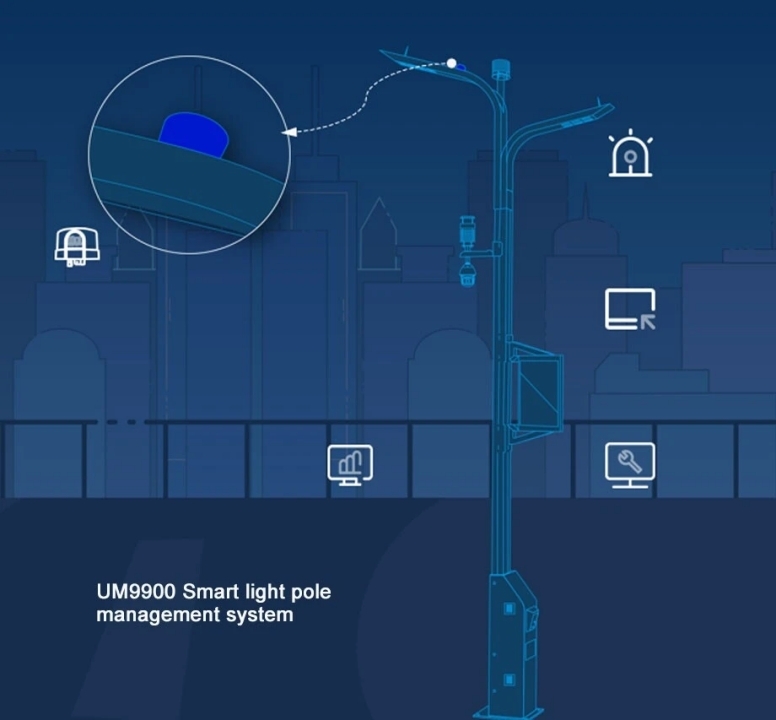
Why Are Streetlights Becoming Critical Infrastructure in Smart Cities?
Because it’s no longer just about lighting roads at night, smart streetlights slash energy use by up to 60%. This is achieved through adaptive LEDs and dynamic controls.
They collect real-time data on various parameters like traffic and air quality. This data helps planners optimize transport and environmental decisions.
Smart lighting also enhances public safety. Brightness can adapt to pedestrian activity. Faults are detected instantly. This enables faster repairs and fewer dark spots.
Cities use streetlight networks as multi-purpose infrastructure. Poles can host IoT sensors, Wi-Fi, and connectivity for broader smart services. This makes lighting networks ideal platforms for efficient, data-driven urban management.
What Is the UM9900 Smart Lighting Management System?
The UM9900 is a lamp-pole level management platform for smart street lighting. It links single-lamp controllers, photosensors, and a cloud dashboard. The system collects operation logs, energy data, and fault alerts. It enables remote control, scheduled scenes, and automated work orders.
Long-Join built UM9900 to speed up city digitalization. The goal is:
- Practical interoperability
- Plug-and-play controllers, and
- Acentral management layer
This reduces on-site visits and shortens repair cycles. Key functions include:
- Single-lamp monitoring and dimming.
- Fault detection and automated O&M workflows.
- Energy and ESG reporting for municipalities.
Further, here is a table comparing traditional vs UM9900 smart lighting.
| Aspect | Traditional Street Lighting | UM9900 Smart Lighting |
| Control Method | Fixed on/off timers | Dynamic, rule-based control |
| Fault Discovery | Manual inspection | Automatic real-time alerts |
| Energy Optimization | None | Adaptive dimming & scheduling |
| Data Availability | No operational data | Per-lamp performance data |
| Upgrade Flexibility | Hardware replacement | Software-driven optimization |
How Does UM9900 Ensure Compatibility with Global Smart Lighting Standards?
UM9900 supports both NEMA (ANSI C136.41) and Zhaga Book-18 interfaces. This dual-standard approach lets projects reuse existing fixtures or adopt modern Zhaga lighting sensor modules.
Practical integrations:
- NEMA twist-lock photocontrols for North American retrofits.
- Zhaga Book-18 sockets for D4i/DALI-ready luminaires and photocell switch modules.
Why this matters
Dual compatibility lowers procurement risk, and it speeds global deployments. Cities can choose the standard that matches local supply chains while keeping a single management back-end.

Why Do Cities Choose UM9900 for Energy Savings and Operational Efficiency?
Cities pick smart lighting because it cuts energy use dramatically. Intelligent systems with adaptive dimming and real-time control can significantly reduce energy consumption. The savings could be around 20–40% or more compared to unmanaged lighting.
This translates to meeting urban sustainability targets. Operational and maintenance costs get lowered. Further, the routine inspections and emergency repairsare curtailed.
Lower energy and upkeep spending free up municipal budgets for other services. This combination of cost savings and sustainability gains makes platforms like UM9900 attractive for modern cities.
How Does Single-Lamp Smart Control Improve Road Safety and Lamp Performance?
UM9900’s single-lamp control ensures light stays consistent even as LEDs age or weather changes. Constant Light Output strategies prevent glare or dark spots while controlling power precisely.
Smart dimming “listens” to traffic patterns and drops brightness during low-use hours like late night to save energy without cutting safety.
Optical decay compensation means the system adjusts output over time so the perceived brightness stays stable throughout the lamp’s life.
This enhances visibility and safety while also extending lamp performance and reducing waste.
How Does UM9900 Turn Lighting Data into Actionable Urban Intelligence?
UM9900 collects real-time telemetry from each lamp. It logs power, on/off events, fault codes, and sensor readings. This data feeds immediate dashboards and automated reports.
Municipal teams get clear energy dashboards and efficiency rankings. These reports support ESG and carbon-reduction compliance by proving actual savings and run-time reductions. UM9900 can also trigger rules — for example, boost lighting in high-risk zones or flag underperforming fixtures for inspection.
Key outputs include:
- Hourly and monthly energy use reports;
- Ranked lists of the least-efficient luminaires;
- Automated ESG/carbon exportable reports.
How Does Automatic Fault Detection Reduce Risks and Downtime?
UM9900 monitors photocell light switches and luminaire currents continuously. It detects open/short circuits, abnormal leakage, and sudden current drops. Leakage alerts improve electrical safety and cut accident risk.
Sudden current loss or open-circuit patterns trigger cable-theft alarms and immediate dispatch notices. The system creates fault tickets automatically and routes work orders to crews.
This shortens repair cycles and reduces dark-spot time. In short: faster detection, faster response, and fewer safety incidents on the street.
How Flexible Is UM9900’s Remote Lighting Control Strategy?
UM9900 offers multiple remote control modes so cities can adapt lighting precisely. Operators can control:
- Single lights when only one fixture needs adjustment,
- Groups for neighborhoods or road segments,
- Timed control with schedules,
- Strategic policies linked to events or rules.
Smart systems also adjust brightness based on traffic patterns and weather conditions.
This flexibility supports customized strategies for different zones. Ultimately, this enhances both safety and energy savings without manual intervention. Furthermore, here is a table for control scenarios enabled by UM9900.
| Scenario | Control Logic | Practical Outcome |
| Late-night residential streets | Scheduled dimming | Reduced energy use, low glare |
| Event-based lighting | Temporary brightness boost | Improved crowd safety |
| Weather-responsive roads | Visibility-based adjustment | Better driver reaction time |
| Emergency response routes | Priority lighting override | Faster emergency movement |
How Does Intelligent O&M Transform Streetlight Maintenance Operations?
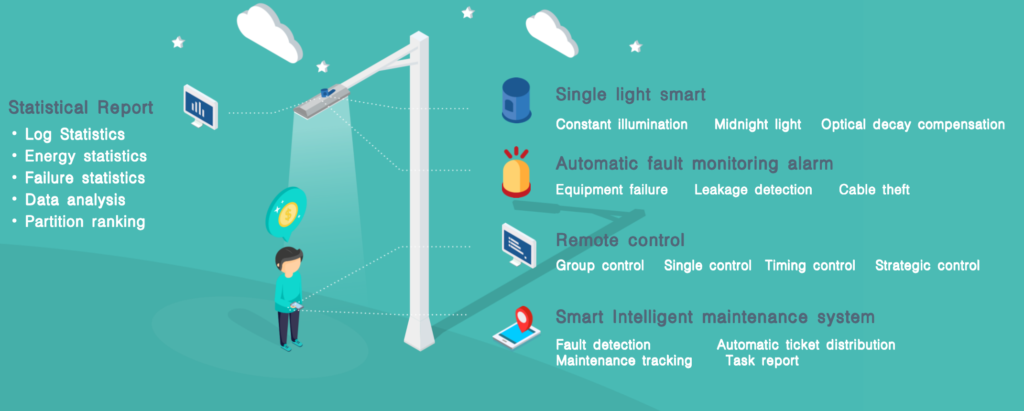
UM9900 changes streetlight maintenance by automating fault handling from detection to resolution. In case of a fault, the system automatically generates a ticket and assigns it to the appropriate team without delay.
Progress tracking and performance reporting are all handled within the platform. Administrators can monitor which jobs are done and how long tasks take.
This reduces reliance on manual inspections and reactive repairs. With data-driven workflows and remote diagnostics, cities can:
- Respond faster
- Cut manpower needs, and
- improve uptime across the lighting network
Where Can UM9900 Deliver the Most Value in Real-World Applications?
Municipal road networks gain the most immediate benefit. Single-lamp control and remote dimming cut energy and remove dark spots quickly. UM9900 links pole-level controllers to dashboards for rapid fault response and reporting.
Institutional campuses and industrial parks benefit from zone-based strategies that balance safety and operating hours.
The same platform handles commercial zones where variable schedules and scene-based control are needed.
Because UM9900 supports common controller modules and protocols, it plugs into existing street-furniture upgrades and large retrofit programs across regions. The table below outlines the regional deployment advantages of UM9900.
| Region | Key Requirement | UM9900 Advantage |
| North America | NEMA-based retrofits | ANSI C136.41 support |
| Europe | Zhaga + D4i luminaires | Book-18 compatibility |
| Middle East | Harsh climate & scale | Remote O&M efficiency |
| Global Smart Cities | Multi-vendor ecosystems | Open integration architecture |
Key deployment types:
- Municipal streets and highways.
- Campuses, industrial parks, and business districts.
- Integrated smart-city projects where poles host sensors and comms.
How Does UM9900 Support the Future of Smart City Development?
UM9900 is designed as a connectivity and data layer. It accepts telemetry from controllers and sensors for predictive maintenance.
The platform works with LoRa, NB-IoT, LTE/5G, and similar networks. This enables broad connectivity choices for cities.
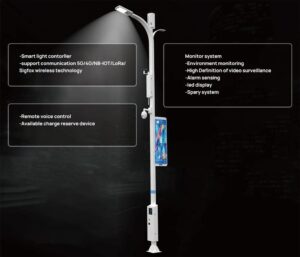
This lets operators run AI models on usage and fault data to predict failures and optimize dimming by traffic patterns. Street poles become multi-use nodes — hosting air quality sensors, cameras, and V2X interfaces — with UM9900 as the management spine.
Why Is UM9900 a Foundation for Safer and More Efficient Cities?
Yes! The system combines per-lamp control and automated O&M to deliver measurable outcomes:
- Fewer dark spots
- Lower energy bills
- Faster repairs
The system’s data exports support ESG and carbon reporting. This gives cities evidence for sustainability claims.
Dual-standard support and modular connectivity lower deployment risk across the globe. This helps municipalities adopt smart lighting without replacing entire fleets.
In short, the UM9900 turns lighting networks into resilient, data-driven infrastructure that improves safety, governance, and cost efficiency.
Final Words
UM9900 shows how street lighting can evolve into a smart and data-driven urban asset. It improves safety and gives cities better control with measurable results. For projects using Long-Join photocontrollers, working with a reliable supplier matters just as much as the technology. Chi-Swear offers proven experience, stable supply, and product expertise that support smooth deployment.
External Links
- https://blogs.worldbank.org/en/energy/led-street-lighting-unburdening-our-cities
- https://www.nema.org/
- https://www.ansi.org/
- https://www.zhagastandard.org/books/overview/smart-interface-between-outdoor-luminaires-and-sensing-communication-modules-18.html
- http://DALI
- https://www.mdpi.com/2076-3417/9/16/3281
- https://en.wikipedia.org/wiki/LoRa
- https://en.wikipedia.org/wiki/Narrowband_IoT


 English
  Spanish
  Russian
  Arabic
  Italian
  Japanese
  Portuguese