
Outline
- Introduction
- Why Do Photocell Switches Matter for Outdoor Street Lighting in 2025?
- How Does A Photoelectric Sensor Work in Outdoor Lighting Systems?
- What Are the Main Types of Light Sensor Switches Used in Outdoor Street Lighting?
- Why Are International Certifications Critical When Choosing a Photo Switch Sensor?
- What Are The Most Common Uses Of Light Sensor Controls in 2025?
- Why Should Buyers Choose Long-Join Photocells for Outdoor Lighting Projects?
- How To Choose the Right Street Light Controller for Your Project in 2025?
- Why Are Lighting Control Critical For Smart Lighting?
- Final Words

Even in 2025, some streetlights waste energy owing to their conventional operation patterns. They either turn on too early or stay on too long.
However, one critical component that has revolutionized the lighting industry is the light sensor. They allow outdoor lights to respond to natural daylight automatically. They reduce energy waste, extend LED lifespan, and support smart-city goals.
In today’s lighting systems, photocells are no longer optional. They are essential for compliance, efficiency, and future-ready infrastructure.
Why Do Photocell Switches Matter for Outdoor Street Lighting in 2025?
Photosensors are central to outdoor street lighting that meets today’s energy efficiency goals. Modern cities must cut energy waste and lower electricity bills.
Photocells automate dusk-to-dawn switching so lights only run when needed, reducing power use by up to 40–60% in smart systems.
Dusk-to-dawn automation is no longer optional. Fixed schedules can leave lights on too long or turn them on too early. Photocells respond to real ambient light continuously, saving energy and preventing unnecessary operation.
Photocell lighting sensors also support carbon neutrality and smart-city infrastructure. Smart photocell networks feed data into central systems for optimized control and reduced light pollution.
In 2025, LEDs and IoT matter more than ever. Photocells ensure compatibility with LED drivers. They integrate with IoT platforms for remote monitoring and future-ready smart lighting management.
How Does A Photoelectric Sensor Work in Outdoor Lighting Systems?
A photocontrol receptacle is a sensor. It automates outdoor lighting based on ambient daylight. Photocells use ambient light sensing to decide when lights should be active.
Two key sensing technologies are common:
● Older CdS light-dependent resistors
They change resistance with light
● Phototransistors or silicon sensors
They offer faster and more accurate detection.
Outdoor photocell light sensors include features like time delay and temperature compensation. The first prevents false triggering, while the latter keeps switching thresholds stable across weather extremes.
Photocells send their switching signal either directly to the light fixture or to a contactor that handles larger loads.
What Are the Main Types of Light Sensor Switches Used in Outdoor Street Lighting?
Wire-In Photocells

They are wired directly into the light fixture wiring. They deliver basic control by sensing ambient light and switching the circuit on/off automatically.
These are comparatively cheaper and simple to install. This makes them ideal for small outdoor areas. Because they don’t use a socket interface, they work well when a luminaire lacks a receptacle base.
However, they are less modular and harder to replace or upgrade than socketed types.
NEMA Twist-Lock Photocells

These lighting controls use the ANSI socket standard to plug securely into street lighting fixtures. This standardization lets municipalities and contractors swap photocells easily without rewiring.
They dominate roadway and street lighting because of their reliability and ease of maintenance. Many models include:
- Fail-on/fail-off logic
- Integrated surge protection
- Optional dimming contacts
Zhaga Book 18 Photocells

The Book 18 defines a compact, modular interface between sensors and LED luminaires. These lighting controls fit into a standardized socket and often comply with Zhaga-D4i for smart control protocols.
Their small footprint and easy handling design make them attractive for modern LED street lighting. They also support digital dimming and advanced monitoring through DALI/D4i.
Smart Photocells

These photosensor switches go beyond basic on/off control. They communicate remotely using IoT protocols as discussed in the table below.
These units enable midnight dimming profiles and LED decay compensation. This helps trim energy use and extend LED life.
In smart networks, they feed lighting data to central systems for predictive maintenance and optimization. Smart photocells are becoming standard in connected city infrastructure.
Why Are International Certifications Critical When Choosing a Photo Switch Sensor?
Certifications decide whether a photocell can be legally installed or rejected at inspection.
In North America, UL773 and UL773A are mandatory. Utilities and municipalities require them. Without UL, products cannot enter most U.S. or Canadian projects. UL testing verifies electrical safety and extended outdoor reliability.
ANSI standards ensure interchangeability. A certified photocell fits any compliant socket without rewiring. This reduces maintenance time and avoids field errors. ANSI also defines mechanical locking, pin layout, and electrical interfaces.
For smart cities, Zhaga Book 18 with D4i is critical. It guarantees digital communication between sensors, drivers, and control nodes. This enables multi-vendor interoperability and future upgrades.
CE, RoHS, and ISO certifications support global trade. They confirm EMC safety, material compliance, and controlled manufacturing quality for international projects. Here is a table outlining the regional certification requirements for photocells in 2025.
| Region | Mandatory Certification | Key Focus Area | Reason for Requirement |
| USA & Canada | UL / cUL | Fire & safety compliance | Ensures safe operation under utility standards |
| Europe | CE, RoHS | Environmental and EMC regulation | Legal requirements for import and sales |
| Middle East | SASO / G Mark | Safety & performance | Customs clearance for infrastructure projects |
| Australia | RCM | Electrical compliance & EMC | Product traceability and enforcement |
| Latin America | INMETRO / RETIE | Safety & installation rules | Public grid connection authorization |
What Are The Most Common Uses Of Light Sensor Controls in 2025?
Lighting controls remain standard in street and roadway lighting. They ensure automated operations without manual scheduling. Utilities use them to reduce power waste and simplify maintenance.
In smart-city lighting networks, photocells act as data nodes. They enable dimming schedules, fault alerts, and energy reporting through central platforms. This improves visibility and lowers operating costs.
Industrial and commercial sites rely on photocells for parking lots and airports. Automatic control reduces labor dependency and improves safety after dark.
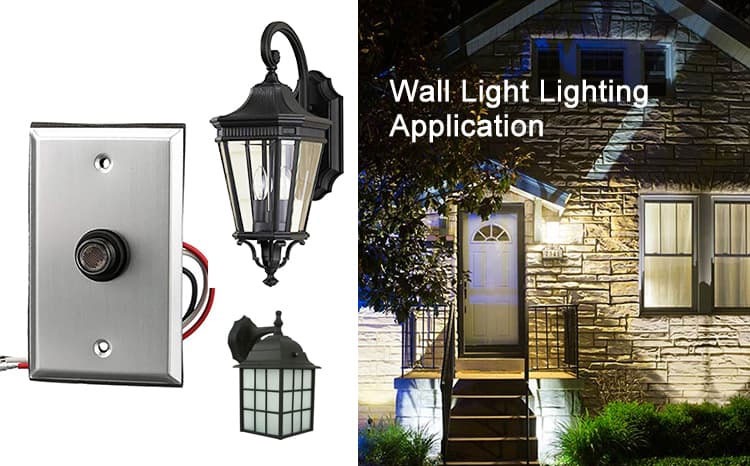
Residential and security lighting uses compact photocells for reliable night activation. Modern designs prevent false triggering from vehicle headlights.
Field data from U.S. municipal retrofits shows smart photocells delivering 15–30% energy savings and extending LED fixture life by reducing thermal stress. The table below outlines switching requirements by application.
| Application | Recommended OFF Level (Lux) | Recommended ON Level (Lux) |
| Roadways & Highways | 15–20 lx | 3–5 lx |
| Urban Smart Lighting | 25–30 lx | 7–10 lx |
| Industrial Facilities | 20–25 lx | 5–8 lx |
| Residential Streets | 15 lx | 3 lx |
| Coastal Locations | 10–15 lx | 2–3 lx |
Why Should Buyers Choose Long-Join Photocells for Outdoor Lighting Projects?
Manufacturing Strengths Set Long-Join Apart
Long-Join has over 20 years of focused experience designing and making outdoor photocontrol solutions, positioning it as a seasoned leader in lighting control technology. Its manufacturing base spans large certified facilities that are aligned with ISO.
Furthermore, the company has dozens of patents. This reflects their ongoing innovation in photocell technologies.
Long-Join products are used worldwide and trusted by global partners, proving broad market presence and reliability.
Long-Join Outdoor Light Sensor Switches Offer Product Advantages
Long-Join’s portfolio covers basic wire-in, NEMA twist-lock, Zhaga Book 18, and smart IoT photocells, ensuring a solution for every outdoor lighting need.
OEM/ODM customization is supported, including firmware, housing, packaging, and communication features for brand-specific requirements.
Their smart-ready designs support remote control, dimming logic, and multiple protocols. Long-Join units are built for harsh environments with high waterproof ratings and surge protection, which boosts long-term field performance.
How To Choose the Right Street Light Controller for Your Project in 2025?
Start by defining your application clearly. Match street light sensor specs with fixture type, voltage range, load, and environmental extremes. Check whether the fixture uses a socket interface (NEMA or Zhaga) or hard-wired connections, so you avoid mechanical mismatches
Choose the correct standard early. NEMA/ANSI C136.10/C136.41 suits North American street lighting. Zhaga Book 18 with D4i fits smart, digital LED systems and global smart-city platforms.
Certification matters. Ensure UL, ANSI, Zhaga-D4i, and equivalent marks are present. This prevents tender disqualification, ensures safety, and supports interoperability.
Future-proof by planning for smart-city upgrades like remote dimming, data reporting, and IoT connectivity. Opt for photocells that support these features today.
For example:
- In the U.S., pick a NEMA twist-lock with ANSI and UL compliance.
- For European or smart poles, pick Zhaga-D4i plug-and-play models.
Here is a table for a quick model selection guide by project type.
| Project Type | Recommended Interface | Best Photocell Feature | Suggested Model Type |
| New smart-city project | Zhaga-D4i | IoT + dimming control ready | Zhaga smart photocell |
| Highway retrofitting | NEMA 7-Pin | Surge protection + lens control | JL-245C class |
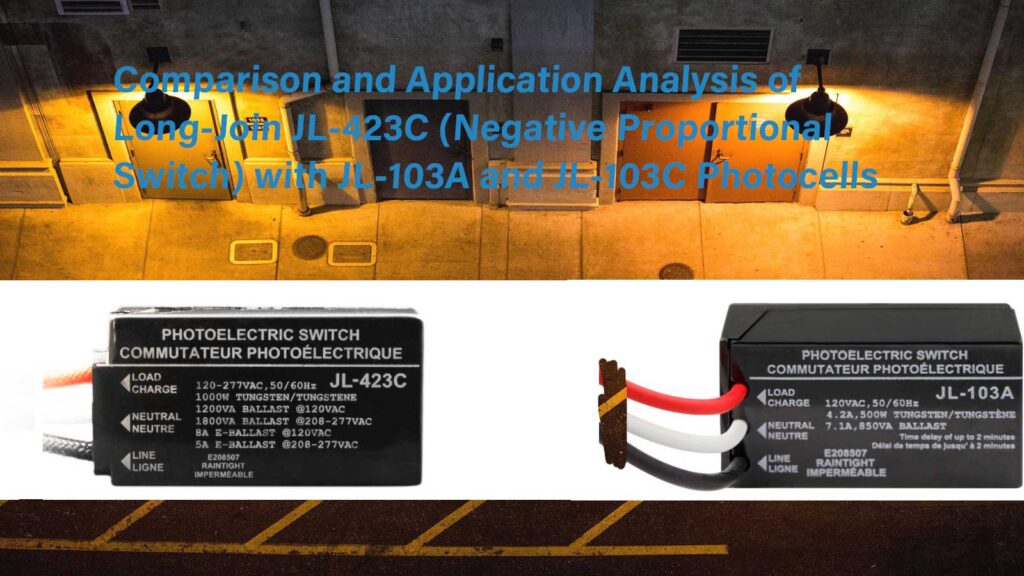
| Residential upgrades | NEMA 3-Pin | Cost-efficient + stable switching | JL-103 class |
| Industrial area | NEMA 5/7-Pin | High current handling + timing | JL-205/206 class |
| Coastal or humid zone | Any | IP66/67 + anti-UV housing | Dome-sealed model |
Why Are Lighting Control Critical For Smart Lighting?
Light sensors have evolved far beyond simple mechanical switches. Today, they act as intelligent control nodes that detect light and tie directly into lighting systems.
Modern smart photocells automatically adjust lighting based on real ambient conditions rather than fixed timers. This helps cut energy waste dramatically. This control also supports intelligent energy management and aligns outdoor lighting with broader sustainability goals.
Extended reliability and interoperability are now critical. Photocells must survive harsh conditions and work seamlessly with LED drivers.
Long-Join supports global lighting projects with certified and smart solutions. Their photocells integrate with IoT protocols and fit standards like NEMA and Zhaga-D4i for broad compatibility. This makes photocells a foundation of connected, sustainable lighting infrastructures in 2025.
Final Words
Photocells are no longer simple dusk-to-dawn switches. They are now the core of energy-efficient and globally compliant outdoor lighting systems. For consistent quality, Long-Join photocells from Chi-Swear stand out. If you need a stable supply and technical guidance, Chi-Swear is a dependable partner for long-term lighting success.
External Links
- https://www.nema.org/
- https://www.zhagastandard.org/books/overview/smart-interface-between-outdoor-luminaires-and-sensing-communication-modules-18.html
- http://www.julixing.com.cn/en/new/new-58-907.html
- https://www.ansi.org/
- https://www.dali-alliance.org/d4i/
- https://europa.eu/youreurope/business/product-requirements/labels-markings/ce-marking/index_en.htm
- https://en.wikipedia.org/wiki/RoHS
- https://www.iso.org/certification.html
- https://en.wikipedia.org/wiki/National_Institute_of_Metrology,_Standardization_and_Industrial_Quality
- https://www.ul.com/solutions


 English
  Spanish
  Russian
  Arabic
  Italian
  Japanese
  Portuguese