
Outline
- Introduction
- What Is the Lights-Out Campaign?
- Why Is Light Pollution a Growing Concern?
- How Does Photocontrol Technology Provide Smart Solutions for Lights-Out Compliance?
- How Are Cities Globally Using Lighting Controls to Reduce Light Pollution?
- Why Are Long-Join Photocells a Preferred Choice for Sustainable Lighting Projects?
- What Future Trends Will Shape the Next Generation of Street Light Controller Technology?
- Final Words
Light pollution is rising fast across major cities, impacting entire ecosystems. The “Lights-Out Campaign” urges buildings and communities to turn off unnecessary lighting at night.
But how can cities follow this without compromising safety? Lighting controls offer a simple answer. These smart sensors ensure lights operate only when needed, reducing waste while supporting environmental goals.
This article explores how photocells strengthen the Lights-Out movement and help create cleaner, healthier night skies.

Photo courtesy: Texas Border Business
What Is the Lights-Out Campaign?
This is a drive led by the National Audubon Society. It aims to protect migrating birds from night collisions. Many regional chapters now also support it.
The idea is direct. During peak migration, cities and buildings switch off unnecessary lighting between 11 PM and 6 AM. Further, here is a table showing Lights-Out recommended hours across major cities.
| City / Region | Recommended Lights-Out Hours | Organization / Authority |
| New York City | 11:00 PM – 6:00 AM | NYC Audubon |
| Toronto | Midnight – 6:00 AM | FLAP Canada |
| Chicago | 10:00 PM – Dawn | Chicago Bird Collision Monitors |
| San Francisco | 11:00 PM – 5:00 AM | Bay Area Light-Pollution Taskforce |
| London | 1:00 AM – 5:00 AM | Local Councils |
Core Purposes
The campaign works to stop birds from being distracted by bright lights. This will reduce bird deaths caused by strikes with illuminated buildings.
Another prospect is to reduce energy waste, ultimately lowering carbon emissions by eliminating any unnecessary lights.
How it works
City governments are encouraged to join the program during migration seasons. Local agencies are urged to follow as well. Building owners and managers are asked to keep their lighting use to a minimum.
Lighting planners must rethink their approach. One possible way out could be downward-facing or shielded fixtures. Automated controls may also serve the purpose effectively.
Migratory birds travel mostly at night. They depend on natural darkness to stay oriented. This makes the campaign more than a conservation effort. It signals a global move toward sustainable lighting. It supports stronger energy efficiency. It reinforces ecological responsibility for cities seeking to lower their environmental footprint.
Why Is Light Pollution a Growing Concern?
Night lighting patterns are changing. The use of artificial lighting is increasing. Satellite data shows a 2.2% annual rise globally. This creates severe ecological stress:
- Migrating birds get disoriented by city lights at night. They eventually exhaust and crash into buildings.
- Insects, vital for pollination and the food web, swarm toward lights. They exhaust themselves and often die. Artificial lighting also disrupts their mating.
- On the energy side, outdoor lighting is a major power draw. In many places, this accounts for 15–19% of global electricity used for lighting.
How Does Photocontrol Technology Provide Smart Solutions for Lights-Out Compliance?
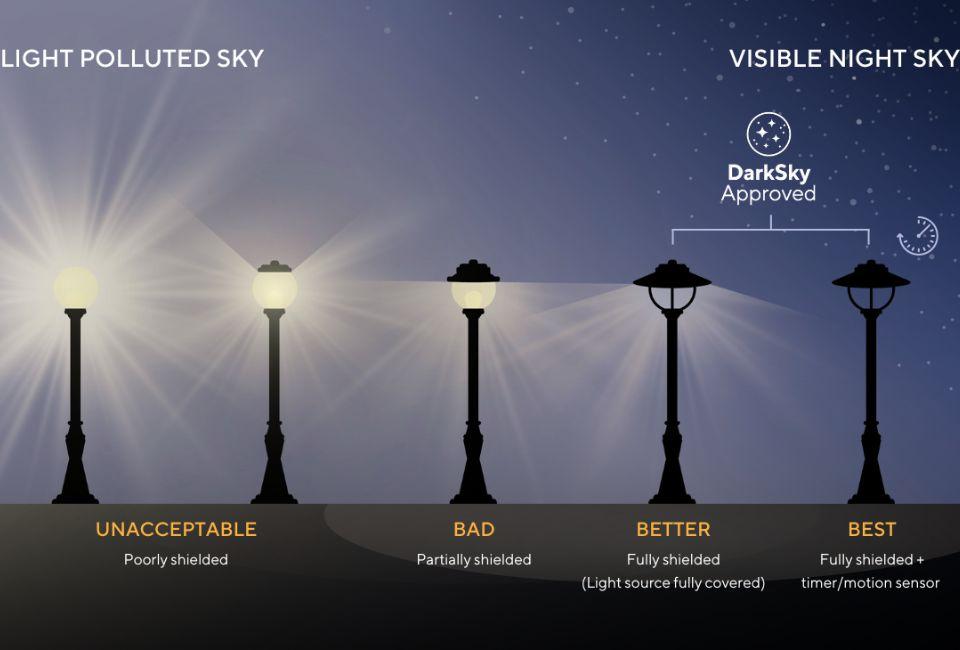
Enable Automatic Switching
Light sensor switches measure ambient light through a sensor. When natural light falls below a threshold at dusk, photocells trigger lights to turn ON. At dawn, rising light causes them to switch lights OFF automatically. This ensures lights run only through dark hours.
Photocell Switches Integrate With Citywide Lighting Schedules
Modern dusk-to-dawn photocell systems often support smart-city communication protocols like. A list of these protocols is given in the table below. This allows centralized control and scheduling by facility managers.
Cities can align lighting behavior with “lights-out” policies. Remote monitoring and scene scheduling become possible. This reduces reliance on manual switches or outdated timers.
| Protocol | Range | Power Use | Best Use Case | Strength |
| ZigBee | Short–medium | Low | Street clusters in smart cities | Stable mesh networking |
| LoRa | Long | Ultra-low | Large cities, highways | Long-distance coverage |
| NB-IoT | Very long | Low–medium | National-scale utility systems | Deep penetration in dense areas |
| WiFi | Short | High | Local building/facility lighting | High bandwidth |
Photoelectric Sensors Reduce Energy Waste and Support Sustainability Goals
Photocell-based control significantly lowers energy use. Some urban systems with smart controls report 30–50% lower electricity consumption compared to always-on lighting.
That translates to major cost savings for municipalities. Less runtime also prolongs the service life of fixtures and cuts maintenance needs.
Photocontrol Receptacles Help Control Light Pollution Through Adaptive Dimming
Advanced photocell systems integrate with dimming protocols like 0–10 V or DALI. Lights can run at full brightness during active hours. As traffic wanes or after midnight, systems can automatically dim lighting levels.
How Are Cities Globally Using Lighting Controls to Reduce Light Pollution?
New York City
During migratory-bird seasons, some NYC buildings adopt “lights-out” protocols. Lights are switched off or dimmed overnight using timers and light sensors. This helps prevent birds from being drawn into illuminated areas.
European Smart Cities
In many European cities, lighting systems use modular light photocell sensors. These systems detect ambient light and dynamically dim streetlights during low-traffic hours. The result is fewer sky-glow effects and lower energy use.
Middle-Eastern Municipalities
Municipal tenders in some Middle-Eastern cities now require certified photo switch sensors. These ensure reliable dusk-to-dawn operation or dimming at late hours to reduce both energy waste and unnecessary nighttime illumination.
Why Are Long-Join Photocells a Preferred Choice for Sustainable Lighting Projects?
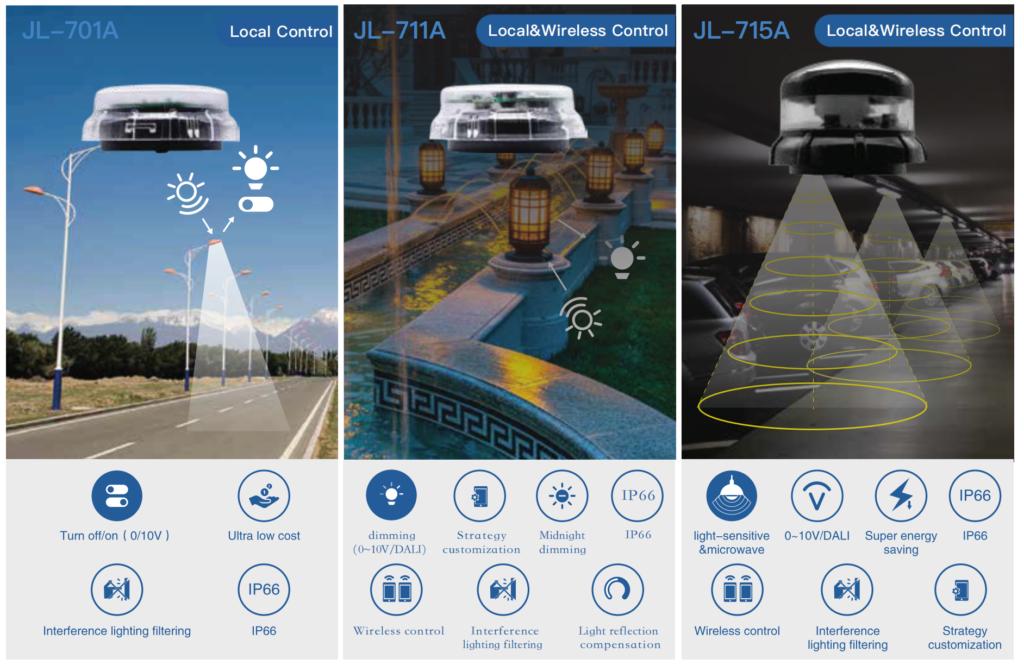
Here’s why Long-Join photocells stand out for eco- and city-lighting projects:
- Long-Join has more than 20 years of experience in manufacturing photocontrol equipment. Their long track record brings reliability and industry knowledge to each product.
- Their photocells hold global certifications. This ensures compliance with international quality and safety standards.
- Long-Join supports flexible smart connectivity. Many of their units are compatible with multiple communication protocols. That makes them easy to integrate into city lighting networks.
- Their designs include eco-centric engineering. Features such as LED-decay compensation and adaptive dimming help extend fixture life and reduce wasted light or energy.
- The company is trusted by major lighting and LED industry players. This reflects confidence in their performance and quality.
Here is a table outlining Long-Join photocells’ technical reliability metrics.
| Parameter | Typical Rating | Purpose |
| Surge Protection | 10 kV / 20 kV options | Defend against lightning + grid spikes |
| UV Resistance | >800 hours | Maintain stable lens transmission |
| Switching Repeatability | ±10 lux accuracy | Minimize false switching |
| Operating Temperature | –40°C to +70°C | Designed for global climates |
What Future Trends Will Shape the Next Generation of Street Light Controller Technology?
The lighting world is trending sharply toward greener, smarter solutions.
● Eco-driven lighting policies
Laws and regulations now favor energy saving, light pollution reduction, and ecological protection. Photocells and smart controls fit perfectly with these goals.
● Standardization
Interfaces like Zhaga-D4i and ANSI are becoming common. This helps ensure compatibility across fixtures and control modules.
● AI-enabled adaptive lighting
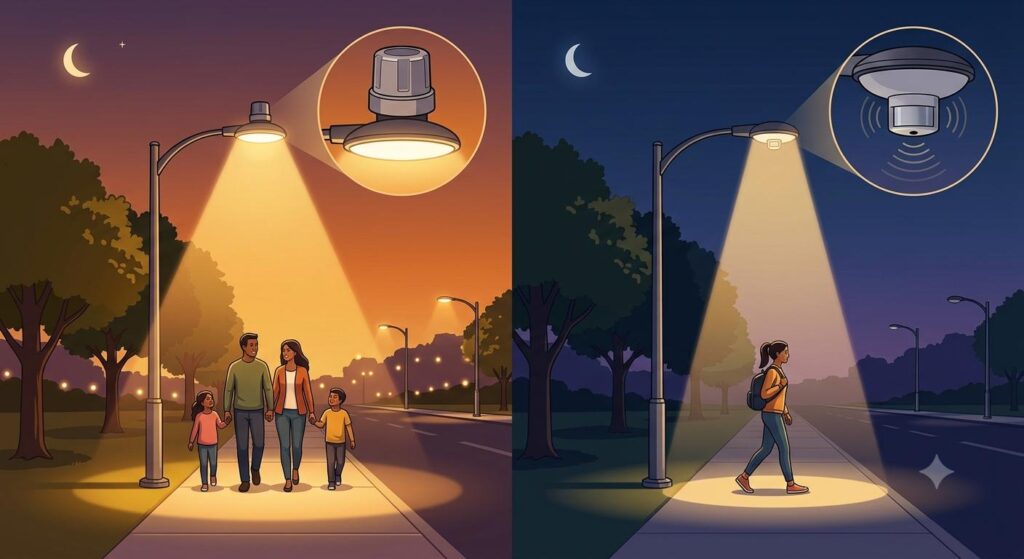
Photocells are evolving beyond simple switching. Lights turn on when people or movement is detected. This “on-demand” lighting cuts waste and reduces sky glow.
● Smart mobility systems and wildlife protection
Street-lights could adapt based on traffic density or nearby animal activity. That means safer streets and less impact on nocturnal ecosystems.
Final Words
Smart photocontrol technology is moving toward higher efficiency and reduced environmental impact. These innovations help cities upgrade lighting performance without complexity. For any project that needs dependable, long-life photocontrols, Chi-Swear delivers tested and trusted Long-Join solutions designed for modern outdoor lighting needs.
External Links
- https://birdcast.info/science-to-action/lights-out/
- https://www.un.org/en/un-chronicle/growing-effects-light-pollution-migratory-birds
- https://www.mdpi.com/2413-8851/9/7/251
- https://en.wikipedia.org/wiki/Zigbee
- https://lora-alliance.org/
- https://en.wikipedia.org/wiki/Narrowband_IoT
- https://zhagastandard.org/
- https://www.ansi.org/




 English
 Spanish
 Russian
 Arabic
 Italian
 Japanese
 Portuguese