Gliederung
- Einführung
- Why Are Climate‑Specific Fotosensoren Necessary in 2025?
- What Environmental Challenges Do Fotosteuerungen Face in Harsh Regions?
- Which Long‑Join Lichtsensorschalter Models Perform Best in Snow and Ice?
- What Is The Most Suitable Fotozelle for Coastal Environments?
- How Do Desert‑Grade Fotokontrollbehälter Survive in Extreme Heat?
- Can a Single Fotosensor Work Across Multiple Harsh Conditions?
- What Factors Should Buyers Consider When Selecting a Climate-Specific Dusk-to-Dawn Photocell?
- Why Is Long-Join the Go-To Supplier for Ruggedized Photocells?
- Fazit

Not all outdoor Lichtsensoren are made for every climate. Some even fail just months after installation. Salt air, freezing snow, or desert heat might be the culprit.
Each environment creates unique challenges for outdoor electronics. That’s why choosing the right Fotozelle for your region is critical. In this article, we’ll explore the best models for coastal, snowy, and desert zones—so your lights stay on, no matter the weather.
Why Are Climate‑Specific Fotosensoren Necessary in 2025?
Generic outdoor Lichtsteuerung assumes moderate conditions. They often fail under salt spray, ice, or high desert UV. Corrosion, false triggers, faded housings, or overheating become common.
Replacement costs rise, reliability drops, and lighting systems fail. Many project failures trace to sensor mismatches with the local climate.
Smart cities and industrial parks now require climate‑certified devices. Installers and planners expect sensors to survive salt, snow, or sun. Photocells with IP67 ratings, corrosion-tested housing, and thermal‑tolerant PCBs are in demand.
What Environmental Challenges Do Fotosteuerungen Face in Harsh Regions?
Outdoor lighting fails when a generic photocell is used in extreme climates. Manufacturers now design sensors tailored to specific environments. Here’s why climate-tuned Straßenbeleuchtungssteuerungen matter in 2025:
Coastal Environments
- Salt-laden air corrodes metal housings and damages circuit internals.
- Moisture ingress under salt fog reduces light-sensing accuracy quickly.
- Standard sensors lack sufficient salt-fog testing like ASTM B117.
Snow and Cold
- Snow reflection can trigger photocells during daylight hours.
- Moisture condenses and freezes on lenses, blocking sensor response.
- Ordinary housings fail in sub-zero temperatures without IP‑rated sealing.
Desert Conditions
- These intensive heat climates accelerate PCB aging and component failure.
- UV exposure cracks the plastic lens and case, compromising the sealing.
- Dust and heat stress shorten operational lifespan significantly.
Which Long‑Join Lichtsensorschalter Models Perform Best in Snow and Ice?
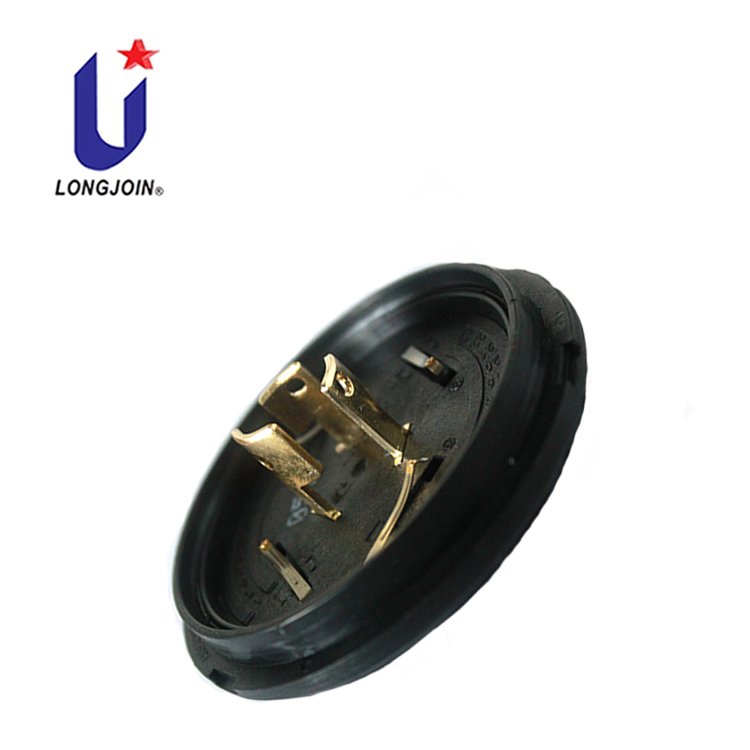
Der JL‑205/207 Series is optimized for snow and freezing environments. These models are designed with IP67 sealing to block moisture and condensation. The electronics operate reliably down to ‒40 °C, ensuring illumination even in extreme cold.
- Delay‑on and Delay‑off timing prevent false activation from snow reflections.
- A built‑in fail‑safe (fail‑on) mode keeps lights on if the sensor fails.
- Rugged silicone gaskets maintain integrity through freeze‑thaw cycles.
Used widely across Canada, Northern Europe, and Alpine regions, this series has proven stable in subzero winters and snowy landscapes. Every feature tackles a common challenge faced in icy climates. Here is table further outlining technical details of JL-205C.
| Besonderheit | Spezifikation |
| Spannungsbereich | 110–277 VAC |
| Stromverbrauch | Approx. 1.5 VA |
| Ein-/Ausschalt-Lux-Wert | ~6 lx ON / ~50 lx OFF |
| Nennlast | 1000 W Tungsten / 1800 VA Ballast |
| Humidity Tolerance | Up to 99% relative humidity |
What Is The Most Suitable Fotozelle for Coastal Environments?
The Long‑Join JL‑436C Series is built for salty, humid coastal zones. It features a zinc alloy housing with salt fog‑resistant coating, offering strong resistance to corrosion.
- It meets ASTM B117 salt spray testing requirements for continuous 1,000‑hour exposure.
- For protection against moisture and salt ingress, it comes with Neoprene gaskets.
- UV‑stabilized lenses resist sunlight degradation in coastal sun and wind.
Installed successfully in Florida coastal cities, Japanese seaside municipalities, and Mediterranean regions, the JL‑436C delivers long‑term durability where standard sensors corrode quickly. Every component prevents the known failure modes in marine air.
Here is table for other technical specifications of JL-436C.
| Besonderheit | Spezifikation | Besonderheit | Spezifikation |
| Nennspannung | 120–277 VAC (50/60 Hz) | Nennlast | 1000 W Tungsten |
| Stromverbrauch | ≤ 0.4 W | Operate Lux Levels | ~16 lx ON / ~24 lx OFF |
| Umgebungstemperatur | −30 °C to +70 °C | IP-Schutzart | IP65 |
| Überspannungsschutz | ~235 Joule | Fehlermodus | Fail-ON (lights remain on if sensor fails) |
How Do Desert‑Grade Fotosteuerung Survive in Extreme Heat?
The JL‑243C Series is engineered for scorching, sun‑baked environments. Its internal circuit board is built with high-temperature PCB design, allowing reliable operation in intense heat. A UV-protected polycarbonate shell shields the sensing elements from sun damage and maintains housing integrity over time.
- LED-decay compensation adjusts light levels over time to counteract gradual LED dimming caused by constant sun exposure.
- The robust temperature and UV defenses make the JL‑243C ideal for desert zones.
A real-world deployment in a Dubai Industrial Park saw 12,000 units installed, enduring daily high temperatures and harsh sunlight. The observed failure rate was under 0.2%, proving its resilience and reliability in extreme desert conditions.
Can a Single Fotosensor Work Across Multiple Harsh Conditions?

Yes! Hybrid Lichtsensorschalter für den Außenbereich can be engineered to thrive in all intensive climates. Built for all-weather toughness, they combine:
- IP67 sealing
- UV-resistant materials
- Korrosionsschutzbeschichtungen
These models are tested for all extreme environments and ensure resilience in mixed environments. Further material choices like:
- Polycarbonate housings guard against UV cracking.
- Silicone gaskets keep out moisture and salt.
- Zinc-alloy or coated metal bodies resist corrosion in marine air.
When to Custom-Develop for Multi-Climate Projects
Governments and smart-city planners often need unified photocell specs for infrastructure spanning coastal, alpine, and desert zones. Custom designs eliminate multiple SKUs and cut procurement complexity. Tailored solutions ensure:
- Consistent performance across multiple zones
- Simplified maintenance and stocking
- Compliance with varied environmental certifications
What Factors Should Buyers Consider When Selecting a Climate-Specific Dusk-to-Dawn Photocell?
Wrong photocell choices could lead to frequent failure and costly maintenance. Buyers should match each model to the target climate based on specific, non-negotiable factors. Here is a table outlining key selection criteria by climate.
| Criteria | Snowy Climates | Coastal Climates | Desert Climates |
| Temperature Resistance | ‒40°C or lower | Moderate to mild | +70°C PCB tolerance |
| Gehäusematerial | Plastic + Silicone | Zinc Alloy | UV-rated Polycarbonate |
| Moisture Protection | IP67 sealed | Salt fog coating | Dust + UV resistance |
| Common Failures | Freeze & fog buildup | Corrosion & rust | PCB burnouts |
Buyer’s Checklist
Before placing an order or tendering for projects, ensure the following:
- Temperature ratings match local climate extremes
- IP or ASTM certifications are verifiable
- Materials like silicone or polycarbonate are listed in spec sheets
- Test reports confirm compliance with international standards
- Fail-safe mode is built-in for critical installations
- Technical support is available for field troubleshooting
Choosing a photocell isn’t just about voltage or socket type. It’s about real-world survival—snow, salt, or sun.
Why Is Long-Join the Go-To Supplier for Ruggedized Photocells?
Long-Join doesn’t just manufacture photocells—it engineers them for survival in the world’s toughest climates. That’s why cities and utilities across Canada, Norway, the UAE, and coastal China rely on Long-Join for uninterrupted outdoor lighting.
Proven Global Deployments
Long-Join’s JL-series photocells are already installed in:
- Dubai Industrial Park – 12,000+ units, <0.2% failure rate
- Northern Europe – Cold-rated units handling ‒40°C with no fogging
- South China Coast – Salt-fog-tested photocells withstand marine humidity
- Alberta, Canada – Snow-reflective delay-on logic avoids flickering
These deployments are not pilot runs—they are long-term, field-tested projects.
Built for Industrial-Grade Reliability
Long-Join’s rugged photocells are shaped by:
- 20+ years of export-grade manufacturing for North America and the EU
- PCB and enclosure design specific to high-heat or cold exposure
- In-house testing to meet or exceed UL773 and ANSI C136.41.
Their controllers are not off-the-shelf—they’re engineered to spec. Here is a table showcasing LongJoin’s in-house testing standards and their respective details.
| Test Standard | Zweck | Long-Join Compliance | Testing Details |
| UL 773 | Photocontrol safety certification | Ja | Evaluates electrical safety |
| ANSI C136.41 | Dimming & control interface | Ja | Ensures compatibility with 7-pin |
| IEC60529 (IP67) | Schutzart | Ja | Waterproof, dustproof |
| ASTM B117 | Salt fog corrosion resistance | Ja | Used for coastal application tests |
Customization for OEM & Government Projects
Whether it’s a smart city program or a private label requirement, Long-Join offers:
- Full OEM/ODM design capabilities
- Custom delay curves, surge ratings, socket pinouts
- Support for Zhaga Buch 18, D4i, LoRa, NB-IoT integrations
When governments issue tenders demanding performance under extremes, Long-Join already has models proven in those conditions.
Fazit
Smart lighting in harsh climates demands precision, durability, and compliance. Long-Join’s ruggedized photocells meet these challenges with proven reliability. For buyers seeking dependable supply, Chi-Schwören offers trusted access to Long-Join’s advanced smart photocells, tailored for every environment.
Externe Links
- https://www.astm.org/b0117-19.html
- https://en.wikipedia.org/wiki/IP_code
- http://www.julixing.com.cn/en/new/new-58-907.html
- https://www.nema.org/standards/technical/ansi-c136-series-standards-for-roadway-and-area-lighting-equipment
- https://www.zhagastandard.org/books/overview/smart-interface-between-outdoor-luminaires-and-sensing-communication-modules-18.html
- https://www.dali-alliance.org/d4i/
- https://en.wikipedia.org/wiki/LoRa
- https://en.wikipedia.org/wiki/Narrowband_IoT