
Motion Sensor and Photocell On-Off Cycling Issues
OUTLINE A light that switches on and off repeatedly is immediately noticeable, immediately annoying, and immediately damaging to the equipment causing it. On-off cycling is one of the most common fault complaints in outdoor lighting systems, and it comes from two very different sources depending on whether the control device is a motion sensor or a photocell. Diagnosing the right cause saves a lot of time on site. What Is On-Off Cycling and Where Does It Appear? On-off cycling is a fault where a lamp repeatedly switches between on and off states in a pattern that doesn’t correspond to true changes in ambient light or occupancy. It commonly appears in […]
Are Photo Controls More Energy Efficient than Motion Sensors?
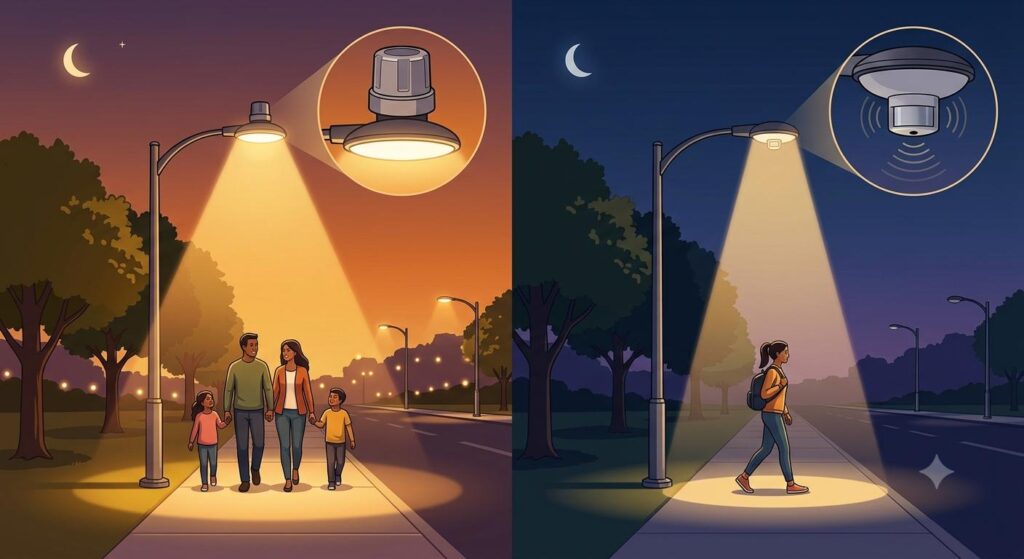
OUTLINE The energy efficiency debate between photo controls and motion sensors misses the point when framed as a head-to-head competition. Both save energy. Both devices save energy in different ways, at different times of day, in different environments. The real question is which one matches the specific lighting application. This article compares their energy-saving performance and suitability for different applications, helping users make informed choices How Does Each Technology Save Energy? Photocontrols eliminate daytime lighting waste. Motion sensors eliminate unnecessary nighttime lighting. They address different halves of the same problem. A photocontrol switches the light off when ambient lux rises above the dawn threshold. Every hour of daylight that a […]
Should Photocells Support High Temperatures (60°C)?
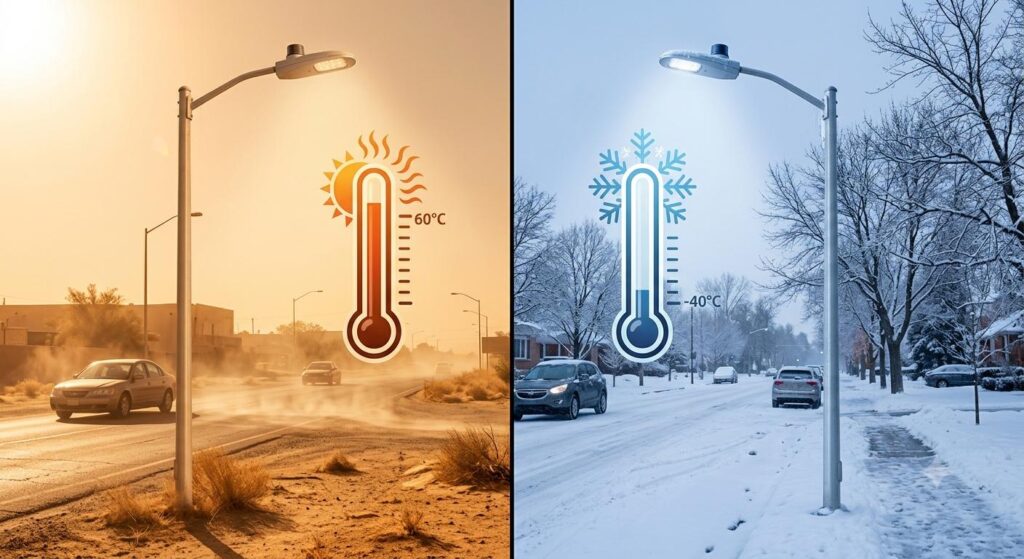
OUTLINE Outdoor lighting markets are not uniform. A street light photocell installed operates in fundamentally different ways depending on the thermal environment of its installation. As lighting procurement becomes more global, the question of high-temperature tolerance has moved from a regional concern to a specification standard that affects which products can enter which markets. Regarding whether photocells should support high temperatures, the short answer is yes, and the reason goes beyond marketing claims about durability. What Technical Features Make Twist-Lock Photocells Suitable for High Temperatures? Long-Join’s twist-lock photocell range is engineered across seven technical dimensions that together determine how reliably a unit performs under sustained thermal stress. Waterproof Sealing High IP-rated waterproof […]
Should Photocells Have Metal Bases?
OUTLINE It comes up in procurement discussions more often than you might expect whether photocells should have metal bases. Some suggest that a metal base would be stronger, more durable, or better for surge resistance than the plastic bases standard across the industry. It’s an intuitive argument because of how metal feels more robust than plastic. But intuition and engineering don’t always agree, and in the case of outdoor photocell bases, the engineering case for plastic is clear and consistent. There are better alternatives, such as those used in LongJoin models, and knowing about the different materials and their efficacy will help in decision-making. What Materials Does Long-Join Use for […]
Should Photocells Have Transparent or Frosted Windows?
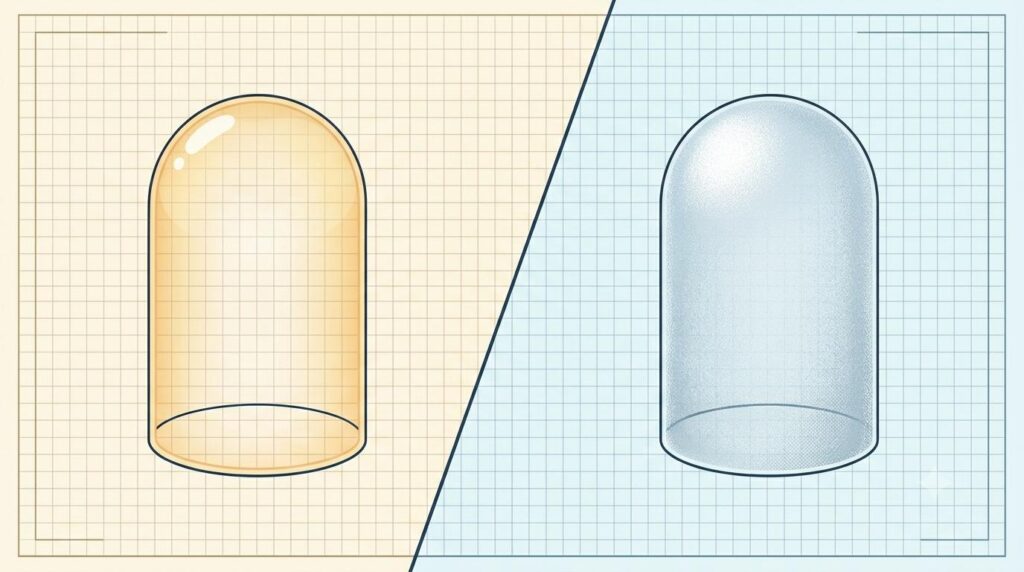
OUTLINE In product evaluation and procurement, we try to ask why some photocells have a clear lens window while others have a frosted dome. The two designs look different and perform slightly differently, and understanding the trade-off helps both specifiers and maintenance teams make better product choices. The short answer is that window design is one factor among several others, and not the most important one. But it does matter, and for specific installation environments the choice between transparent and frosted makes a practical difference. How Is the Photocell Sensing Window Designed? The sensing window is the photocell’s optical interface with the environment. It determines how much light reaches the […]
Should Photocells Use a Photodiode Instead of CDS?
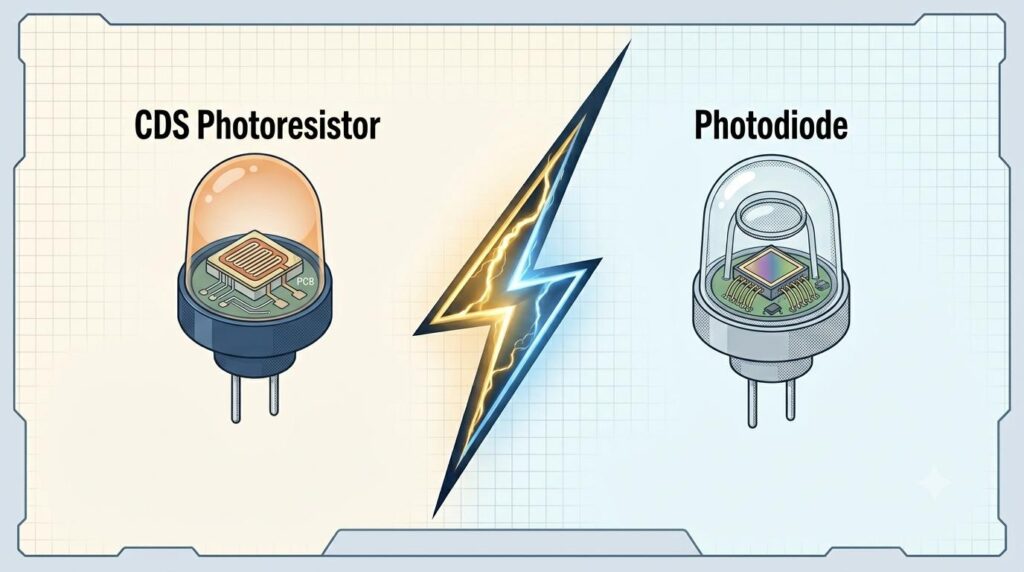
OUTLINE This debate comes up regularly in outdoor lighting procurement, and it almost always starts the same way: someone points at the price difference between a CDS photocell and a photodiode model and asks whether the more expensive one is actually worth it. The honest answer is that it depends on where the photocell is going and what you expect from it over its service life. Both sensor types do the same job at the most basic level — they detect ambient light and trigger switching. What separates them is how well they do it across different temperatures, environments, and years of outdoor exposure. What Are the Light-Sensitive Component Types […]
How to Identify Aging or Poor Contact in NEMA Receptacles Without Tools

OUTLINE A NEMA receptacle sits on top of a street light pole and does nothing visibly dramatic for years. No moving parts, no indicator lights, no audible signals. However, when it starts to fail, the symptoms show up in the fixture in the form of flickering lights, intermittent outages, lights stuck on, and the receptacle itself is often the last thing a maintenance team checks. Knowing what aging looks like on the receptacle, and what to look for without any tools, saves a diagnostic step and often prevents a more expensive failure down the line. Signs of Aging or Poor Contact in NEMA Receptacles These eight signs can help identify […]
Should Long-Join Photocells Have a Delay? How to Choose the Right Setting
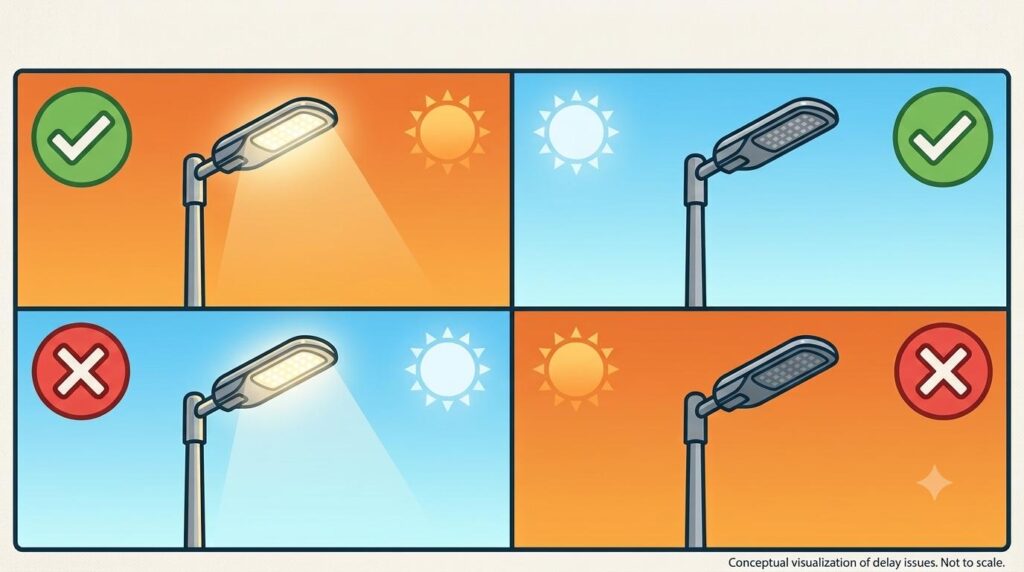
OUTLINE The delay function in a photocell is one of those features that most users either never think about or blame for problems it didn’t cause. When a light is slow to come on at dusk, the delay gets blamed. When a light flickers repeatedly from a passing car, the lack of adequate delay is the actual problem. Understanding what the delay actually does, how long it should be, and which products let you combine it with other sensing modes is what separates a well-specified installation from one that generates complaints. What Does the Delay Function Actually Do? The delay is not a response lag; rather, it is a time […]
6 Factors That Make Photocontrols More Prone to False Triggers in Winter

OUTLINE Summer gets most of the attention when outdoor photocell performance is discussed. High temperatures, intense UV, and surge risk from lightning are real problems. However, winter has its own set of challenges that cause a different category of failures, and they’re less intuitive. A photocell that performs flawlessly through August can start cycling erratically in December without any obvious cause. Usually one of these six factors is responsible. 1. Low Sun Angle in Winter Causes the Sensing Window to Be Shadowed The sun’s lower elevation angle in winter places the photocell’s sensing window in shadow for longer portions of the day, producing unstable light readings and misjudged switching. A […]
Which Internal Components of Photocontrols Are Affected in 60°C High-Temperature Environments
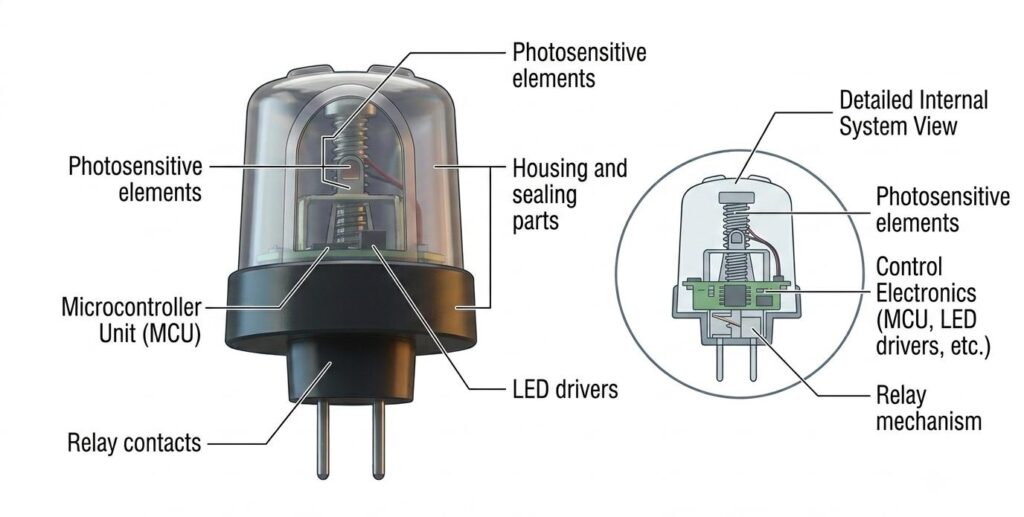
OUTLINE Most outdoor photocells spend their entire service lives in positions with no shade, no ventilation, and no protection from direct solar radiation. In the Middle East, South Asia, and tropical regions, surface temperatures on pole-mounted equipment routinely exceed 60°C during summer months. That thermal load doesn’t just affect the housing. It works its way into every internal component, and each one responds differently. Photocells such as Long-Join’s JL-207C and JL-103A are both designed with outdoor temperature tolerance as a core requirement. Understanding how each internal component responds to sustained high-temperature exposure explains why design decisions at the component level matter for long-term reliability. Effects of 60°C High Temperature on […]
 Japanese
  English
  Spanish
  Russian
  Arabic
  Italian
  Portuguese