OUTLINE
- Introduction
- What Are the Common Photocell Technologies in Outdoor Lighting?
- How Does Light Sensing Accuracy Compare Across Technologies?
- How Does Response Speed Compare?
- How Do Long-Join’s Products Map to Each Technology?
- Why Is IR Phototransistor Technology Gaining Popularity?
- Which Technology Is Recommended for Each Application?
- Photocell Models for Different Projects
- Frequently Asked Questions on Sensor Types
Photocells generally do the same jobs globally, so how are they rated? The technology inside the sensor determines two things: accuracy (how precisely it reads ambient light) and speed (how quickly it reacts to changes).
For engineers, municipalities, and lighting buyers, understanding these differences is what separates a good specification from one that creates problems in the field.
Understanding the many differences within the photocell system will help inform your decision on selection.
What Are the Common Photocell Technologies in Outdoor Lighting?
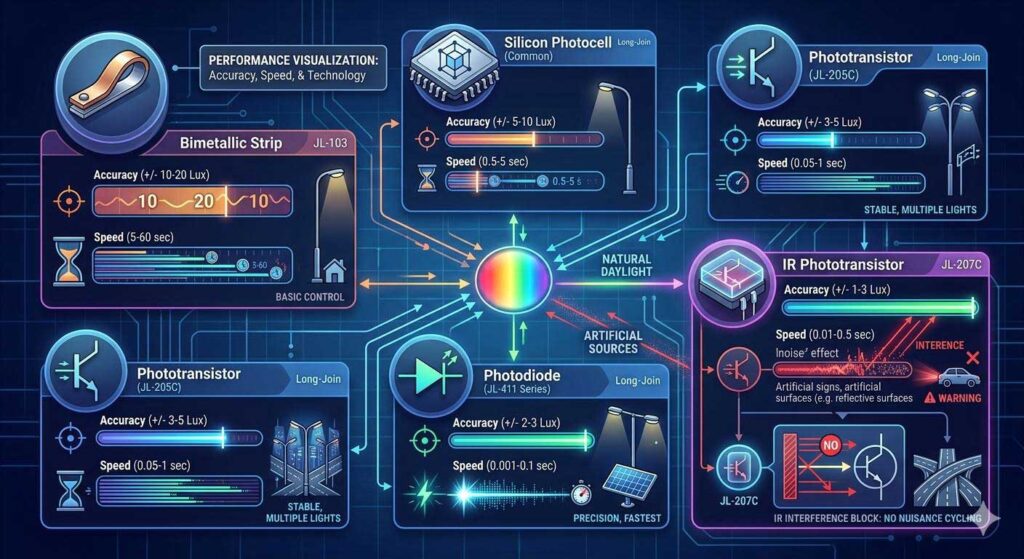
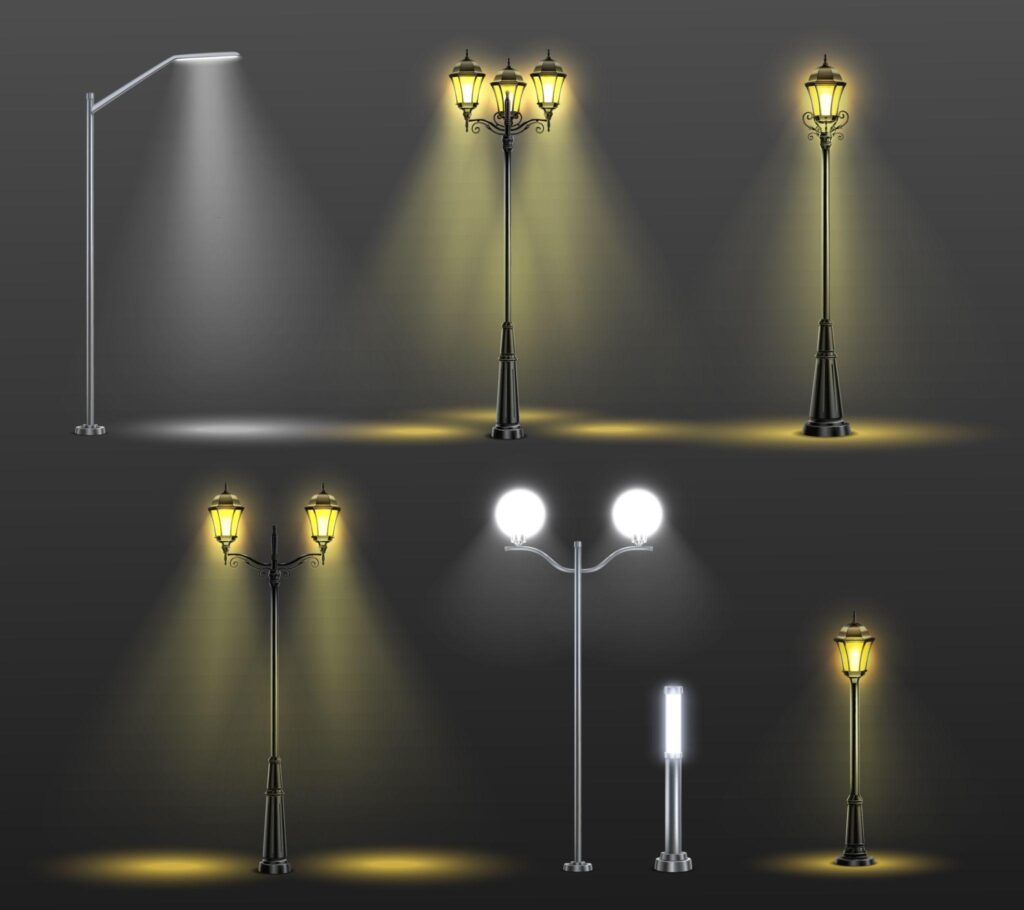
Five sensing technologies are used across Long-Join’s photocell range, each with a different working principle, accuracy level, and response speed.
| Sensor Type | Working Principle | Typical Product |
| Bimetallic Strip | Heat generated by light triggers mechanical switching | JL-103 Series |
| Photodiode | Converts light directly into electrical current | JL-411 Series |
| Phototransistor | Amplified photoelectric sensing | JL-205C |
| IR Phototransistor | Infrared-filtered light detection | JL-207C |
| Silicon Photocell | Semiconductor light sensing | Common industry products |
How Does Light Sensing Accuracy Compare Across Technologies?
Sensing accuracy determines how precisely a photocell detects the lux threshold at which it switches. The different sensor types offer different accuracy levels.
| Sensor Type | Typical Lux Control Accuracy | Accuracy Level |
| Bimetallic Strip | +/-10 to 20 Lux | Basic |
| Silicon Photocell | +/-5 to 10 Lux | Moderate |
| Phototransistor | +/-3 to 5 Lux | High |
| Photodiode | +/-2 to 3 Lux | Very High |
| IR Phototransistor | +/-1 to 3 Lux | Excellent |
Note that having the highest level is not always necessary.
- Traditional bimetallic photocells suit basic on/off control where switching precision is not a priority
- Phototransistor and photodiode designs offer far better repeatability across seasonal light variation
- The IR phototransistor minimises interference from vehicle headlights, artificial reflections, and nearby signage that would cause a standard sensor to switch at the wrong time
How Does Response Speed Compare?
Response speed determines how quickly the photocell reacts to a change in ambient light, and it is important to note that faster does not necessarily mean better in outdoor applications.
| Sensor Type | Estimated Response Time |
| Bimetallic Strip | 5 to 60 seconds |
| Silicon Photocell | 0.5 to 5 seconds |
| Phototransistor | 0.05 to 1 second |
| Photodiode | 0.001 to 0.1 second |
| IR Phototransistor | 0.01 to 0.5 second |
A faster sensor detects genuine dusk conditions more quickly and responds better in adaptive and smart lighting systems. However, outdoor photocells always include a built-in time delay to filter out brief light disturbances like lightning and headlights. The sensor speed and the time delay work together to produce reliable, stable switching.
How Do Long-Join’s Products Map to Each Technology?
Not many brands produce the array of sensor options in Long-Join’s catalogue. There is a model for every type.
| Product Series | Sensor Technology | Main Advantage |
| JL-103 Series | Bimetallic Strip | Cost-effective, simple design |
| JL-205C | Phototransistor | Stable roadway lighting control |
| JL-207C | IR Phototransistor | Improved anti-interference capability |
| JL-411 Series | Photodiode | High sensitivity and fast response |
Why Is IR Phototransistor Technology Gaining Popularity?
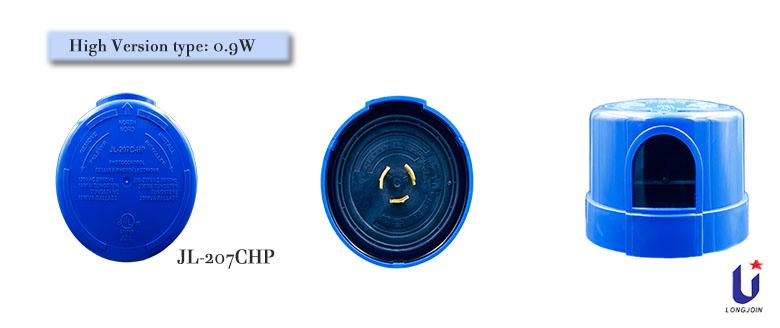
The JL-207C’s IR-filtered phototransistor blocks infrared-heavy light sources such as vehicle headlights, reflected LED light from nearby fixtures, advertising signs, and temporary light sources that cause false switching in complex outdoor environments.
A standard phototransistor responds to this infrared output, which causes nuisance cycling and relay wear. The IR filter blocks these wavelengths, so the sensor responds only to the ambient daylight spectrum, giving it stable and accurate switching performance in environments where standard sensors struggle.
This effectively leads to:
- Improved switching accuracy
- Better roadway reliability
- Reduced nuisance cycling
- Longer operational stability
Which Technology Is Recommended for Each Application?
| Application | Recommended Sensor Type |
| Residential lighting | Bimetallic Strip |
| Commercial lighting | Phototransistor |
| Highway lighting | IR Phototransistor |
| Smart city projects | Photodiode / IR Phototransistor |
| High-precision control | Photodiode |
The photocells have other specifications that are described in Chi-Swear’s photocell product range.
Photocell Models for Different Projects
No single photocell technology is best for every application. The JL-103 series covers economical standard lighting control. The JL-205C provides reliable phototransistor-based performance for municipal projects. The JL-207C delivers enhanced accuracy through IR-filtered sensing for highway and complex light environments. The JL-411 series offers high-speed photodiode performance for solar and precision control applications.
Frequently Asked Questions on Sensor Types
Q1: What is the difference between a photodiode and a phototransistor?
A photodiode converts light directly into electrical current with high speed and precision. A phototransistor amplifies the signal internally, giving higher output current but slightly slower response. Phototransistors suit general outdoor switching while photodiodes are better for high-precision or fast-response applications like the JL-411 series.
Q2: Why does the JL-207C use an IR phototransistor instead of a standard phototransistor?
A standard phototransistor responds to infrared-heavy sources like vehicle headlights, causing false switching mid-night. The IR filter in the JL-207C blocks wavelengths above 700nm, so the sensor responds only to natural daylight and ignores artificial interference from busy roads and parking lots.
Q3: Which photocell technology provides the fastest response speed?
The photodiode, as used in the JL-411 series, at 0.001 to 0.1 seconds. A bimetallic strip takes 5 to 60 seconds by comparison. In practice, raw speed is paired with a built-in time delay that filters temporary light sources before switching occurs.
Q4: Does faster response always mean better outdoor lighting performance?
Not always. A very fast sensor without a proper time delay will react to lightning, headlights, and wet road reflections. The best performance comes from matching sensor speed with a well-calibrated delay, which is exactly how the JL-207C combines IR filtering with its built-in time delay.
Q5: Which Long-Join photocell is best for highway and smart city lighting projects?
The JL-207C is for highway lighting, due to its IR filter and zero-crossing switching. The JL-245CN NB-IoT is for smart city projects requiring remote monitoring and fault detection. The JL-411 series for high-precision lux control applications.