
Contorno
- Introdução
- Por que a seleção do material de cobertura é importante em equipamentos de engenharia para uso externo? Controle de iluminação?
- Por que a “transparência máxima” é uma premissa enganosa para espaços externos? Fotossensor Precisão?
- Que efeitos do estresse ambiental no exterior Fotocontrole Cobre o rosto ao longo da vida?
- Que problemas a longo prazo as coberturas totalmente transparentes acarretam?
- Por que as capas totalmente transparentes sofrem com o amarelamento e o envelhecimento do material?
- Como as coberturas transparentes causam alterações no limiar de luminosidade em ambientes externos? Sensores de interruptor fotográfico?
- Por que as capas totalmente transparentes são mais vulneráveis à luz difusa e refletida?
- Por que as coberturas pretas translúcidas se tornaram a solução de engenharia preferida?
- Qual é a estratégia de seleção de engenharia recomendada para Interruptores de sensor de luz para exterior?
- Quando as capas transparentes ainda devem ser avaliadas — e sob quais condições?
- Palavras finais
A cor da cobertura da fotocélula é muito importante em ambientes externos, pois afeta diretamente a precisão com que a luz é detectada ao longo do tempo.
Em ambientes reais de iluminação pública, as condições são severas e imprevisíveis. Uma escolha inadequada de cobertura pode causar acendimento prematuro ou desligamento tardio.
Isso leva a reclamações, maior necessidade de manutenção e inconsistência do sistema. Este artigo explica por que as capas pretas translúcidas têm um desempenho superior às totalmente transparentes em uso externo a longo prazo.
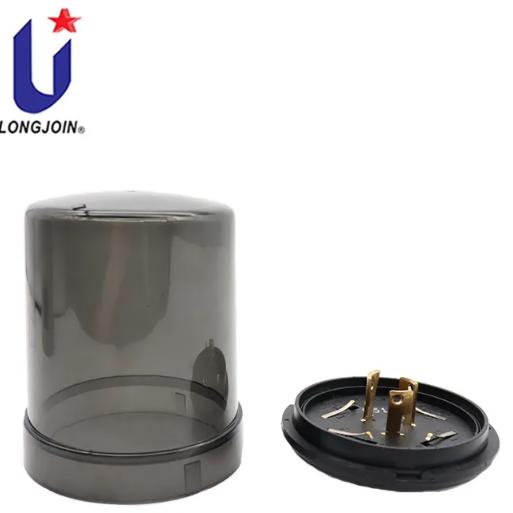
Por que a seleção do material de cobertura é importante em equipamentos de engenharia para uso externo? Controle de iluminação?
Escolher o material de cobertura certo não é um detalhe insignificante. Ele afeta diretamente a forma como a luz atinge o sensor. (Exterior) interruptor fotocélula enfrenta condições extremas como:
- UV
- Aquecer
- Pó
- Umidade
Esses fatores podem alterar as propriedades ópticas ao longo do tempo e distorcer as leituras. Os ambientes externos são muito mais agressivos do que os ambientes de laboratório, onde a transparência inicial parece boa.
Em campo, os plásticos podem se degradar, reduzindo a precisão. Uma cobertura resistente aos raios UV protege os componentes internos e mantém a estabilidade da detecção por mais tempo.
Sem o material adequado, sensores de iluminação fotocélula Falhas prematuras podem causar problemas de manutenção e iluminação inconsistente em projetos municipais e de cidades inteligentes. Profissionais projetam coberturas que equilibram proteção, estabilidade e desempenho em situações reais.
Por que a “transparência máxima” é uma premissa enganosa para espaços externos? Fotossensor Precisão?
Muitos compradores acreditam que uma cobertura totalmente transparente significa melhor percepção da luz. À primeira vista, mais luz parece melhor.
Mas a transparência pura não garante estabilidade a longo prazo. A exposição aos raios UV externos degrada muitos plásticos transparentes, causando amarelamento e redução da transmissão de luz. A transmissão inicial só prevê o desempenho em condições ideais, não após anos de exposição ao ar livre.
O que importa é a consistência com que a cobertura mantém seu comportamento óptico.
Uma cobertura que começa transparente, mas se degrada rapidamente, altera os limiares de detecção, levando a uma comutação precoce ou tardia. Os engenheiros priorizam materiais que resistam ao envelhecimento por raios UV e mantenham uma transmissão estável ao longo do tempo, mesmo que não sejam totalmente transparentes.
A estabilidade óptica a longo prazo supera a nitidez a curto prazo em todos os aspectos.
Que efeitos do estresse ambiental no exterior Fotocontrole Cobre o rosto ao longo da vida?
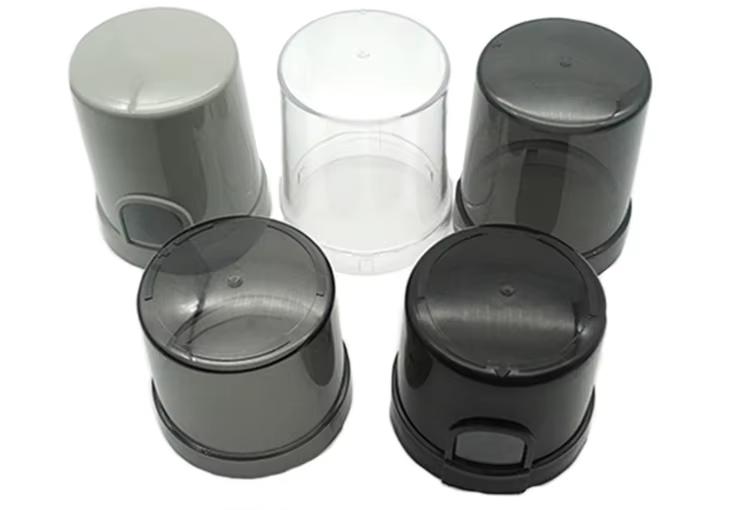
Exposição constante aos raios UV e à luz solar
Controles de iluminação Eles ficam expostos à luz solar direta todos os dias. Isso os torna vulneráveis a radiação UV ataques. Em última análise, as superfícies plásticas enfraquecem e afetam as ligações moleculares. Com o tempo, isso reduz a transparência e a estabilidade óptica.
Extremos climáticos
A iluminação pública é submetida a tardes quentes e noites frias. Esse ciclo térmico causa expansão e contração repetidas. Pequenas fissuras, juntamente com a fadiga da superfície, aparecem gradualmente.
Umidade e luz refletida
Os ambientes externos apresentam múltiplas fontes de estresse:
- Chuva e condensação
- Névoa salina em áreas costeiras
- Poeira e poluição industrial
- Luz refletida de estradas, placas e luminárias.
Esses fatores distorcem os trajetos da luz incidente. Juntos, eles aceleram a instabilidade óptica e reduzem a confiabilidade da detecção a longo prazo.
| Fator Ambiental | Frequência de exposição | Nível de risco óptico | Impacto primário na cobertura |
| radiação UV | Contínuo | Muito alto | Amarelamento, formação de névoa |
| Ciclos de temperatura | Diário | Alto | Microfissuras, fadiga |
| Alta umidade | Sazonal / Diário | Médio | Nebulização, condensação |
| Névoa salina (costeira) | Baseado em localização | Alto | Degradação da superfície |
| Poluição do ar | Urbano/Industrial | Médio | Dispersão da luz |
Que problemas a longo prazo as coberturas totalmente transparentes acarretam?
Envelhecimento mesmo em plásticos de alta qualidade
Policarbonato O uso de PMMA é bastante comum para conferir transparência. Esses materiais também sofrem desgaste sob a ação dos raios UV e do calor. Aditivos protetores retardam a degradação, mas não a impedem completamente.
Perda de transmissão
Com o passar dos anos, desenvolvem-se coberturas transparentes:
- Descoloração amarelada
- névoa superficial
- Aumento da dispersão da luz
A transmissão de luz diminui de forma irregular. O sensor já não recebe iluminação consistente.
O risco aumenta ao longo de 5 a 10 anos.
Os sistemas de iluminação externa são projetados para longos ciclos de vida. As coberturas transparentes degradam-se gradual, mas continuamente. Após anos de exposição, o comportamento óptico se altera o suficiente para afetar a precisão da detecção, aumentar a necessidade de manutenção e reduzir a consistência do sistema em grandes instalações.
Segue abaixo uma tabela comparativa de capas pretas e transparentes quanto ao seu envelhecimento ao longo do tempo.
| Propriedade ao longo do tempo | Capa totalmente transparente | Capa preta translúcida |
| Resistência aos raios UV | Moderado | Alto |
| Tendência ao amarelamento | Alto | Baixo |
| estabilidade óptica | Diminui de forma não linear | Permanece estável |
| risco de neblina na superfície | Alto | Baixo |
| previsibilidade ao longo da vida | Baixo | Alto |
Por que as capas totalmente transparentes sofrem com o amarelamento e o envelhecimento do material?
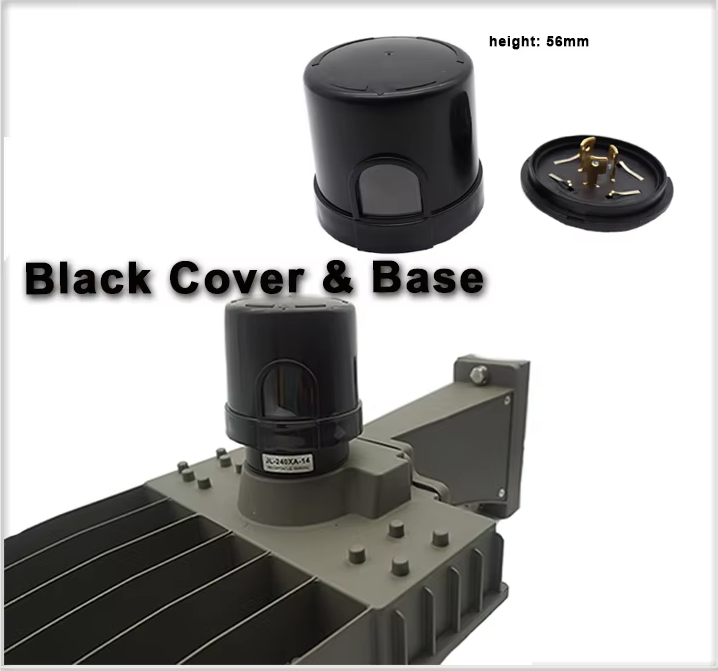
Degradação molecular induzida por UV
As capas transparentes geralmente são feitas de PC ou PMMA. Ambos os materiais reagem mal à exposição prolongada aos raios UV. A energia UV quebra as cadeias de polímeros e forma compostos cromóforos.
Esses compostos absorvem a luz azul, o que causa um amarelamento visível.
A transmissão de luz muda de forma irregular.
O envelhecimento não reduz a transmissão em linha reta. Ele muda de forma desigual ao longo dos comprimentos de onda.
Isso leva a:
- Formação de neblina
- Aumento da dispersão da luz
- Redução da eficácia luxo alcançando o sensor
Impacto na Calibração
sensores de fotocélula de luz Os sensores são calibrados para um caminho óptico fixo. Com o envelhecimento da cobertura, esse caminho se altera. A precisão da calibração é gradualmente perdida. O sensor deixa de receber o nível de luz para o qual foi projetado. O desempenho se deteriora silenciosamente ao longo do tempo.
Como as coberturas transparentes causam alterações no limiar de luminosidade em ambientes externos? Sensores de interruptor fotográfico?
A degradação óptica altera a entrada do sensor.
À medida que as coberturas transparentes ficam amareladas ou opacas, menos luz utilizável chega ao sensor. controle do sensor de luz Não se trata de um "erro". Trata-se de uma leitura incorreta das condições ambientais. Essa é a raiz da deriva de lux.
Sintomas típicos de campo
Pequenas alterações ópticas criam grandes efeitos no sistema:
- Ligar cedo ao entardecer
- Desligamento retardado ao amanhecer
- diferenças de comutação aleatória entre dispositivos
Problemas de consistência em nível de rede
Em grandes redes de iluminação pública, nem todas as coberturas envelhecem da mesma maneira. Isso causa:
- comportamento de iluminação irregular
- Aumento das reclamações
- Custos mais elevados de manutenção e recalibração
Por isso, a estabilidade óptica, e não a transparência, define a precisão a longo prazo.
Por que as capas totalmente transparentes são mais vulneráveis à luz difusa e refletida?
Luminária com autorreflexão
As coberturas totalmente transparentes permitem que a luz da luminária retorne ao sensor. Isso inclui a luz refletida da carcaça da luminária e da câmara óptica. O sensor interpreta isso erroneamente como luz ambiente.
Entrada lateral e reflexão no solo
Materiais transparentes oferecem pouco controle sobre a trajetória da luz indesejada. A luz difusa entra por:
- reflexos da superfície da estrada
- Fachadas e sinalização de edifícios
- Luminárias adjacentes
Isso distorce as leituras reais do ambiente.
Desafios dos sensores voltados para cima
Projetos com iluminação voltada para cima são comuns em iluminação pública. Coberturas transparentes agravam o problema, permitindo que a luz refletida e em ângulos baixos atinja o sensor com facilidade. O resultado é a detecção incorreta de luminosidade, comutação instável e comportamento inconsistente de ligar e desligar em diferentes instalações.
A tabela abaixo mapeia diferentes fontes de luz e como elas afetam a severidade da luz.
| Fonte de luz difusa | Caminho de entrada | Impacto na Sensibilidade | Nível de risco |
| Caixa de luminária | Reflexão | brilho falso | Alto |
| Pavimento da estrada | Reflexão ascendente | Desligamento retardado | Médio |
| Sinalização próxima | Entrada lateral | Comutação aleatória | Médio |
| Luminárias adjacentes | Entrada lateral | Ruído de limiar | Alto |
Por que as coberturas pretas translúcidas se tornaram a solução de engenharia preferida?
Decisões baseadas em dados de campo
A mudança no setor não aconteceu da noite para o dia. Dados de campo de longo prazo mostraram que a filtragem controlada da luz tem um desempenho melhor do que a transparência total. As coberturas pretas translúcidas envelhecem de forma mais previsível e mantêm um comportamento de detecção estável.
Adoção Europeia e Municipal
As normas europeias para iluminação pública priorizam a estabilidade ao longo do ciclo de vida. Os projetos municipais especificam cada vez mais coberturas pretas translúcidas para:
- Sensibilidade reduzida à luz difusa
- Melhor consistência do limiar de lux
- Menores necessidades de recalibração e manutenção
Implantações em larga escala confirmaram os resultados. O desempenho manteve-se consistente ano após ano. Essas evidências impulsionaram uma adoção mais ampla. Hoje, as coberturas pretas translúcidas são vistas como uma escolha de engenharia madura e com riscos controlados, em vez de um compromisso de design.
Qual é a estratégia de seleção de engenharia recomendada para Interruptores de sensor de luz para exterior?

A configuração mais confiável consiste em um sensor de luz voltado para cima com uma cobertura preta translúcida. Isso garante que o sensor detecte a luz ambiente real e não reflexos.
Casos de uso ideais
Essa configuração é adequada para projetos de infraestrutura de longa duração, tais como:
- Iluminação pública municipal
- Sistemas de tráfego e rodovias
- Instalações de cidades inteligentes que exigem operação estável
Principais benefícios
Utilizar essa configuração proporciona vantagens de engenharia mensuráveis:
- Limiares de lux estáveis ao longo do tempo
- Comportamento de alternância consistente em todas as redes
- Redução da necessidade de manutenção e recalibração.
- Menor custo total de propriedade devido ao desempenho previsível a longo prazo.
Quando as capas transparentes ainda devem ser avaliadas — e sob quais condições?
As capas transparentes são adequadas apenas para amostragem, protótipos ou validação de design. Não devem ser consideradas para produção em massa.
Caso seja necessária uma avaliação:
- Realizar testes de envelhecimento por UV para avaliar o amarelamento a longo prazo.
- Realize estudos comparativos de iluminação com versões pretas translúcidas.
- Monitore a variação do limiar de lux ao longo de meses ou anos.
As coberturas transparentes degradam-se de forma imprevisível em ambientes externos. Sem testes adequados, depender delas pode resultar em custos mais elevados ao longo do ciclo de vida. A avaliação controlada mantém os riscos visíveis e gerenciáveis.
Palavras finais
O desempenho das fotocélulas externas depende da estabilidade óptica a longo prazo, e não da transparência inicial. As coberturas pretas translúcidas proporcionam detecção consistente e reduzem a necessidade de manutenção ao longo do ciclo de vida do produto. Para projetos que exigem confiabilidade comprovada, Chi-Swear Trabalha em estreita colaboração com a Long-Join para fornecer fotocontroladores testados em campo e com suporte de conhecimento técnico especializado.

 Portuguese
  English
  Spanish
  Russian
  Arabic
  Italian
  Japanese