
Outline
- Introduction
- What Technical Standards Must Long-join Photocell Switches Meet to Qualify for Municipal Bids?
- Why are Long-join NEMA Sockets Preferred in South American Municipal Lighting Projects?
- What are the Key Technical Specifications of the Long-join JL-207C Lighting Control and JL-240XA NEMA Socket?
- How do Long-join Photocontrols and NEMA Sockets Ensure Seamless System Compatibility?
- Why Do Long-join NEMA Sockets and Automatic Light Sensors Strengthen Municipal Bid Competitiveness?
- What Makes Long-join Solutions the Preferred Choice for South American Municipal Streetlight Projects?
- Final Words
Municipal streetlight bids in South America consistently specify Long-join NEMA sockets and photocell sensors. The reason lies in standards and extended reliability.
Cities across South America demand solutions that are proven and easy to maintain. Long-join products meet these expectations.

Their compliance with ANSI standards ensures bid acceptance. Their intelligent control design supports modern street lighting needs. This makes them a practical and trusted choice for municipal projects.
What Technical Standards Must Long-join Photocell Switches Meet to Qualify for Municipal Bids?
Municipal streetlight bids in South America are strict on standards. Technical compliance is not optional. It is a pass-fail requirement.
Authorities expect light sensors to follow the core standard for streetlight controllers. This standard governs:
- Electrical behavior
- Mechanical fit
- Switching accuracy
- Environmental endurance
For bidders, standards compliance is not a feature. It is a baseline requirement.
| Evaluation Area | Why It Matters in Bids | Impact on Scoring |
| Standards compliance | Confirms legal and technical eligibility | High |
| Fail-safe operation | Ensures public safety during failures | High |
| EMC performance | Prevents system-wide interference | Medium |
| Documentation clarity | Reduces clarification requests | Medium |
Long-join JL-207C Fail-on Light Sensor Switch Comply with ANSI C136.10-2017
The Long-join JL-207C is designed around ANSI C136.10-2017 from the start. Its structure, switching logic, and performance limits align with municipal expectations.
Fail-on operation is critical for public safety. If the control fails, the light stays on. Streets do not go dark. This directly addresses safety clauses in public lighting contracts.
Light sensing is precise. The photoelectric sensor responds accurately to ambient lux levels. This enables stable dusk-to-dawn switching without false triggers.
Automatic control remains consistent over time. This improves energy efficiency while maintaining reliable nighttime illumination.
Long-join Products Comply with FCC Electromagnetic Compatibility
Streetlight networks operate in noisy electrical environments. Interference is common. EMC compliance separates reliable products from unstable ones.
FCC-compliant photocontrols are tested to:
- Resist electromagnetic interference from nearby equipment
- Avoid emitting signals that disrupt other devices
This stability matters at scale. Thousands of controllers operate simultaneously in urban areas. Any instability multiplies maintenance issues.
EMC compliance improves equipment lifespan. It reduces random failures. It protects switching accuracy.
For municipalities, this means fewer outages, safer streets, and lower long-term operating risk.
Why are Long-join NEMA Sockets Preferred in South American Municipal Lighting Projects?
Municipal bids today demand more than lights that simply turn on. They need smart control infrastructure. Long-join NEMA sockets have become a standard choice because they deliver compatibility and flexibility.

ANSI C136.41 7-Pin 240XA Socket Interface Support Smart City Requirements
The ANSI C136.41 7-pin socket is more than a plug. It is a smart interface backbone for modern street lighting. This standard socket:
- Supports multi-control wiring, including 0-10V dimming and smart dimming nodes.
- Ensures plug-and-play compatibility with photocontrols, dimmers, and smart controllers used in South American bids.
- Improves maintenance speed by allowing simple swap-outs without rewiring.
Because this interface handles both power and signal leads, municipalities can add advanced functions like adaptive dimming later — without touching the luminaire’s core wiring. That future-proofs installations, a big plus in bid evaluations.
Here is a comparison table of 3-pin and 7-pin receptacles based on multiple parameters.
| Control Capability | 3-Pin Interface | 7-Pin ANSI C136.41 |
| Dimming support | Limited | Full |
| Smart node integration | Not supported | Supported |
| Future upgrades | Restricted | Flexible |
| Retrofit efficiency | Low | High |
Weather-Resistant Socket Materials Address South America’s Harsh Climate Conditions
Outdoor sockets must survive sun, rain, and dust. The Long-join 240XA and similar sockets are built from high-grade thermoplastics and reinforced materials that:
- Withstand the harsh environments of countries across South America.
- Include sealed gaskets and protective coatings. This blocks dust and water ingress.
- Maintain electrical integrity over years of exposure.
Strong materials mean fewer failures and lower operating costs. Municipal maintenance crews spend less time troubleshooting sockets.
That stability and low O&M burden make Long-join sockets more attractive in tender scoring and long-term budget planning.
What are the Key Technical Specifications of the Long-join JL-207C Lighting Control and JL-240XA NEMA Socket?
Municipal bid documents demand clear, verifiable specifications. Vague claims do not pass technical evaluation. The JL-207C photocontrol and JL-240XA socket are specified in a way that procurement teams can easily verify.
Core Technical Parameters at a Glance
| Component | Key Specifications | Bid Relevance |
| JL-207C Fail-on Photocontrol | ANSI C136.10-2017 compliant, fail-on mode, stable dusk-to-dawn switching | Meets safety and operational clauses |
| JL-240XA NEMA Socket | ANSI C136.41 7-pin interface, sealed design, outdoor-rated materials | Ensures compatibility and durability |
These specifications align directly with tender checklists. They simplify technical scoring. They also reduce clarification requests during bid evaluation, speeding up approval and deployment.
How do Long-join Photocontrols and NEMA Sockets Ensure Seamless System Compatibility?
System compatibility is a silent requirement in municipal bids. It is rarely stated, but always evaluated. Long-join outdoor light sensor switches and NEMA sockets are designed as a matched system, not separate components.


Their technical alignment reduces integration risk during installation and operation. Contractors avoid wiring conflicts. Municipalities avoid post-installation failures.
| Project Risk Area | Non-Standard Pairing | Long-join Standard Pairing |
| Installation errors | High | Low |
| Commissioning time | Longer | Shorter |
| Functional limitations | Possible | Avoided |
| Maintenance cost | Unpredictable | Controlled |
Dual ANSI Standard Compliance Eliminates Integration Risks
Dual ANSI compliance removes guesswork during installation. The JL-207C and JL-240XA are built to work together by design.
- JL-207C photocontrol follows ANSI C136.10-2017 for locking-type control devices
- JL-240XA socket follows ANSI C136.41 7-pin 240XA interface requirements
Because both components follow recognized ANSI standards:
- Installation becomes plug-and-play
- Signal paths align correctly
- Full functionality is retained without modification
This standard pairing avoids partial compatibility issues. It prevents dimming loss and control failure. For municipal projects, this directly reduces commissioning time and technical rejection risk.
Durable Materials and Sealed Designs Reduce Maintenance Costs
Material consistency is as important as electrical compatibility. Long-join applies the same weather-resistant design philosophy across both photocontrols and sockets.
Key protections include:
- Sealed housings against moisture ingress
- UV-resistant materials for long sun exposure
- Stable performance under heat and humidity
This unified protection reduces weak points in the system. Failures do not migrate from the socket to the controller. Maintenance cycles become longer. Spare part usage drops.
For municipalities, this translates into lower lifecycle costs. For bidders, it strengthens technical scoring and long-term value justification.
Why Do Long-join NEMA Sockets and Automatic Light Sensors Strengthen Municipal Bid Competitiveness?
Municipal bids are evaluated on risk, not promises. Long-join NEMA sockets and street light controllers score well because they align closely with how tenders are assessed.
Public tenders favor products that already meet recognized standards. Long-join solutions check those boxes early. Evaluators see fewer compliance gaps. Technical scores improve without additional explanation.
From a contractor’s view, these products reduce uncertainty during installation. There is less troubleshooting. Fewer site revisions are needed. Project timelines stay intact.
During execution, reliability builds trust. The lights switch correctly. Failures remain low. That performance reinforces supplier credibility while also protecting the contractor’s reputation.
What Makes Long-join Solutions the Preferred Choice for South American Municipal Streetlight Projects?
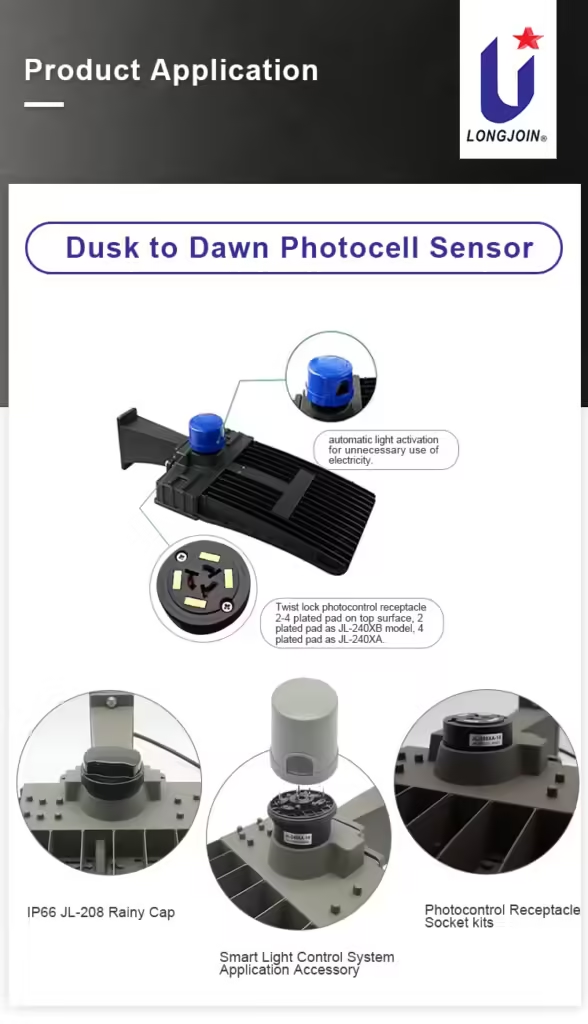
South American municipalities look for solutions that work today and remain relevant tomorrow. Long-join delivers on both fronts.
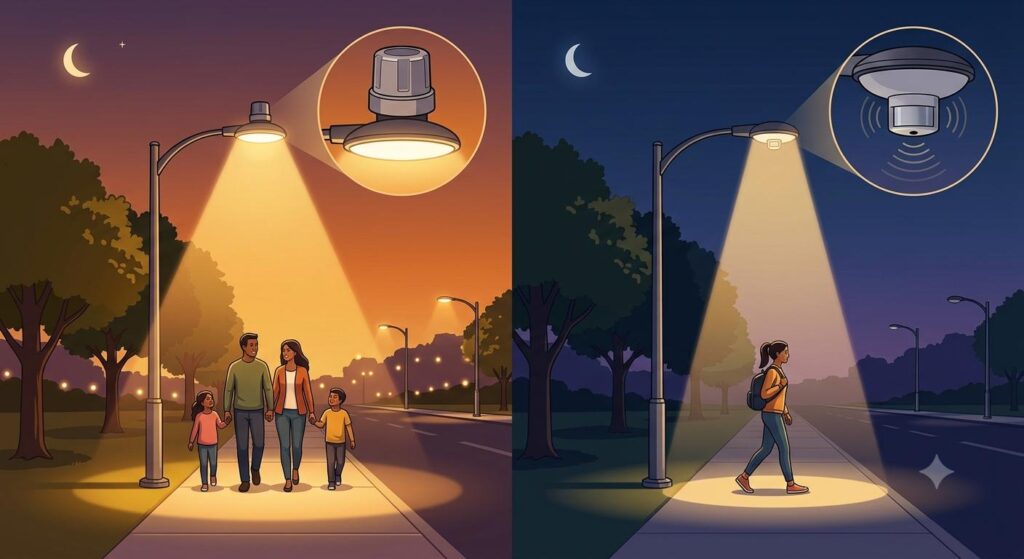
Its photocontrols support intelligent dusk-to-dawn operation, while NEMA sockets provide a standardized interface for future smart upgrades. This combination meets current tender requirements without limiting system growth.
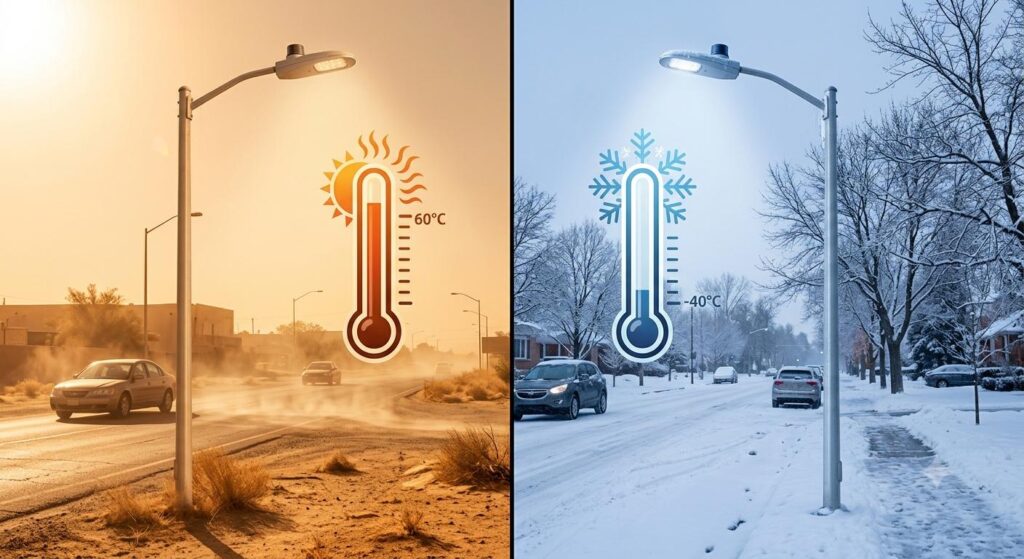
Reliability is another deciding factor. Use of excellent materials and sealed designs reduces failures in hot and rainy environments. Maintenance cycles extend. Operating costs stay predictable. That stability is critical for long-term public lighting contracts.
For bidders, Long-join offers strategic value. Products align with tender checklists. Configurations are easy to justify. Risk is minimized. That makes proposals stronger and more competitive.
Final Words
Long-join NEMA sockets and photocontrols meet the core demands of South American municipal streetlight bids. They deliver standard compliance and extended reliability with low operational risk. For bidders seeking dependable sourcing, Chi-Swear stands out as a reliable supplier of Long-join photocontrollers. Their consistent quality and bid-ready support make project execution smoother and more predictable.


 English
 Spanish
 Russian
 Arabic
 Italian
 Japanese
 Portuguese