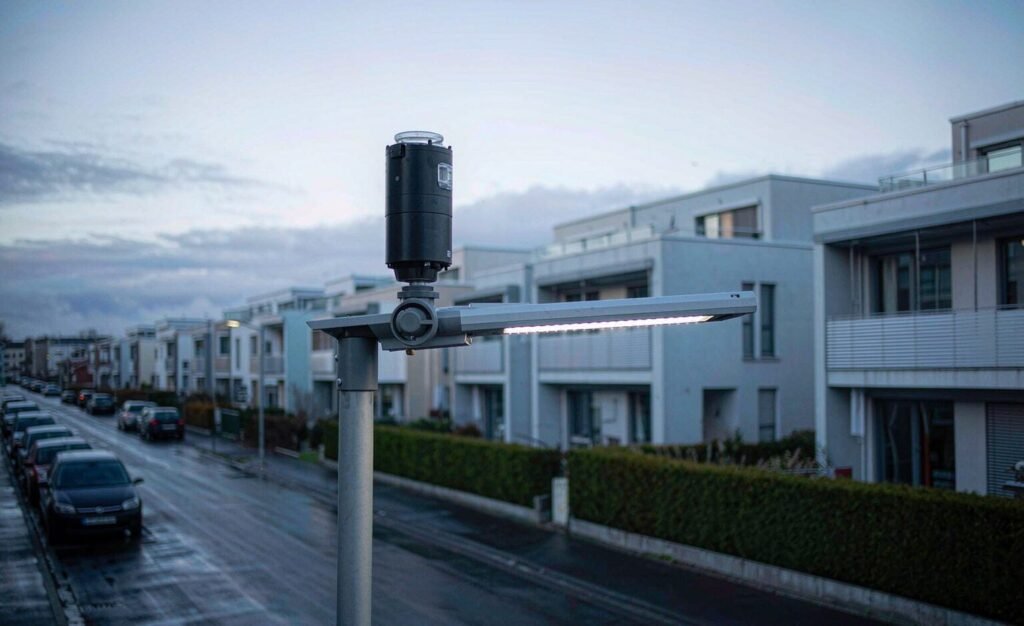
OEM Design & Manufacturing | Long-Join Photocontrol Solutions
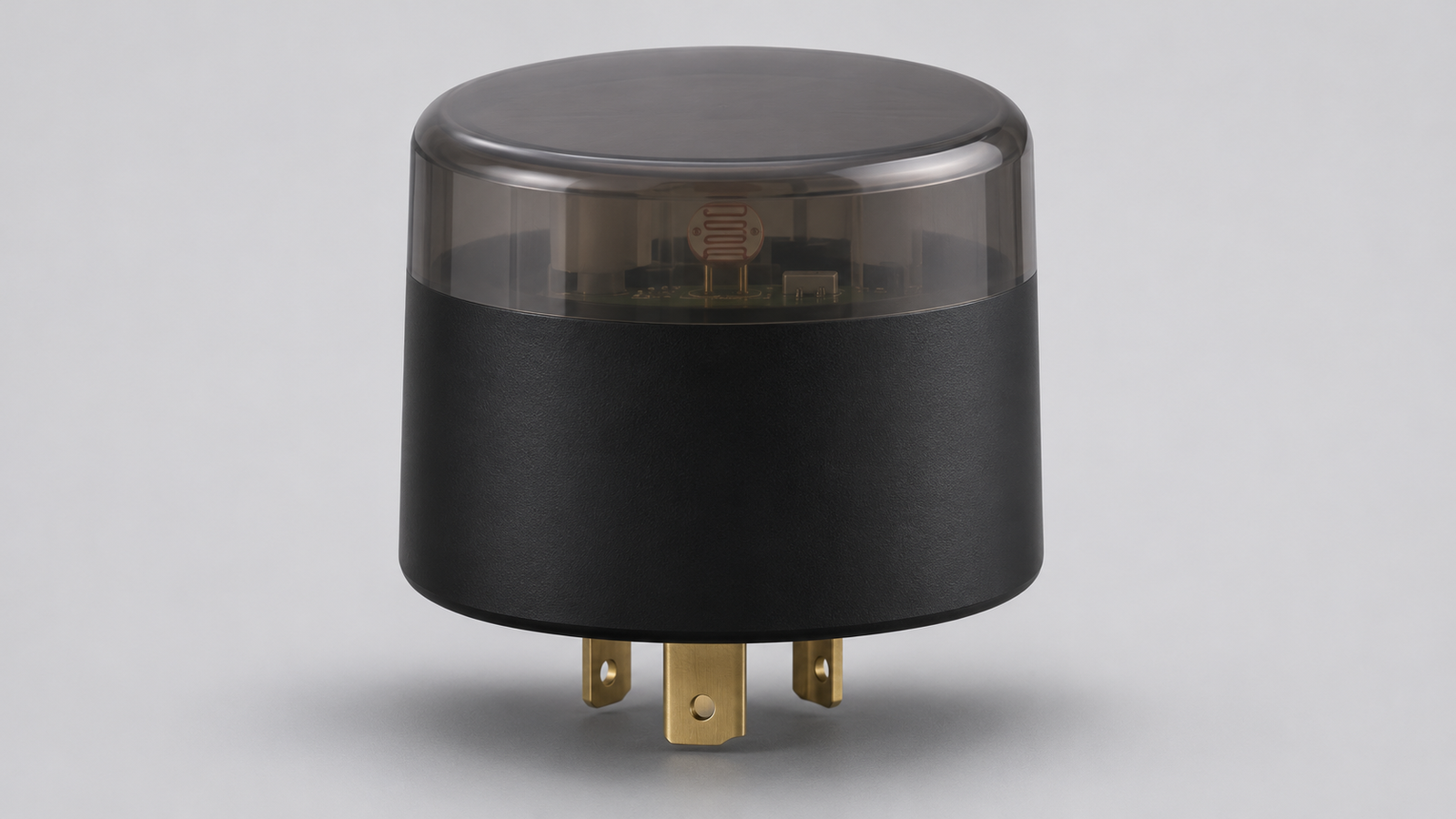
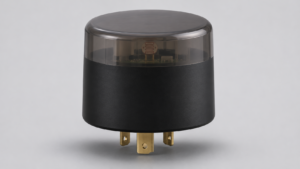
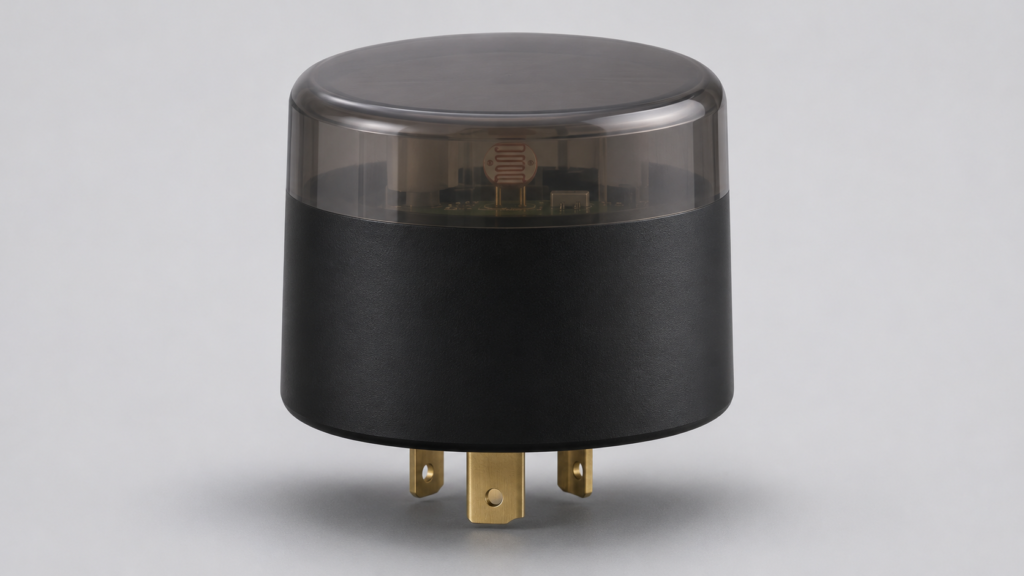
Customer-proposed two-color housing design concept. Final specifications are subject to engineering validation.
For lighting manufacturers and photocontrol brands, enclosure customization is about more than changing the color of a plastic cover. The housing must accommodate optical sensing components, electrical assemblies, environmental protection requirements, and the manufacturer’s preferred product appearance.
A recent OEM design discussion presented a practical challenge: could a NEMA-style photocontrol housing combine a smoked transparent upper dome with a white or black lower body, creating a continuous two-color appearance without relying on a conventionally assembled two-piece shell?
The answer is that multiple manufacturing approaches are possible. However, they differ in tooling investment, production requirements, material compatibility, and long-term interface performance. At Long-Join, evaluating these trade-offs is part of supporting customized photocontrol development.
Why Do Lighting Manufacturers Request Custom Two-Color Photocontrol Housings?
Standard twist-lock photocontrols suit many street-lighting applications. OEM manufacturers and lighting brands may nevertheless require a different appearance or enclosure configuration for their product lines.
- A transparent or smoked upper dome for the light-sensing assembly
- White, black, gray, or another specified housing color
- Custom dimensions and enclosure profiles
- A consistent visual design across a lighting product family
- Specific material and outdoor-durability requirements
- Compatibility with existing internal components and electrical interfaces
- OEM branding and product identification
For example, one lighting brand may prefer a smoked transparent dome with a white lower body, while another may prefer black to match its outdoor luminaire. Both requirements lead to the same engineering question: which manufacturing process is most appropriate?
Three Manufacturing Options for Custom Photocontrol Housings
Before selecting a molding process, determine whether the design requires an integrated multi-material structure, a conventional assembly, or simply a particular external appearance.
1. Conventional Single-Shot Injection Molding
Single-shot injection molding is common for standard plastic enclosure components and is generally suitable when one material and one color are used per molded component.
- Simpler tooling
- Lower initial tooling investment
- Established production processes
- Easier process management for standard components
When a design requires a transparent upper section and an opaque lower section, a conventional single-shot approach may require separate components or an alternative finishing process, which can add assembly requirements.
2. Two-Stage Overmolding
In two-stage overmolding, the first component is molded and then positioned inside another mold for a second injection operation. For a custom photocontrol housing, this can offer a route to a two-color structure.
Potential advantages include lower initial tooling investment than some dedicated two-shot configurations, flexibility when evaluating alternatives, and opportunities to customize the interface between the two molded sections.
The interface still requires careful engineering. Resin compatibility, interface geometry, molding temperature, dimensional stability, and process control can all influence bond performance. For an outdoor enclosure, the interface should also be evaluated under relevant environmental conditions. Overmolding should not automatically be treated as equivalent to a permanently sealed, homogeneous housing.
3. Two-Shot Injection Molding
Two-shot injection molding, also called 2K or dual-shot molding, uses a specialized arrangement to form two material or color regions through coordinated injection stages.
For a smoked dome and opaque lower section, it can support integrated two-color production, reduce intermediate handling in suitable designs, and provide a consistent appearance under controlled production conditions.
It generally requires more complex tooling and a suitable manufacturing setup. Final cost depends on geometry, material, mold construction, production volume, and quality requirements. Two-shot molding does not automatically guarantee complete waterproofing or perfect adhesion; these characteristics must be demonstrated through design verification and testing.
Two-Shot Molding vs. Overmolding: What Should OEM Buyers Compare?
| Evaluation factor | Two-stage overmolding | Two-shot injection molding |
|---|---|---|
| Tooling arrangement | Typically separate molding stages | Coordinated multi-shot process |
| Initial tooling investment | Often lower for suitable designs | Often higher |
| Production handling | Transfer or reloading required | Can reduce intermediate handling |
| Two-color appearance | Possible | Possible |
| Interface reliability | Requires validation | Requires validation |
| Material compatibility | Essential | Essential |
| Suitable application | Cost-sensitive custom designs | Integrated, higher-volume production |
Neither process is universally better. Compare expected production volume, target appearance, material requirements, durability expectations, and tooling budget.
Why Material Selection Matters for Outdoor Photocontrol Housings
Polycarbonate (PC) is often considered for outdoor electrical and lighting enclosures because appropriate grades can provide impact resistance and useful dimensional properties. Not every PC grade performs identically.
- Light transmission: Smoke tint, wall thickness, and pigmentation can influence light reaching the sensing system.
- UV resistance: Outdoor exposure can affect appearance and material performance, so use a grade suited to the intended environment.
- Thermal behavior: The material must tolerate the specified operating and environmental temperatures.
- Dimensional consistency: Wall thickness, shrinkage, and geometry influence molding quality and assembly compatibility.
- Interface strength: Bond performance depends on material compatibility, interface design, and process conditions.
A visually attractive housing is not sufficient if it compromises optical response, dimensional stability, or environmental durability.
What Should Be Tested Before Mass Production?
Mechanical and dimensional inspection
Confirm dimensions, wall-thickness consistency, mechanical interfaces, and fit with internal components.
Interface integrity
Evaluate the connection between molded regions, especially where the enclosure relies on their mechanical or material bond.
Environmental durability
Assess humidity, temperature, UV exposure, and other outdoor conditions applicable to the project.
Ingress protection
If the finished photocontrol must meet a particular IP rating, verify the assembled configuration through appropriate testing. A two-color molding process alone does not establish an IP rating.
Optical performance
Confirm that tint, thickness, and transmission do not adversely affect the required switching behavior.
Production consistency
Review appearance, dimensional tolerances, molding defects, and quality checkpoints before production approval.
How Long-Join Supports Customized Photocontrol Housing Development
Long-Join specializes in outdoor lighting photocontrols and related NEMA receptacles and accessories. Beyond standard models, OEM projects can involve enclosure geometry, resin selection, color combinations, and manufacturing processes.
- Design feasibility: Can the requested appearance and geometry be manufactured?
- Material selection: Which resin and color combinations suit the application?
- Molding process: Is conventional molding, overmolding, or two-shot molding more appropriate?
- Tooling evaluation: What tooling approach is needed?
- Prototype evaluation: What must be checked before tooling approval or mass production?
- Manufacturing review: How can appearance, quality, and production cost be balanced?
Review our OEM/ODM and customized solutions or send a design for project-specific evaluation. Custom manufacturing capability and validation results must be confirmed for each project.
What Information Is Needed for a Custom Housing Quotation?
| Information | Buyer requirements |
|---|---|
| Product application | Street lighting, area lighting, or other |
| Housing design | Drawing, CAD model, or reference image |
| Upper dome color | Clear, smoke, or custom |
| Lower body color | White, black, or custom |
| Material preference | PC or another specified material |
| Overall dimensions | Height, diameter, and tolerances |
| Wall thickness | Specified or open for review |
| Interface requirements | Applicable NEMA interface and model |
| Environmental requirements | Temperature, UV, and ingress protection |
| Expected annual volume | Estimated quantity |
| Tooling arrangement | Customer-funded or to be discussed |
| Project schedule | Prototype and production requirements |
Frequently Asked Questions
Can a NEMA photocontrol housing be made in two colors?
Yes. A two-color concept may be feasible through suitable molding or assembly approaches. The best method depends on geometry, material compatibility, optical requirements, and production volume.
Is two-shot molding always stronger than overmolding?
Not necessarily. Bond performance depends on resin compatibility, interface design, processing conditions, and validation.
Can a smoked transparent dome affect photocontrol performance?
Yes. Tint, thickness, and optical transmission may influence the light received by the sensing system. Evaluate the finished design for the required switching behavior.
Does an integrated two-color housing automatically provide an IP67 rating?
No. Ingress protection must be verified for the relevant finished assembly; the molding method alone does not establish an IP rating.
Can Long-Join evaluate an existing housing design?
Customers can submit drawings, CAD models, photographs, and application requirements for an initial technical review. Feasibility, tooling, prototypes, and production conditions should be confirmed for the specific project.
Discuss Your Custom Photocontrol Housing Project
Looking for a manufacturer that can support a customized NEMA photocontrol housing?
Share your design concept, dimensions, expected order quantity, and application requirements with Long-Join.
Request an OEM Housing Evaluation | Send Your Drawing for a Technical Quote
Email: wally@ljsensor.com
Technical note: Molding methods, materials, tooling requirements, and product performance must be evaluated and confirmed for each custom project.