OUTLINE
- Introduction
- What Is the Difference Between E26 and E27 Lamp Sockets?
- How Do Long-Join’s Bulb Holder Photocell Models Compare?
- What Does the Temperature Compensation System Do?
- What Is the Difference in CFL and LED Compatibility?
- What Certifications Do These Products Carry?
- E26 vs E27 Bulb Sockets
- Frequently Asked Questions on Bulb Sockets
E26 and E27 look almost identical; you could almost not tell the lamp sockets apart at first glance. The thread diameter difference is just one millimetre, and in many cases, the sockets are physically interchangeable.
However, the voltage systems they belong to are not interchangeable, and connecting a 120V product to a 240V circuit — or vice versa — creates a safety hazard.
Understanding the difference before purchasing saves a lot of unnecessary returns and compatibility problems.

What Is the Difference Between E26 and E27 Lamp Sockets?
E26 is the North American standard with a 26mm thread diameter rated for 120VAC, while E27 is the European standard with a 27mm thread diameter designed for 220-240VAC systems.
The one-millimetre size difference means some E26 and E27 products can physically fit each other’s sockets, but this does not make them electrically compatible.
A product designed for 120VAC will fail or create a hazard on a 240VAC supply. When purchasing, confirm both the socket type and the supply voltage of the installation, not just the physical fit.
How Do Long-Join’s Bulb Holder Photocell Models Compare?

There are three models of sockets in the Long-Join catalog that strongly cover 120VAC E26 applications;
| Model | Socket Type | Rated Voltage | Power Consumption | Supported Functions | Certifications |
| JL-301A | E26 | 120VAC | 0.5W Max | No support for CFL or LED | UL, CE, RoHS |
| JL-302A | E26 | 120VAC | 1.5W Max | Supports CFL, LED, and Temperature Compensation | UL, CE, RoHS |
| JL-303A | E26 | 120VAC | 1.5W Max | Supports CFL, LED, and Temperature Compensation | UL, CE, RoHS |
The models are all E26, but they have key differences in 3 major parameters:
- Power consumption
- Lamp type compatibility
- Temperature compensation capability.
The JL-301A’s 0.5W standby consumption is its primary advantage, making it the most energy-efficient option for straightforward incandescent applications. The JL-302A and JL-303A draw 1.5W but add Compact Fluorescent Lamp (CFL) and LED compatibility alongside a built-in temperature compensation system.
What Does the Temperature Compensation System Do?
Based on the season, the outdoor temperatures vary. This could have an effect on a photocell’s switching threshold. The temperature compensation system was developed to curb that effect and prevent any changes in sensitivity due to temperature changes.
The sensors of a photocell can have its typical responses changed slightly as temperature rises or falls, leading to early switching during the hot summer afternoon or late switching in the cold winter. This compensation ensures that it works as calibrated, regardless of the changes.
The temperature compensator in the JL-302A and JL-303A corrects for this variation, maintaining consistent dusk and dawn switching regardless of seasonal temperature changes.
What Is the Difference in CFL and LED Compatibility?
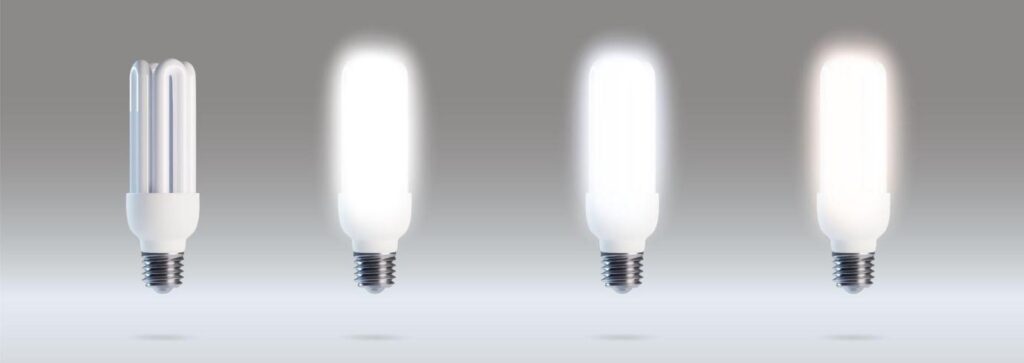
The JL-302A and JL-303A support CFL energy-saving lamps and LED lamps, meeting the requirements of modern efficient lighting.
The JL-301A is designed for traditional incandescent lamps and does not have the electronic compatibility required to drive CFL or LED light sources reliably. For any installation using modern efficient lamps, the JL-302A or JL-303A is the correct specification.
What Certifications Do These Products Carry?
All three Long-Join models carry the following certifications:
- Underwriters Laboratories (UL)
- Conformité Européenne (CE)
- Restriction of Hazardous Substances (RoHS)
UL covers North American safety requirements. CE covers European safety and electromagnetic compatibility. RoHS confirms compliance with hazardous substance restrictions. Together, they cover the regulatory requirements of the major global markets into which these products are sold.
For more information on the full specifications of bulb holder photocells, visit Chi-Swear’s detailed product page.
E26 vs E27 Bulb Sockets
E26 and E27 sockets look alike but belong to different voltage systems, and confusing them creates compatibility and safety problems. Within the E26 120VAC range, Long-Join’s JL-301A suits traditional incandescent applications with the lowest standby consumption. The JL-302A and JL-303A add CFL and LED compatibility and temperature compensation for installations where modern lamp types and consistent seasonal performance are required. All three carry UL, CE, and RoHS certification.
Frequently Asked Questions on Bulb Sockets
Q1: Can E26 and E27 lamp sockets be used interchangeably?
Some products can easily fit into both sockets and function; however, the difference is in the electrical angle. E26 is rated for 120VAC and E27 for 220-240VAC. There is a risk to safety when you interchange voltage ratings that are not compatible. Always match the product voltage rating to the supply voltage, not just the physical socket size.
Q2: Why do the JL-302A and JL-303A need temperature compensation?
The sensitivity of the photosensitive element shifts slightly with temperature changes. Without compensation, the switching threshold drifts as outdoor temperatures change across seasons, causing the photocell to switch at the wrong lux level. The temperature compensator corrects for this and keeps the on/off threshold consistent year-round.
Q3: Why does the JL-301A not support CFL or LED lamps?
The JL-301A circuit is designed around the load characteristics of traditional tungsten filament lamps. CFL and LED light sources have different electrical characteristics, including different inrush current profiles, which the JL-301A’s circuit is not designed to handle. The JL-302A and JL-303A include the additional electronic circuitry needed for reliable CFL and LED operation.
Q4: What certifications do these photocell products carry?
All three Long-Join E26 models carry UL, CE, and RoHS certifications. UL covers North American safety standards. CE covers European safety and electromagnetic compatibility requirements. RoHS confirms the products meet restrictions on hazardous substances in electrical equipment.
Q5: How do I choose between the JL-301A, JL-302A, and JL-303A?
JL-301A is the earlier model, created to prioritize minimum standby power. They are suitable for fixtures that use traditional incandescent lamps. However, for more modern fixtures utilizing CFL or LED lamps or requiring seasonal temperature consideration, the JL-302A or the JL-303A fit perfectly. If the lamps have a mid-to-high power level, the JL-303A is highly recommended.