
OUTLINE
- Introducción
- What Environmental Challenges Do Latin American Projects Actually Face?
- Why Does the IP65 Rating Matter So Much?
- What Goes Wrong with Low-Quality Photocells in These Climates?
- Which Long-Join Models Are Recommended for Latin America?
- Why Does LED Lighting Raise the Waterproof Standard Further?
- What Should Latin American Buyers Check Before Purchasing?
- Photocells For Latin American Climates
- Frequently Asked Questions
Talk to a contractor who has run outdoor lighting projects across coastal Brazil or Mexico’s Gulf highway network, and they’ll tell you the same thing: a photocell that works fine in a dry European climate can fail inside a wet season.
Housing cracks, contacts corrode, moisture gets in through a gasket that’s lost its compression, and suddenly you’re dealing with false switching or a dead unit on a pole that requires a bucket truck to reach.
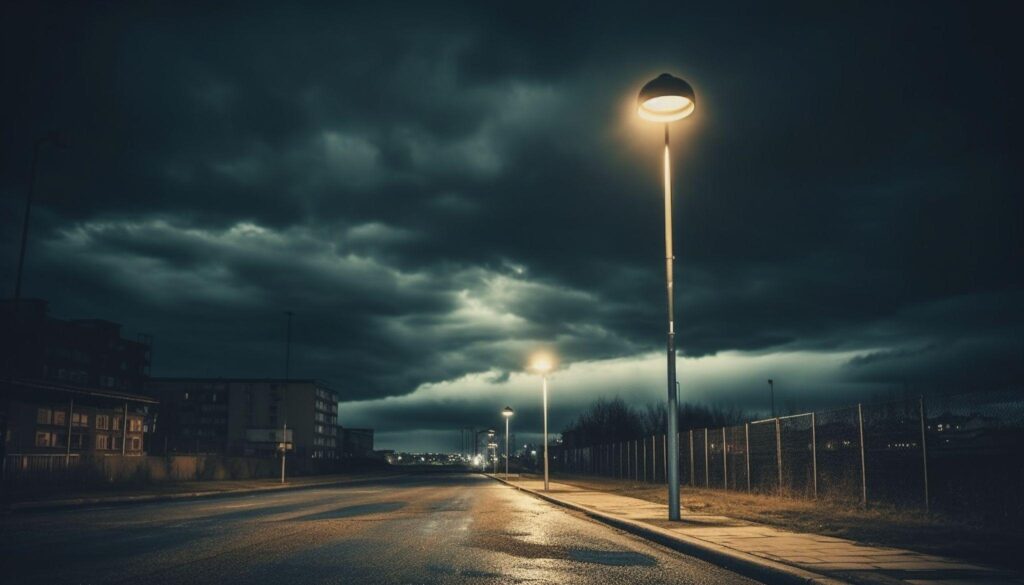
Latin America’s climate is not forgiving to under-specified outdoor equipment. High humidity, salt air, continuous rainfall, intense UV, and wide temperature swings don’t just shorten service life — they expose every weakness in a photocell’s design.
This is where selecting an IP65-rated dusk-to-dawn sensor matters, and why cutting corners on the specification usually ends up costing more than the savings were worth.
What Environmental Challenges Do Latin American Projects Actually Face?
Latin American outdoor lighting projects face a combination of humidity, UV intensity, salt corrosion, and rainfall that standard photocontrols are not designed to handle over the full service life.
| Región | Environmental Challenge | Impact on Photocell |
| Brazil’s coastal cities | Salt fog and high humidity | Accelerated contact corrosion |
| Colombia’s tropical zones | Continuous heavy rainfall | Riesgo de entrada de agua |
| Peru’s industrial regions | Dust and humidity combined | Gasket and seal degradation |
| Mexico’s coastal highways | UV intensity and heat | Housing brittleness and cracking |
| Ecuador’s rainy regions | Condensation | Internal circuit failure |
These conditions require a photocontrol cell with:
- Waterproof sealing that holds across years of thermal cycling
- UV-resistant housing that does not become brittle
- Stable performance across wide temperature ranges
- Corrosion-resistant contacts
Why Does the IP65 Rating Matter So Much?
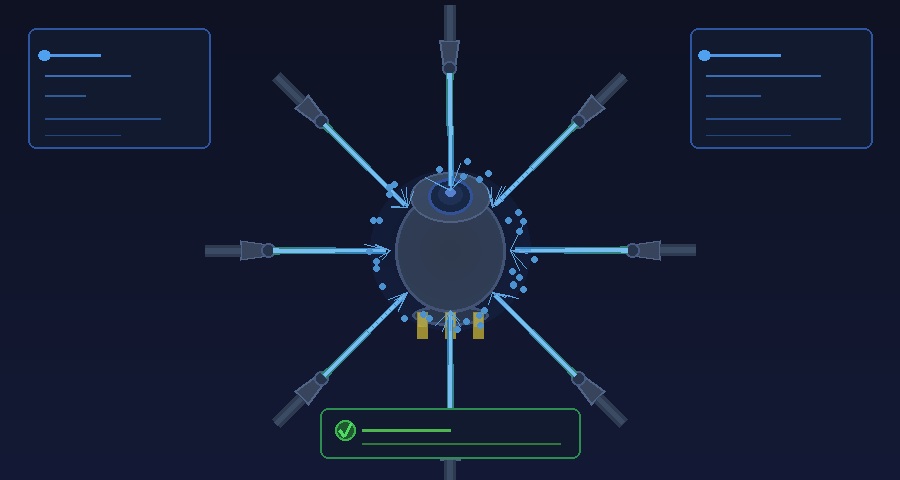
IP65 means complete dust protection and resistance to water jets from any direction, and for a photocell mounted on an exposed outdoor fixture across a tropical wet season, this is not a premium specification — it is the minimum one that works.
The difference between IP54 and IP65 in practice is significant:
| Característica | IP54 Photocell | IP65 Long-Join Photocell |
| Dust protection | Parcial | Complete |
| Water resistance | Light splash only | Water jet from any direction |
| Humid climate reliability | Moderado | Excelente |
| Recommended for tropical regions | Not ideal | Highly recommended |
IP54 is adequate for sheltered positions in temperate climates. It is not adequate for a street light pole in Cartagena’s wet season or a highway fixture on Mexico’s Gulf Coast.
What Goes Wrong with Low-Quality Photocells in These Climates?
Three failure modes account for most photocell failures in Latin American projects:
UV resistance and housing failure
Some photocell manufacturers use standard plastic housings without UV-resistant additives. After extended sunlight exposure in tropical latitudes, the plastic housing becomes brittle, discolours, and eventually cracks. Once the housing cracks, dust and moisture reach the internal components directly.
Long-Join photocontrols use UV-resistant engineered housing materials with outdoor-grade structural design, maintaining integrity across years of tropical UV exposure.
Gasket failure and water leakage
Low-quality silicone gaskets at the receptacle base shrink under heat and lose elasticity over time, creating gaps that allow rainwater to penetrate during heavy downpours. Water reaching the relay causes corrosion, contact sticking, short circuits, and false switching.
Long-Join’s sealing design uses industrial-grade gaskets with optimised compression geometry that maintains its seal across thermal cycling.
Impact resistance during installation
Lower-grade photocells can crack or deform during transport, pole installation, or maintenance operations in remote locations. For municipal roadway projects where hundreds of units are installed and maintained across a network, physical durability during handling directly affects total project cost.
El Chi-Swear photocell catalogue consists of many Long-Join solutions. These are high-quality photocells that are built to avoid common failure modes. Here are Long-Join’s waterproof design improvements in comparison:
| Componente | Low-Quality Design | Long-Join Design |
| Silicone sealing ring | Thin and unstable | Industrial-grade |
| Base waterproof structure | Basic assembly | Optimised sealing geometry |
| Resistencia a los rayos UV | Plástico estándar | UV-resistant engineering material |
| Contact corrosion protection | Mínimo | Enhanced plated contacts |
| Outdoor lifespan | 1-2 years typical | Long-term outdoor reliability |
Which Long-Join Models Are Recommended for Latin America?
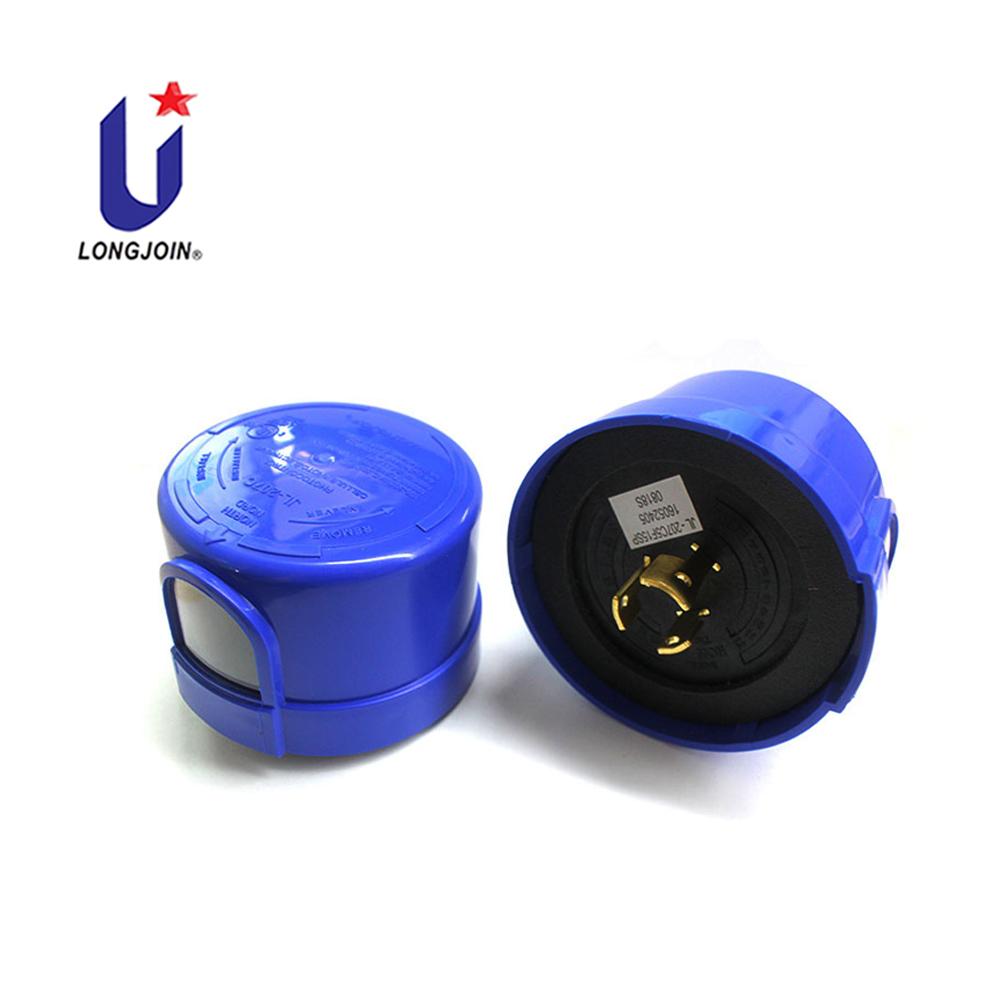
Long-Join’s range covers all main application types across Latin American outdoor lighting, from residential street lighting to smart city infrastructure.
| Solicitud | Modelo recomendado | Ventaja clave |
| Alumbrado público | JL-205C | Stable LED compatibility |
| Iluminación del estacionamiento | JL-207C | IP65 and long switching life |
| Proyectos de ciudades inteligentes | JL-245CN | NB-IoT remote monitoring |
| Solar lighting | JL-411 series | 12V/24V DC native operation |
| Highway lighting | JL-207C (IP67 variant) | Enhanced outdoor durability |
Why Does LED Lighting Raise the Waterproof Standard Further?
LED lighting systems are more sensitive to moisture than the HID systems they replaced. Voltage instability and leakage current from moisture ingress cause LED drivers to flicker and sensors to cycle incorrectly. A moisture event that might have caused a minor issue with an HID ballast can cause complete driver failure on an LED fixture.
IP65 has become the preferred standard for modern outdoor LED lighting systems in Latin America precisely because the consequences of moisture ingress are more severe.
What Should Latin American Buyers Check Before Purchasing?
Running through a short checklist before committing to a photocell supplier saves a lot of problems once the product is in the field.
Before purchasing, verify:
- IP65 waterproof certification
- UV-resistant housing materials
- Outdoor sealing design
- LED compatibility
- Long switching cycle life
- UL / CE certification
- Tropical climate suitability
Before large-volume procurement, contractors and distributors are strongly encouraged to request samples and conduct outdoor field testing across at least one wet season. Long-Join supports project sample evaluation for overseas buyers. Full product specifications are available on Chi-Swear’s IP65 photocell range.
Photocells For Latin American Climates
If you’re specifying outdoor photocells for a Latin American project, IP65 should be the starting point for you. The combination of UV-resistant housing, industrial-grade gaskets, and corrosion-resistant contacts that Long-Join builds into its IP65 range addresses the specific failure modes that humid tropical climates produce. Buying on price alone won’t work out fine in humid areas such as Cartagena, Manaus, or Veracruz.
Frequently Asked Questions
Q1: Is IP54 sufficient for outdoor lighting in tropical Latin American climates?
For anything fully exposed, no. IP54 covers light splash but not a sustained water jet from any direction, and wind-driven rain in a tropical downpour is exactly that. IP65 is the safe starting point for any exposed outdoor position in these climates.
Q2: Why do some outdoor photocells fail after heavy rain seasons?
Usually, the sealing ring between the housing halves loses its elasticity from thermal cycling and UV exposure over time, creating small gaps where water can get in.
Q3: How does UV exposure affect photocontrol housing materials?
Standard plastic without UV stabiliser additives breaks down under sustained tropical sun and this open up paths for moisture to get in. It doesn’t show up immediately, which is why UV-resistant engineering materials matter even when the product looks the same from the outside.
Q4: What causes water leakage in low-quality photocontrol receptacles?
The most common cause is a thin or poorly compressed silicone gasket at the receptacle base. Heat makes cheap silicone shrink, and once it stops filling the gap between the photocell base and the luminaire housing, water finds its way through during heavy rain.
Q5: Which Long-Join photocontrol models are best for humid coastal environments?
The JL-207C in IP67 configuration is the strongest choice for coastal positions with salt air or wave spray exposure. However, for solar-powered coastal installations on 12V or 24V DC systems, the JL-411 series in IP65 is the right pairing.

 English
 Spanish
 Russian
 Arabic
 Italian
 Japanese
 Portuguese