OUTLINE
- Introduction
- What Are the Three Common LED Fixture Types and What Do They Need?
- Which Socket Type Should You Choose?
- Which JL-3X Model Suits Which Fixture?
- LED Fixture Compatibility
- Frequently Asked Questions
Automatic outdoor lighting doesn’t require a complex system. A bulb holder photocell controller screws into the existing lamp socket, the bulb screws into the controller, and the fixture becomes dusk-to-dawn automated from that point.
The challenge most buyers run into isn’t the concept, but knowing which controller to pair with which fixture, and which socket standard applies to their installation.
Some photocontrol manufacturers cover the three most common outdoor LED fixture types across two socket standards, and getting the pairing right means accurate sensing, reliable switching, and no compatibility headaches after installation.
What Are the Three Common LED Fixture Types and What Do They Need?
Lamp posts, porch and coach lights, and walkway lamp posts each have different installation environments, power levels, and switching requirements, and the right photocell controller for each is determined by those differences, not just by socket size.
Lamp Posts
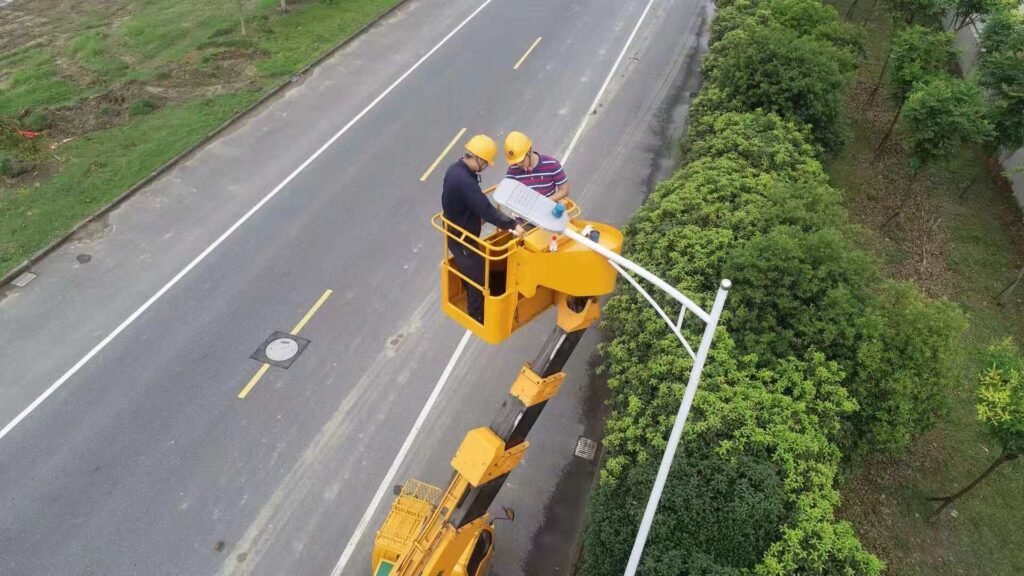
Lamp posts represent the most demanding application in this group. They are typically the highest-power fixtures, mounted at greater heights, and exposed to the full range of outdoor weather conditions across their service life.
A photocell controller on a lamp post faces sustained UV exposure, temperature variation, and in busier locations, interference from vehicle headlights and nearby artificial sources. The controller needs reliable switching performance, adequate sensitivity across the natural light range, and physical durability appropriate for the mounting height and environment.
Porch and Coach Lights
Porch and coach lights are moderate-sized area fixtures at building entrances, driveways, and architectural transition points. Their primary requirements are different from lamp posts.
They typically run at lower power levels, operate in positions that are at least partially sheltered by building overhangs or canopies, and serve residential or light commercial applications where energy efficiency across the full nightly cycle matters.
Standby power consumption is a relevant consideration here, since porch lights often run on residential circuits where cumulative standby draw across multiple fixtures is noticed in the electricity bill.
Walkway Lamp Posts
Walkway lamp posts are smaller fixtures that provide circular illumination along footpaths, garden walkways, and residential pathways. They face a specific challenge that lamp posts and porch lights don’t: their low mounting height and garden position put them in an environment full of ambient light sources that can interfere with accurate sensing.
False-trigger prevention is therefore more important on walkway lamp posts than on higher-mounted fixtures.
Which Socket Type Should You Choose?

Long-Join’s bulb holder photocell controllers support two socket specifications:
- E26 for North American 120VAC installations
- E27 for international 220-240VAC applications
The fixture’s existing lamp holder determines the correct choice.
E26 is the standard North American medium base with a 26mm thread diameter, designed for a 120VAC supply. E27 is the European standard with a 27mm thread diameter, designed for 220-240VAC systems.
The two look very similar and are often physically interchangeable, but the voltage systems they belong to are not. Connecting a 120VAC E26 controller to a 240VAC supply will cause failure and create a safety risk. Confirm the existing lamp holder and the supply voltage before ordering.
For international applications requiring E27 socket compatibility, Long-Join’s B-suffix models cover 240VAC installations across the same fixture types.
Which JL-3X Model Suits Which Fixture?

Three models cover the main outdoor LED fixture applications across the 120VAC E26 format, with differences in standby consumption, lamp type compatibility, and temperature compensation that determine which is best suited to each application environment.
| Model | Socket Type | Rated Voltage | Suitable LED Fixture Power Range | Typical Application |
| JL-301A | E26 | 120VAC | ≤150W | Porch lights, small walkway lamps |
| JL-302A | E26 | 120VAC | ≤150W | Standard street lamps and medium/low power luminaires |
| JL-303A | E26 | 120VAC | ≤150W | Mostly mid-to-high power LED street lamps |
Select the appropriate model according to fixture power and site environment to ensure sensitive sensing, low power consumption, and high reliability.
The JL-301A is the right choice for traditional incandescent porch lights and small walkway lamps where standby efficiency is the priority, and the lamp type is a standard incandescent.
The JL-302A is the versatile mid-range option that handles standard LED and CFL lamps across street lamp and general outdoor applications with temperature compensation for consistent seasonal performance.
The JL-303A suits mid-to-high power LED street lamp applications where broader load compatibility and interference resistance are required.
Chi-Swear offers full specifications for all JL-3X models, including E27 variants for international applications.
LED Fixture Compatibility
Matching a bulb holder photocell controller to an LED fixture comes down to three questions:
- What socket type does the fixture use?
- What voltage is the supply?
- What lamp type is connected?
Long-Join’s models cover a wide range of applications across the 120VAC E26 standard, with differences in standby consumption, LED compatibility, and temperature compensation that make each model the right answer for a specific set of installation conditions. Get the pairing right, and the fixture runs automatically and reliably from the first dusk after installation.
Frequently Asked Questions
Q1: What is a dusk-to-dawn photocell controller?
It uses a photosensitive component to detect ambient light levels and automatically switches the connected fixture on at dusk and off at dawn. No manual input is needed once installed, and the built-in time delay prevents false switching from temporary light sources like vehicle headlights or lightning.
Q2: How do I determine the correct socket type for my LED fixture?
Check the existing lamp holder in the fixture. E26 is the 26mm thread base used in North American 120VAC systems. E27 is the 27mm European standard used in 220-240VAC systems. The physical difference is small, but the voltage systems are not interchangeable, so confirm both the socket type and supply voltage before purchasing.
Q3: What is the maximum power supported by the JL-3X series?
All three models support up to 150W tungsten lamp load, which covers the majority of medium and low-power LED street lamp applications in North American residential and light commercial installations.
Q4: Which model suits outdoor high-power LED lamps?
The JL-303A is recommended for mid-to-high power LED street lamps. It provides stable switching across a broader range of load types and offers better interference resistance than the JL-301A for demanding outdoor environments.
Q5: What advantages does a bulb holder photocell controller bring?
No rewiring or separate mounting is required. The controller screws into the existing lamp socket, the bulb screws into the controller, and the fixture becomes automatically controlled. It is one of the simplest retrofit options for adding dusk-to-dawn control to any E26 or E27 fixture without modifying the fixture itself.
External Links