OUTLINE
- Introdução
- What Types of Dusk-to-Dawn Sensors Are Used in Parking Lots?
- What Power Ranges Do Parking Lot Fixtures Run At?
- Which Long-Join Models Are Recommended for Parking Lot Applications?
- How Much Energy and Money Does a Dusk-to-Dawn Sensor Actually Save?
- Save Energy and Money with Dusk-to-Dawn Sensors
- Frequently Asked Questions on Dusk-to-Dawn Sensors
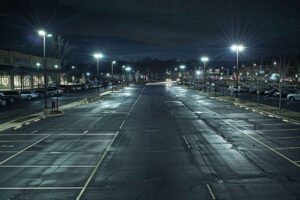
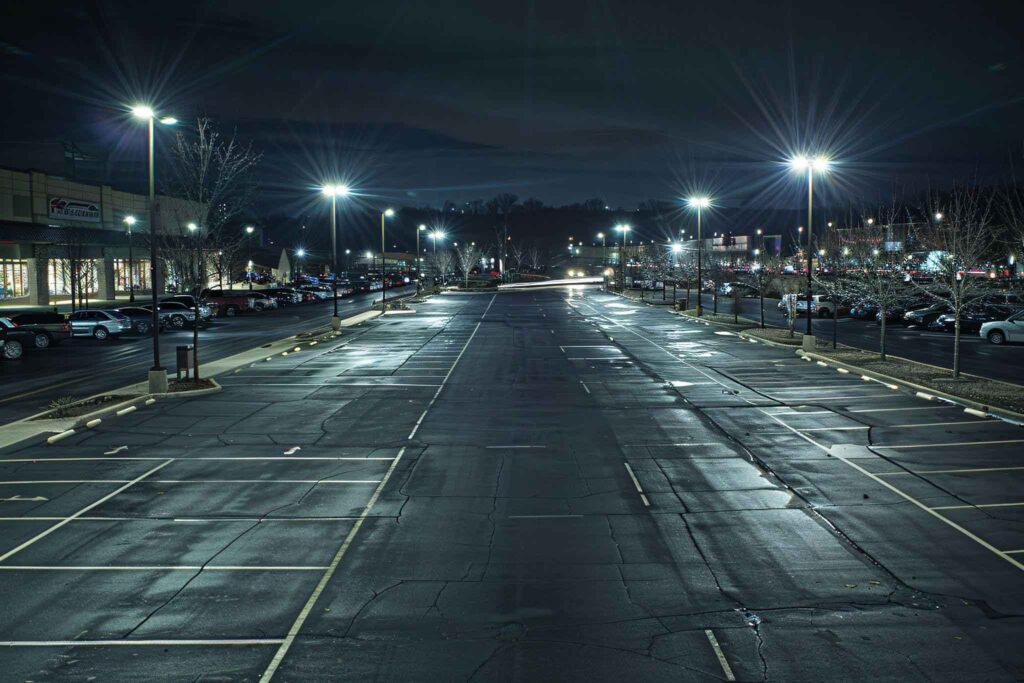
Something most parking lot managers don’t think about until they see the electricity bill is that the lights are running whether anyone is in the lot or not.
A 500-fixture parking lot is burning the same wattage at midnight as it burns at peak traffic days. Energy wasted, high cost.
Dusk-to-dawn sensors solve this problem by responding to what’s actually happening outside. When it gets dark, the lights come on. When it gets light, they go off, without any manual intervention.
This is a change that provides real and measurable impact on energy costs for commercial and municipal parking lot operators. Let’s dive into how it works, which products suit different parking lot configurations, and what the savings actually look like in numbers.
What Types of Dusk-to-Dawn Sensors Are Used in Parking Lots?
Three sensor formats cover the range of parking lot lighting configurations, and the right one depends on how the fixture is wired and what kind of access the installation allows for future maintenance.
Fotocélulas com trava giratória
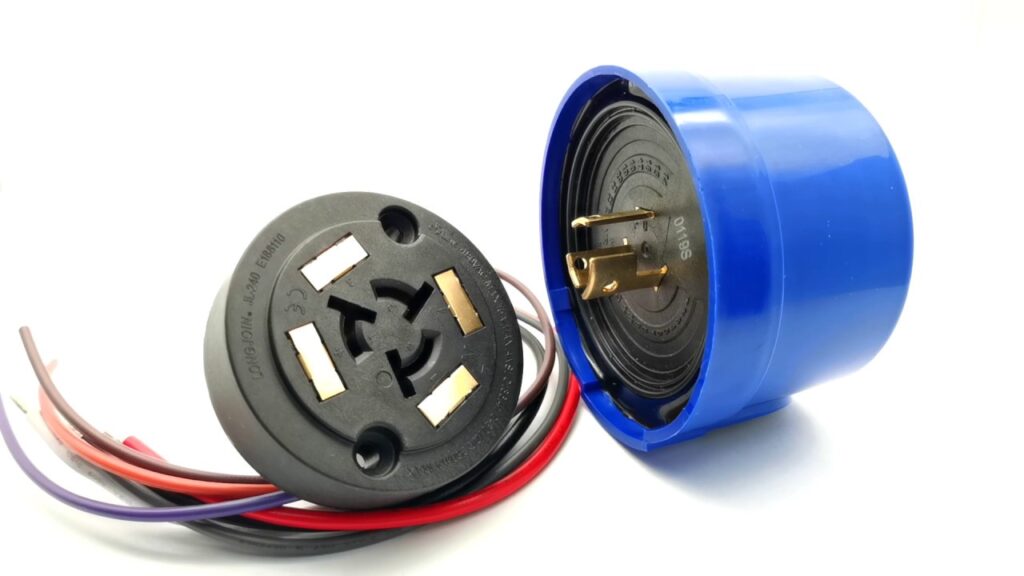
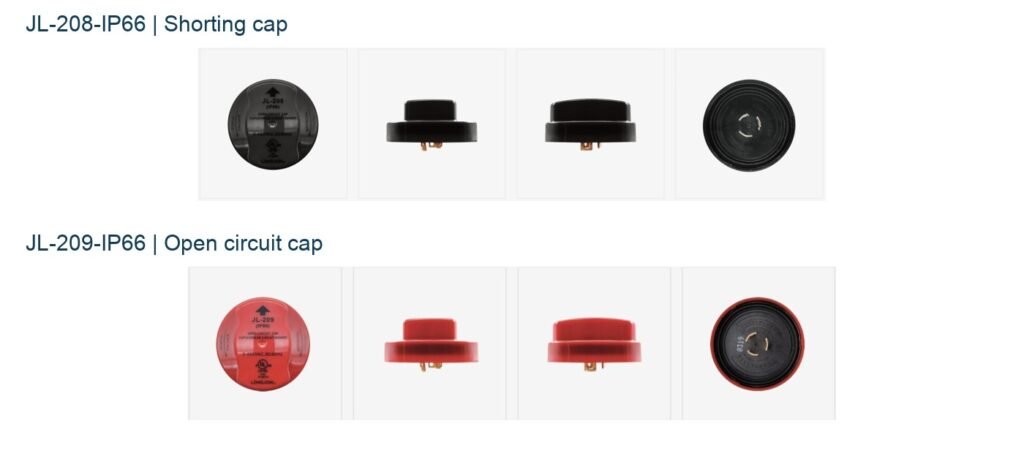
Twist-lock is the go-to for commercial parking lot lighting. They plug directly into the NEMA receptacle on the fixture head and can be removed and replaced without touching a single wire.
For a facility manager running hundreds of fixtures across a large site, maintenance simplicity matters enormously. Models like the JL-205C, JL-215C, and JL-207C all use the standard ANSI C136.10 twist-lock format and cover the power ranges typical of commercial parking luminaires.
Fotocélulas com fio

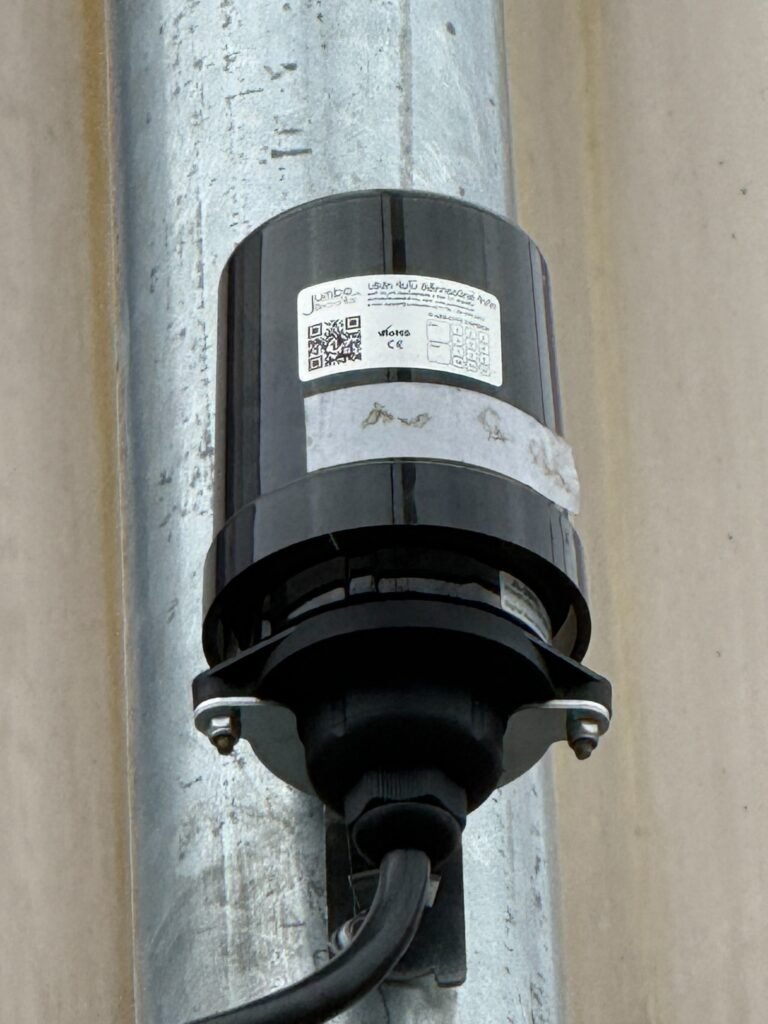
These are the photocells that connect directly to the fixture circuit. They suit single fixtures and installations where no NEMA receptacle is present, typically in older fixtures or compact wall-mounted units at lot entrances. Replacement requires disconnecting and reconnecting wires within the fixture.
Embedded photocells
Sometimes, photocells are built directly into the fixture housing during manufacture. They’re used where the fixture design is too compact to accommodate an external sensor, or where the manufacturer has integrated sensing as part of the fixture specification. These are typically found in smaller decorative or residential-adjacent fixtures at the perimeter of commercial lots rather than the main field lighting.
What Power Ranges Do Parking Lot Fixtures Run At?
Parking lot luminaires span a wide power range, and getting the photocell load rating right across the full range is important for relay longevity and stable switching performance.
Medium-power fixtures (100W – 150W)
This range covers standard commercial lots, moderate-sized retail car parks, and residential apartment complexes with shared parking areas. These are the most common fixture types in general commercial parking lot applications, and the JL-205C handles this range comfortably with its 1,000W tungsten / 1,800VA ballast rating.
High-power fixtures (200W – 240W)
These suit larger sites, sites with security-grade illumination requirements, and multi-level car parks where consistent brightness across a covered structure is a priority. At this power level, the LED driver inrush current on startup becomes a more significant consideration, and a photocell with proper LED compatibility is worth specifying explicitly rather than assuming.
High-end fixtures (300W – 500W)
High-end fixtures are found in heavily trafficked areas such as major retail centres, airport and transport hub parking structures, logistics facility yards, and stadiums. At these load levels, the JL-207C HP variant with its 20-amp relay and 50,000-plus cycle life is the appropriate specification, particularly in high-use sites where the photocell is switching every single day under sustained load.
Which Long-Join Models Are Recommended for Parking Lot Applications?
The right model comes down to fixture power level and how demanding the site environment is.
JL-205C and JL-200X
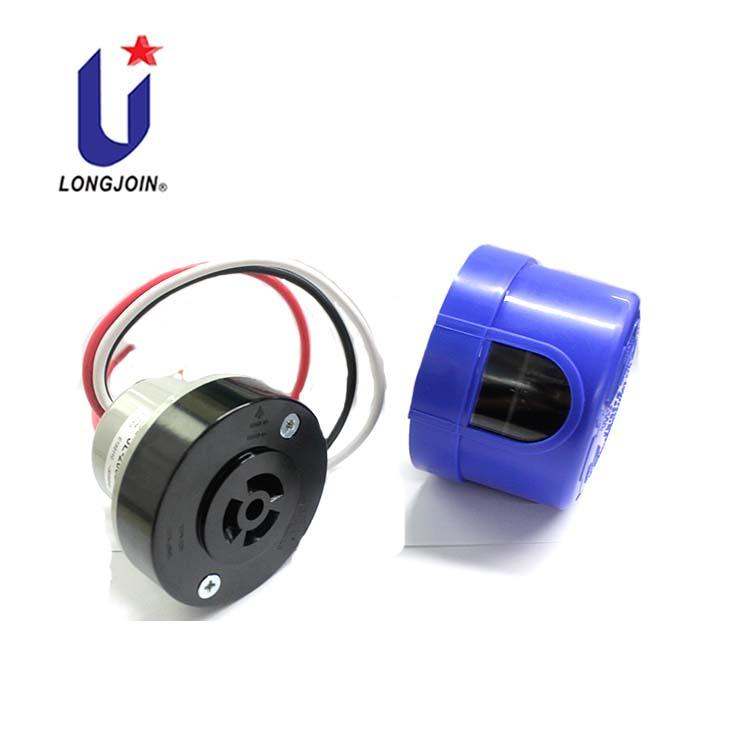
The JL-205C paired with the JL-200X receptacle base covers most medium to low-power installations. It is ANSI C136.10 compliant, LED-compatible, and allows tool-free replacement without rewiring.
JL-215C and JL-207C

For higher-power fixtures and busier environments, the JL-215C and JL-207C offer stronger protection and more durable construction. The JL-207C adds IR-filtered sensing e zero-crossing switching, both of which directly reduce relay wear in high-traffic lots where vehicle headlights are a constant presence.
How Much Energy and Money Does a Dusk-to-Dawn Sensor Actually Save?
The savings calculation is straightforward. Every hour the photocell prevents the light from running during daylight is an hour of wattage not consumed.
Based on six effective saved hours per day at $0.15 per kWh, here is how the annual energy and cost savings per fixture compare:
| Lamp Power | Using Twist-lock Photocells | Non-Photocell Lighting Consumption | Energy Saved (kWh/year) | Estimated Cost Saving (USD/year) |
| 150W | Automated control reduces unnecessary lighting | Operates 24/7 | About 525 kWh | About $77.2 |
| 240W | Precise timing control shortens usage time | Operates 24/7 | About 840 kWh | About $123.52 |
| 500W | Efficient timer control cuts energy waste | Operates 24/7 | About 1750 kWh | About $257.32 |
However, these figures are conservative estimates based on six saved hours daily. In practice, seasonal variation means winter nights run longer than summer nights, and a photocell responding to actual dusk and dawn captures those extra hours automatically, while a fixed timer set to a seasonal average does not.
Across a full site, the figures scale quickly. A lot running 50 fixtures at 240W saves roughly 26,250 kWh per year, which translates to approximately $3,940 annually at $0.15 per kWh. A larger facility with 200 fixtures at 300W saves over 130,000 kWh per year, or around $19,700. The cost of the photocells themselves is recovered within the first weeks of operation at those volumes.
Save Energy and Money with Dusk-to-Dawn Sensors
Dusk-to-dawn sensors are one of the most straightforward energy investments in parking lot operations. The calculation is simple, and it requires no manual intervention. Long-Join’s JL-205C covers standard commercial lots, the JL-207C handles demanding sites with vehicle interference and high load requirements, and the JL-215C fills the middle ground. At six saved hours per day, the payback on the photocell cost is measured in weeks, not years.
Frequently Asked Questions on Dusk-to-Dawn Sensors
Q1: Is the installation of twist-lock dusk-to-dawn photocells convenient?
Yes. The JL-205C and JL-207C are both ANSI C136.10 compliant, which means they fit any standard 3-pin NEMA receptacle. The installation is a push-and-twist motion that takes seconds and requires no tools or rewiring.
Q2: Are photocells compatible with different lamp power ratings?
Long-Join’s range covers 100W through 500W and above. The JL-205C handles up to 1,000W tungsten and 1,800VA ballast. The JL-207C HP variant extends this further with a 20-amp relay suited to the heaviest fixture loads in large commercial lots.
Q3: How much energy saving can photocells offer?
At six saved hours daily and $0.15/kWh, a 240W fixture saves roughly $79 per year. Across a 50-fixture lot that is close to $4,000 annually. Larger facilities with higher-power fixtures see proportionally larger returns.
Q4: How well do these photocells resist interference from vehicle headlights?
The JL-207C specifically addresses this with two design features:
- An IR-filtered phototransistor that blocks the infrared-heavy output of headlights
- Zero-crossing switching that eliminates the relay arcing caused by false-triggered switching cycles. In active parking environments, both matter.
Q5: Is the maintenance of photocells complicated?
Not with the twist-lock format. A technician removes the old unit with a counterclockwise rotation and installs the replacement with a clockwise twist. No wiring is touched. On a standard parking lot pole, the whole job takes under a minute.