OUTLINE
- Introduction
- Why Does Adjustability Matter in Commercial Installations?
- What Makes a Photocontrol Adjustable?
- JL-104 Series: Adjustable Sunlight Orientation Design
- JL-118 Series: Advanced Adjustable Photocontrol Design
- JL-103 Series: Rain Cap Colour Selection
- How Do the Models Compare?
- Future Trend: Smarter and More Adaptive Photocontrols
- The Need for an Upgrade
- Frequently Asked Questions on Adjustable Photocontrols
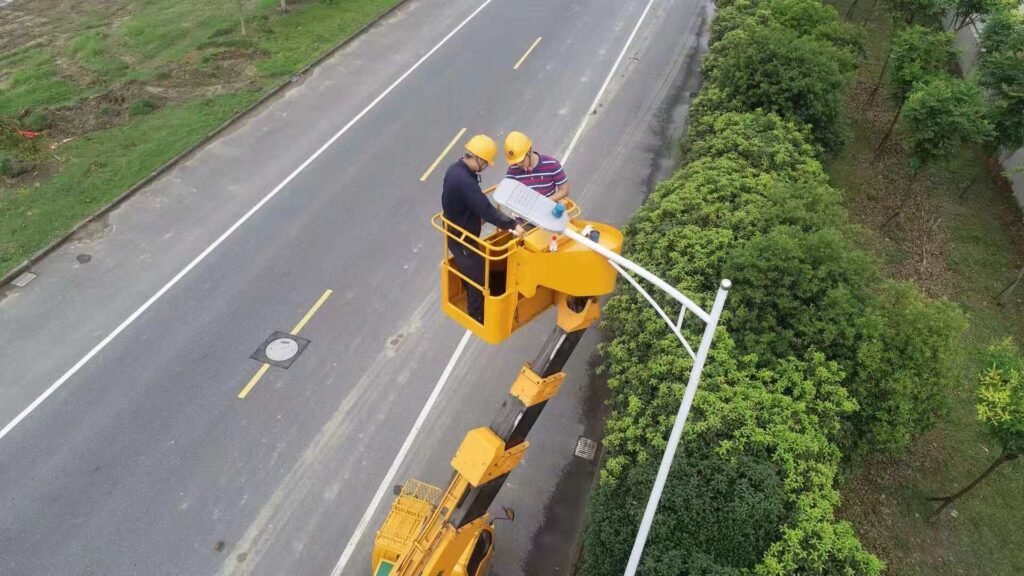
In photocell installation, some things are clear: A photocell mounted on the north face of a building reads a very different light environment from one on the south face. A sensor installed under a canopy sees less direct sky than one on an open pole. A unit next to a billboard picks up reflected artificial light that a unit in an open car park never encounters.
These differences matter because a fixed photocell set to a standard lux threshold assumes a consistent light environment, and commercial outdoor lighting installations are rarely consistent.
False switching, premature activation, delayed deactivation, and unstable cycling are the symptoms of a photocell that can’t adapt to its actual installation environment.
Adjustable photocontrols address this directly by allowing the installer to tune the sensor direction, sensitivity threshold, or both, to match the specific conditions of the site. Let’s explore Long-Join’s adjustable dusk-to-dawn sensor models that help improve commercial outdoor lighting performance.
Why Does Adjustability Matter in Commercial Installations?
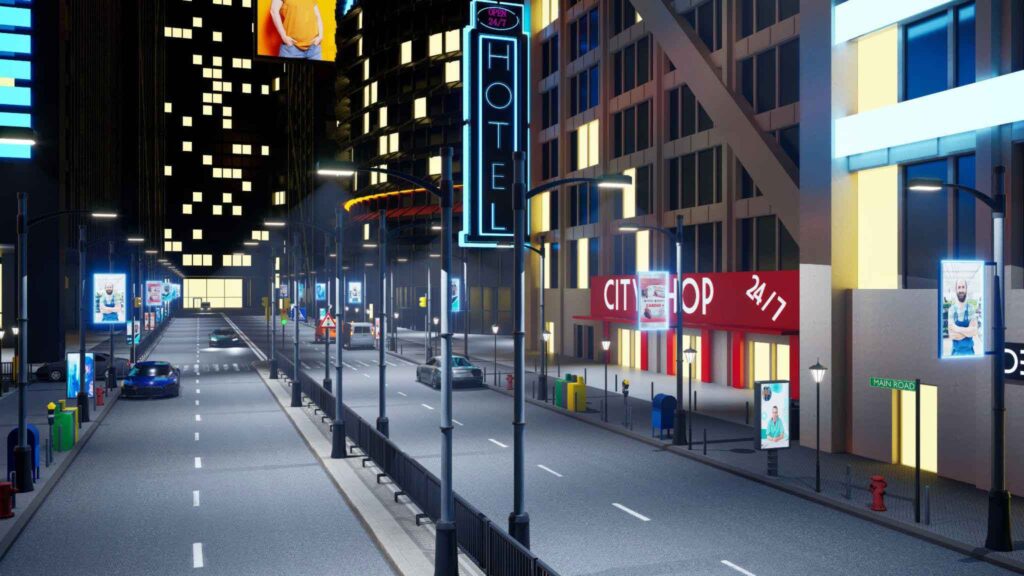
Commercial outdoor lighting environments introduce variables that fixed photocontrols handle poorly.
Things like these affect sensing accuracy:
- Building shadows
- Nearby light pollution
- Billboard reflections
- Vehicle headlights
- Varied mounting orientations
Without the ability to adjust, a photocell in a shadowed position may switch on before actual dusk because the shadow reads as darkness. One facing a nearby illuminated sign may never switch off reliably at dawn because the sign’s output keeps the lux reading above the off-threshold. One mounted at a non-standard angle on a decorative fixture may sense the ground rather than the sky.
Adjustable photocontrols give the installer the tools to correct for these conditions during commissioning rather than accepting the performance of a fixed unit that wasn’t designed for the specific site.
What Makes a Photocontrol Adjustable?
Adjustability in a dusk to dawn sensor typically means one or both of two things:
- The ability to rotate/adjust the sensor head toward optimal sky exposure
- The ability to tune the lux sensitivity threshold using a physical slide adjustment.
Rotational adjustment addresses the direction problem. If the sensor can be oriented to face open sky rather than a reflective surface or shadow-casting obstruction, the accuracy of its dusk and dawn readings improves significantly. While sensitivity adjustment addresses the threshold problem. By sliding a metal strip across the sensor’s exposure window, the effective sensitivity can be raised or lowered.
Long-Join offers adjustable photocontrols that achieve these adjustable features in different scenarios:
| Model | Adjustable Feature | Typical Application |
| JL-104 Series | Rotational sunlight angle adjustment | Commercial outdoor lighting |
| JL-118A | slide sheets | Parking lot & roadway lighting |
| JL-118AV | Angle adjustment + sensitivity tuning by slide sheets | Industrial & municipal projects |
| JL-103 Series | Rain cap color selection | Decorative & outdoor fixtures |
JL-104 Series: Adjustable Sunlight Orientation Design

The JL-104 is a swivel-type wire-in photocontrol with a rotatable shaft that allows the sensor head to be oriented after installation, combined with a time delay that filters out short-term interference from vehicle headlights and lightning.
The JL-104 is equipped with a rainproof PC housing suitable for outdoor installation, with a rotatable shaft for easy direction adjustment and a light attenuation compensation function that extends lighting time to maintain consistent illumination regardless of external environment changes.
The rotational shaft is the key feature for commercial installations where the fixture position doesn’t allow the photocell to face north as standard installation guidance recommends.
Recommended applications:
- Wall pack lighting on commercial buildings
- Commercial parking lot fixtures
- Outdoor advertising and billboard lighting
- Shopping centre lighting
JL-118 Series: Advanced Adjustable Photocontrol Design

The JL-118 series adds slide sheet sensitivity adjustment to the directional flexibility of a swivel design, making it the more capable option for commercial installations where both sensor direction and switching threshold need to be optimised.
It includes the models:
- JL-118A
- JL-118AV
JL-118 Series Rotational Shaft Adjustment
The directional swivel on a JL-118 model functions the same way as on the JL-104, as the sensor head can also be positioned to face open sky regardless of the fixture’s mounting orientation. This is particularly useful in industrial and municipal installations to optimise daylight sensing and environmental adaptation.
Slide Sheet Sensitivity Adjustment
This is what distinguishes the JL-118 series from simpler swivel designs. The sliding metal strip physically adjusts how much of the photosensitive element is exposed, changing the effective lux threshold at which the unit switches. A site with significant ambient light pollution needs a lower sensitivity setting to avoid premature activation. A site in a dark rural location may need higher sensitivity to ensure reliable switching as light fades gradually at dusk.
| Adjustable Feature | Benefit |
| Rotational direction | Better sunlight exposure |
| Slide sheet sensitivity tuning | Improved sensing accuracy |
| Flexible installation | Easier project adaptation |
| Environmental tuning | Better commercial lighting performance |
JL-103 Series: Rain Cap Colour Selection
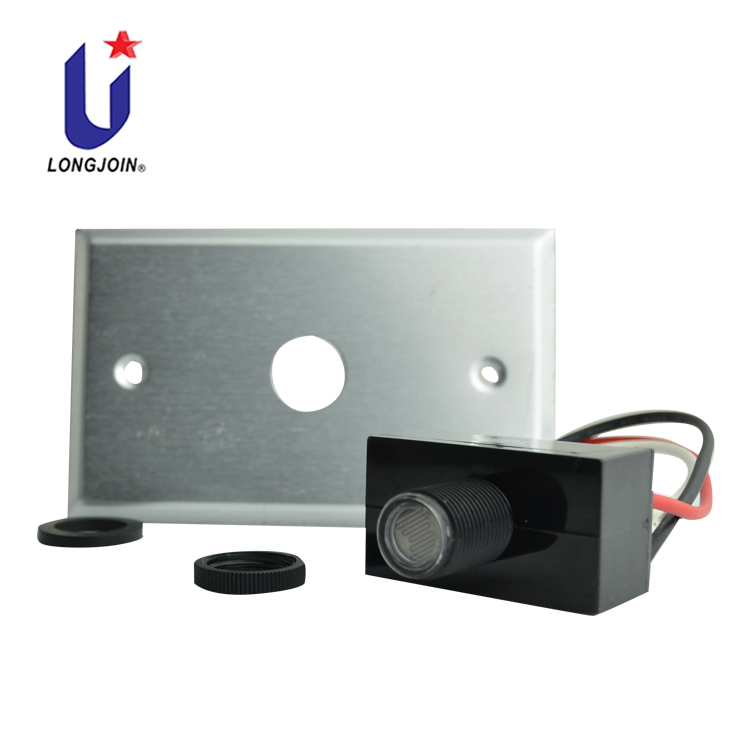
The JL-103 series introduces a practical environmental adaptation option through rain cap colour selection, which affects heat absorption and thermal stability in different climate conditions.
The rain cap sits over the photocell’s sensor window and protects it from direct rain contact. Its colour determines how it interacts with solar radiation:
- White caps
- Black caps
White caps are recommended for high-temperature regions and strong sunlight environments. Lower heat absorption means the photocell housing runs cooler, reducing thermal stress on the internal components and improving switching threshold stability in climates where surface temperature can significantly affect sensor performance.
Black caps suit decorative outdoor lighting and lower ambient brightness environments where the visual integration of the photocell into the fixture design matters and high solar heat absorption is less of a concern.
How Do the Models Compare?
| Feature | JL-104 Series | JL-118A | JL-118AV | JL-103 Series |
| Rotational direction adjustment | Yes | Yes | Yes | No |
| Slide sensitivity adjustment | No | Yes (Slide sheet) | Yes (Slide sheet) | No |
| Rain cap colour options | No | No | No | Yes |
| Commercial outdoor use | Excellent | Excellent | Advanced applications | Decorative lighting |
| Parking lot lighting | Suitable | Suitable | Highly suitable | Limited |
| Municipal lighting | Moderate | Good | Excellent | Limited |
Recommended pairings by application:
| Application | Recommended Model |
| Commercial parking lot | JL-118AV |
| Building wall packs | JL-104 series |
| Billboard and advertising lighting | JL-118A |
| Decorative outdoor lighting | JL-103 series |
| Industrial outdoor lighting | JL-118AV |
Full specifications for all adjustable photocontrol models are available on Chi-Swear’s wire-in photocell product pages.
Future Trend: Smarter and More Adaptive Photocontrols
Commercial outdoor lighting is moving steadily toward systems that deal with:
- Adaptive sensing
- Environmental tuning
- Smart network integration
- Energy optimisation
Adjustable photocontrols sit at a meaningful point in this transition. A rotational swivel or slide sensitivity adjustment may seem like simple mechanical features, but they represent the same underlying principle as more sophisticated smart systems, which is the recognition that a lighting control performs better when it can be tuned to its actual environment rather than assuming a standard one.
The Need for an Upgrade
Fixed photocontrols perform reliably in consistent, well-oriented installations. However, that is not common in commercial outdoor environments. Adjustable dusk to dawn sensors give installers the tools to correct for likely issues that fixed units can’t adapt to. Photocells on Chi-Swear’s catalogue such as the JL-104, JL-118, and JL-103 series are better suited for these conditions.
Frequently Asked Questions on Adjustable Photocontrols
Q1: Why is rotational adjustment important for dusk to dawn sensors?
Because the photocell needs to read open sky to switch accurately at dusk and dawn, and the fixture’s mounting position doesn’t always make that possible. Rotational adjustment lets the installer correct for this after mounting, without moving the fixture.
Q2: What does the slide sheet adjustment on the JL-118AV do?
It physically changes how much of the photosensitive element is exposed, which shifts the lux level at which the unit switches on and off. Sliding it in one direction raises sensitivity, making the unit switch earlier at a lower lux level. Sliding it the other way reduces sensitivity, making it switch later at a higher lux level.
Q3: How do different rain cap colors affect photocontrol performance?
The colour determines how much solar radiation the cap absorbs. A white cap reflects more sunlight and keeps the housing cooler, which helps maintain stable switching threshold performance in hot climates where surface temperature significantly affects sensor behaviour. A black cap absorbs more heat, which isn’t ideal in high-temperature environments but suits decorative applications where visual integration with the fixture design matters more than thermal performance.
Q4: Which adjustable photocontrol is best for commercial parking lot lighting?
The JL-118AV. Parking lots present two specific challenges for fixed photocontrols: vehicle headlights that can trigger false switching, and varied mounting orientations across a large site that make standard north-facing installation difficult. The JL-118AV’s time delay filters out headlight interference, the swivel head allows direction optimisation for each fixture, and the slide sensitivity adjustment fine-tunes the switching threshold for the site’s ambient light conditions.
Q5: Can adjustable dusk to dawn sensors reduce false triggering in outdoor lighting?
Yes, through two mechanisms.
- Directional adjustment; removing the sensor from facing light sources that cause false readings
- Sensitivity adjustment; raising the lux threshold required to trigger switching.
Together, these adjustments address most common false triggering causes in commercial outdoor environments.