- Introduction
- What Should You Know Before Matching a Photocell to a Fixture?
- Which Photocell Works Best with Lamp Posts?
- What Photocell Should You Use with Wall Packs?
- Which Photocell Is Right for LED Flood Lights?
- How Do All the Options Compare?
- In Summary
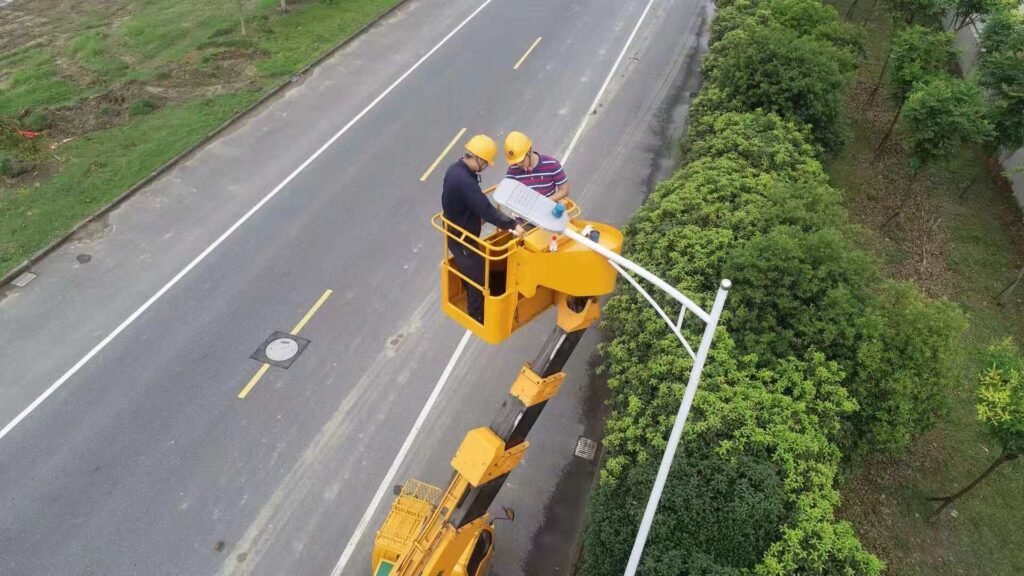
Outdoor lights play a very important role in the safety and movement of people at night. Be it building-focused lights, such as wall packs, or more widespread lighting like lamp posts and flood lights.
Deciding on the right fixture and photocell pairing is what differentiates a functional outdoor lighting system that lits from dusk to dawn from one flawed by premature relay failure, nuisance tripping, or a fixture that stays on all day, burning energy nobody asked for.
A photocell sensor that works perfectly on a 40W residential lamp post may be completely wrong for a 150W commercial flood light. Load rating, voltage range, mounting format, and fail mode all need to match the fixture.
This guide breaks down the right photocell for three of the most common outdoor fixture types (lamp posts, wall packs, and knuckle/yoke flood lights), using Long-Join’s product range as the reference point.
What Should You Know Before Matching a Photocell to a Fixture?
Before selecting any photocell, there are four core compatibility factors that every fixture pairing must satisfy.
Load Rating
This is the maximum wattage or VA the photocell relay can safely switch. Photocells with lower-rated tungsten will be unable to handle fixtures of higher watts. Always remember that:
- Matching voltages does not matter when the ratings are different
- Overloading the relay generates excess heat at the contact point, leading to early failure
- Checking both tungsten (resistive) and ballast (inductive) ratings is vital, since LED drivers behave differently from traditional lamps
Voltage Range
The voltage models of every photocell have limits and requirements, some of which are:
- Narrow voltage models (e.g., 120VAC only) will fail or behave erratically if connected to a different supply voltage
- Wide voltage models like the JL-403C (120–277VAC) are more flexible across different grid supplies
- For DC systems such as solar streetlights, only DC-rated photocells should be used
Mounting Format
The way photocells are installed in outdoor lights contributes to the durability and maintenance of these devices. Here are the 3 major ways:
- Button/wire-in — mounts through a knockout hole in the fixture housing, secured with a locknut; typical for wall packs and post lights
- Swivel stem — adjustable direction, used on barn lights and yard lights where the sensor needs to face north or away from the fixture’s own light output
- Twist-lock — plugs into a NEMA receptacle on a street light fixture; quick swap without rewiring
Fail Mode
There are 2 ways photocells handle malfunction:
- Fail On — if the photocell malfunctions, the light stays on; preferred for security and safety-critical applications
- Fail Off — if the photocell malfunctions, the light goes dark; used where constant illumination is not essential
Most Long-Join wire-in models default to Fail On, which is the safer choice for public-facing outdoor lighting
Which Photocell Works Best with Lamp Posts?
Lamp posts cover a wide power range, from residential pathway lights to industrial poles, and the right photocell depends on both the wattage and the mounting height.
Understanding Lamp Post Power Segments
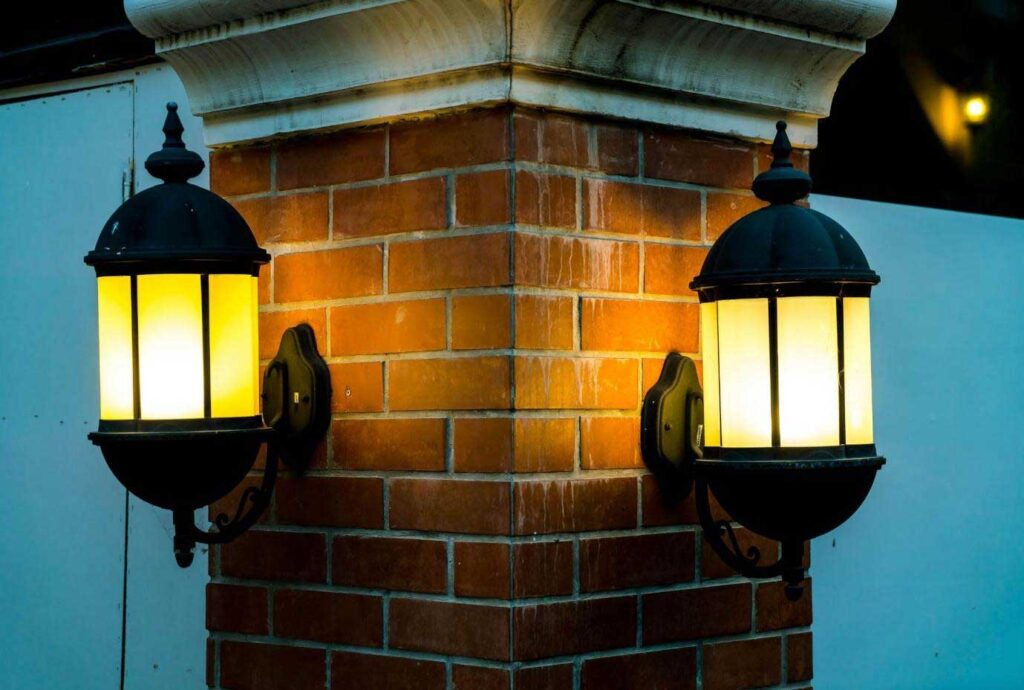
Lamp posts generally fall into three power categories, each with a different environment and set of demands:
- 10–60W — Residential streets, garden paths, small commercial areas; mounting heights 8–12 ft
- 60–100W — Mid-level commercial areas, parking entrances, community spaces; mounting heights 12–18 ft
- 100W+ — Industrial zones, high-security perimeters, major roadways; mounting heights 15–25 ft
Recommended Photocell Models for Lamp Posts
Low to Mid Power (10–60W) — Residential and Small Commercial
The JL-103A is the go-to choice at this range. Key specs:
- Rated voltage: 120VAC
- Load rating: 500W tungsten, 850VA ballast
- Sensor type: Thermal bimetal (reliable, low-maintenance)
- IP rating: IP54
- Compliance: UL773A, CE, RoHS
- Time delay: Built-in, prevents false switching from car headlights
The JL-412 series is also well-suited here, bringing phototransistor-based sensing for faster and more accurate response compared to the thermal bimetal design of the JL-103A. It suits fixtures where the environment has variable natural light conditions.
Mid to High Power (60W–100W+) — Commercial and High-Security
At this range, the JL-103C comes in alongside the JL-412 series. The JL-103C supports a wider voltage range, making it suitable for commercial installations where supply voltage may vary. For industrial poles at 15–25 ft mounting heights, the JL-412 series with IP65 protection handles the environmental exposure better than lower-rated alternatives.
Key Considerations for Lamp Post Installations
- Orient the photocell sensor north to avoid interference from the fixture’s own light output
- At higher mounting heights, wind exposure increases
- For residential installations, Fail On is recommended so streetlights stay on in the event of sensor failure
What Photocell Should You Use with Wall Packs?
Wall packs are wall-mounted fixtures used across residential, commercial, and industrial settings, and because the photocell is typically wired directly inside the housing, the mounting format and load rating take priority. You can check out this article for more on wall packs use-cases.
Understanding Wall Pack Power Segments
- 12–40W — Residential porches, pathway entrances, small retail fronts
- 40–120W — Commercial building exteriors, car parks, general security lighting
- 120W+ — Industrial facilities, warehouses, high-security perimeters
Recommended Models for Wall Packs
Standard Range (12–120W) — Residential to Commercial
The JL-412 series and JL-103A both work well in this range. Their compact button form factor fits neatly into standard wall pack knockouts without modification. The JL-412 series is particularly useful where the fixture may face variable ambient light, as its phototransistor sensing gives a more precise switching response.
Typical installations in this range include:
- Porch and entryway lighting on residential buildings
- Exterior walls of retail units and offices
- Car park perimeters and pedestrian walkways
High Power (120W+) — Industrial and High-Security
The JL-403C is the recommended model at this range. Key specs:
- Rated voltage: 120–277VAC (wide range, single model covers most supplies)
- Time delay: 3–10 seconds (prevents nuisance tripping from vehicle headlights or lightning)
- Compliance: UL773A listed
- IP rating: IP54
- Fail mode: Supports both Fail On and Fail Off configuration
Its wide voltage compatibility is especially useful in industrial settings where supply voltage is not always standardised across a site. The 3–10 second delay is critical in high-traffic security environments.
Key Considerations for Wall Pack Installations
- Button-style photocells should be mounted with wires pointing downward to prevent water ingress
- In security applications, always specify Fail On — a dark perimeter is a safety risk
- Check that the photocell’s load rating covers both the fixture’s running wattage and any inrush current from LED drivers
Which Photocell Is Right for LED Flood Lights?
Flood lights are the most power-variable fixture category in outdoor lighting, ranging from 15W landscape accents to 150W+ commercial arrays, and the knuckle or yoke mount introduces vibration exposure that demands robust physical protection.
Understanding Flood Light Power Segments
- 15–50W — Landscape features, community pathways, decorative signage
- 50–100W — Parking lots, building facades, community safety lighting
- 100–150W+ — Large-area commercial, high-security zones, industrial compounds
Recommended Models for Flood Lights
Low Power (15–50W) — Landscape and Community
The JL-412 series and JL-103A handle this range comfortably. Flood lights at this power level are typically in lower-risk, lower-intensity environments. The JL-103A’s thermal bimetal design suits installations where the priority is long service life and minimal maintenance.
Mid to High Power (50–150W) — Parking Lots, Security, Commercial
The JL-403C is the best match here. In parking lot environments specifically, its 3–10 second time delay is indispensable. Without it, the floodlight would switch off every time a vehicle’s headlights sweep across the sensor, which in a busy car park could happen dozens of times per hour.
Key Considerations for Flood Light Installations
- Knuckle and yoke mounts allow directional adjustment
- Wind movement on bracket mounts can loosen connections over time; check wiring periodically
- For commercial signage applications, consider whether the sign itself could illuminate the photocell and cause false triggers. Add a shade cap if needed
How Do All the Options Compare?
The table below summarises recommended photocells, power segments, and fail modes across all three fixture types.
| Fixture Type | Power Range | Typical Environment | Recommended Models | Fail Mode | Key Notes |
| Lamp Post | 10–60W | Residential, small commercial (8–12 ft) | JL-412 series, JL-103A | Fail On | Thermal or phototransistor sensing; compact button format |
| Lamp Post | 60–100W | Commercial, community (12–18 ft) | JL-412 series, JL-103C | Fail On | Wider voltage range needed at commercial scale |
| Lamp Post | 100W+ | Industrial, high-security (15–25 ft) | JL-412 series, JL-103C | Fail On | IP65 protection is essential at exposed heights |
| Wall Pack | 12–120W | Residential, commercial, security | JL-412 series, JL-103A | Fail On | Button format; wires-down mounting |
| Wall Pack | 120W+ | Industrial, high-security | JL-412 series, JL-103A, JL-403C | Fail On / Fail Off | Wide voltage range; time delay critical |
| LED Flood Light | 15–50W | Landscape, community safety | JL-412 series, JL-103A | Fail On / Fail Off | Lower risk environment; long service life priority |
| LED Flood Light | 50–150W | Parking lots, security, and commercial | JL-412 series, JL-103A, JL-403C | Fail On / Fail Off | Time delay essential; surge arrester recommended |
Browse Chi-Swear’s full photocell range for complete specifications, and visit Chi-Swear’s wire-in photocell section for detailed mounting format options across all fixture types.

In Summary
Matching a photocell to a fixture correctly directly affects energy efficiency, maintenance costs, and system reliability over the years of operation. The JL-103A covers residential and low-power applications with a simple, proven thermal design. The JL-412 series steps up the sensing accuracy with phototransistor technology across all three fixture types. And the JL-403C handles the high-power, wide-voltage, time-delay requirements of commercial and industrial installations. Know your fixture’s load, voltage, mounting format, and fail mode requirement, then pick the model that matches all four.