Last updated: 13 November 2026 · Long-Join technical marketing team, Shanghai
Wholesale photocell buying looks simple from outside: pick a model, get a price list, order in volume. In practice, the buyers who get the best results treat it as a spec-driven negotiation — the unit price follows the specification and the batch logic, not just the quantity. The same twist-lock photocell can be quoted at several different prices depending on contact materials, certification scope, packaging and how you phase the deliveries.
This guide explains how MOQ, pricing tiers and lead time actually work at the manufacturer level, and how to write an RFQ that gets an accurate, final quote in one round instead of three.
Key takeaways
- Unit price is driven by specification first, quantity second: contact materials, certification scope and sealing all move the number more than the last 10,000 pieces do.
- MOQ exists because of production batching and test runs, not arbitrary policy — mixed-model orders and phased deliveries are the usual workarounds.
- Lead time = stock position + production + QC + certification variants + export documents; catalog models are multiples faster than OEM variants.
- An RFQ with model/interface, voltage, load and annual volume gets a firm quote in one round; “how much for photocells” gets a brochure.
- Buying aged or surplus stock to save unit cost is the most expensive discount in this category — gaskets and sealed electronics age on the shelf.

What actually drives the wholesale unit price
Volume matters, but it is the last lever, not the first. In roughly descending order of impact:
- Certification scope. A model produced under UL Recognized or Listed coverage costs more than its unlisted twin, and multiple regime variants (UL + cUL + CE) cost more again. If your market genuinely needs the certification, this is the wrong place to save — if it does not, do not pay for it. Decide before quoting, not after.
- Contact and body materials. Silver-alloy contacts, brass bodies and quality gaskets are real cost drivers and the difference between a control that survives its warranty and one that does not. This is also where lowball quotes do their substituting — see How to Vet a Photocell Manufacturer for the checks.
- Sealing and protection level. Potted electronics and sealed optical assemblies cost more to build than open designs. Outdoor luminaires amortize that difference within the first avoided service call.
- Quantity tier. Pricing curves in this category flatten quickly: the meaningful steps are between sample, first batch (thousands) and annual volume. Beyond that, expect per-piece savings mostly from packaging and logistics, not from production.
- Packaging. Bulk pack vs. individual retail cartons changes landed cost more than buyers expect. If your installers label and store parts themselves, bulk pack is free money.
For a full breakdown of price components, see The Ultimate Guide to Understanding Photocell Prices.
Why MOQ exists, and how to work with it
Minimum order quantities in photocontrol manufacturing come from batch logic: components are bought and tested in batches, sealing and calibration runs are set up per batch, and outgoing electrical tests are planned per production lot. A tiny order forces the same setup cost onto few pieces — hence the MOQ.
Practical workarounds that manufacturers routinely accept:
| Situation | Workaround |
|---|---|
| Need below MOQ for a trial | Sample order at sample pricing — higher unit price, no production commitment |
| Several models needed, each below MOQ | Mixed-model order: combined quantity meets the batch threshold, production sequenced together |
| Uncertain first-year volume | Phased delivery: contract the annual quantity, release production in tranches (also smooths your cash and warehouse) |
| Filling a container | Consolidate photocells with receptacles, shorting caps and accessories from the same supplier — one QC standard, one shipment |
Lead time anatomy: where the weeks go
A wholesale lead time quote is the sum of five parts. Knowing them lets you compress the ones you control:
- Stock position. Fast-moving catalog models (standard NEMA 3-pin controls, standard voltage variants) often ship from production schedules running continuously. Slow movers and dual-certification variants start when ordered.
- Production run. Typically the shortest part of the equation for catalog parts — days, not weeks, for common models.
- QC and outgoing tests. 100% electrical/photometric outgoing testing takes real calendar time at volume; suppliers who skip it are the ones quoting suspicious lead times.
- OEM customization. Private-label marking, custom lead lengths or housing colours add tooling and proofing loops. This is where a catalog 2–4 week order commonly becomes 6–10 weeks — typical industry figures, to be confirmed per supplier.
- Export handling. Packing for sea freight, documentation and booking. Consolidating with other components (above) usually hides this cost inside a shipment you were already paying for.
Ask the supplier which of the five parts drives your specific quote, and the ETA you get back becomes negotiable instead of mysterious.
The RFQ that gets quoted in one round
Most quote ping-pong happens because the first RFQ was a question, not a specification. A first-round RFQ for photocells needs exactly four things:
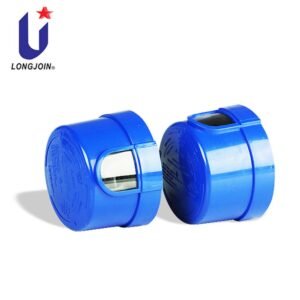
- Model or interface — e.g. NEMA 3-pin twist-lock (ANSI C136.10), ANSI C136.41 5-/7-pin receptacle system, Zhaga Book-18, or a specific model like JL-205 or JL-206.
- Operating voltage — and whether the market requires a specific variant (120/208/240/277 V etc.).
- Load rating — what the control actually switches, including ballast/driver type.
- Annual quantity and phasing — including how much is for the first order.
Add target certifications and packaging preference, and a manufacturer can return unit price, MOQ, lead time and the datasheet revision for the exact variant in a single reply. Long-Join quotes against those four inputs — plus OEM marking, modified lead length and housing colour on request.
Quality control at wholesale volume
Volume multiplies whatever QC culture exists. Before a bulk PO, agree in writing on:
- Outgoing test rate — 100% electrical testing is the norm at serious photocontrol factories; anything less is a discount you will pay for later.
- AQL sampling plan for incoming components and finished goods.
- Batch traceability — each carton traceable to production date/lot, so a field issue maps to a batch, not to “everything”.
- Certificate of conformance per shipment, referencing the datasheet revision quoted.
Two classic wholesale mistakes (and their antidotes)
Mistake 1: chasing surplus stock prices. Photocells are sealed electromechanical assemblies; gaskets age, and shelf-stored electronics absorb humidity long before installation. “Brand new, old production date” is a contradiction worth money. Antidote: require production date codes in the quote, and treat any batch older than about two years as a different product.
Mistake 2: mixing generations in one street. Turn-on thresholds and delay behaviour differ subtly between control generations and manufacturers. A visibly patchy dusk switch across a road is the visible symptom. Antidote: quote per street or per project phase, and keep one model/variant per zone; if a mid-project substitution is unavoidable, request the threshold comparison for both variants before switching.
Ready to price a wholesale batch?
Send the four RFQ inputs and get unit price, MOQ, lead time and the exact datasheet revision in one reply.
Note: MOQ tiers, lead-time ranges and pricing behaviour described here are general industry guidance. Exact terms depend on model, variant, certification scope and production schedule — confirm in writing with each RFQ.
Related reading on this site
- How to Vet a Photocell Manufacturer: 9 Checks Before a Bulk Order
- The Ultimate Guide to Understanding Photocell Prices
- Wire-in vs Twist-Lock Photocontrols: Selection Guide
References
- ANSI C136.10 — street-lighting photocontrol interfaces (3-pin twist-lock)
- ANSI C136.41 — roadway lighting photocontrol receptacles and accessories (5- and 7-pin)
- Long-Join photocontrol datasheets (PDF)
Sourcing photocells at wholesale volume?
Send us four things — model or interface (NEMA 3-pin, ANSI C136.41 5/7-pin, Zhaga Book-18), operating voltage, load rating and annual quantity. We reply within 24 hours with unit price, MOQ, lead time and the datasheet revision for the exact variant.
OEM housing colour, private-label marking and modified lead length are quoted on request.
JL-205 product page → · Twist-lock photocontrols → · PDF datasheets →