

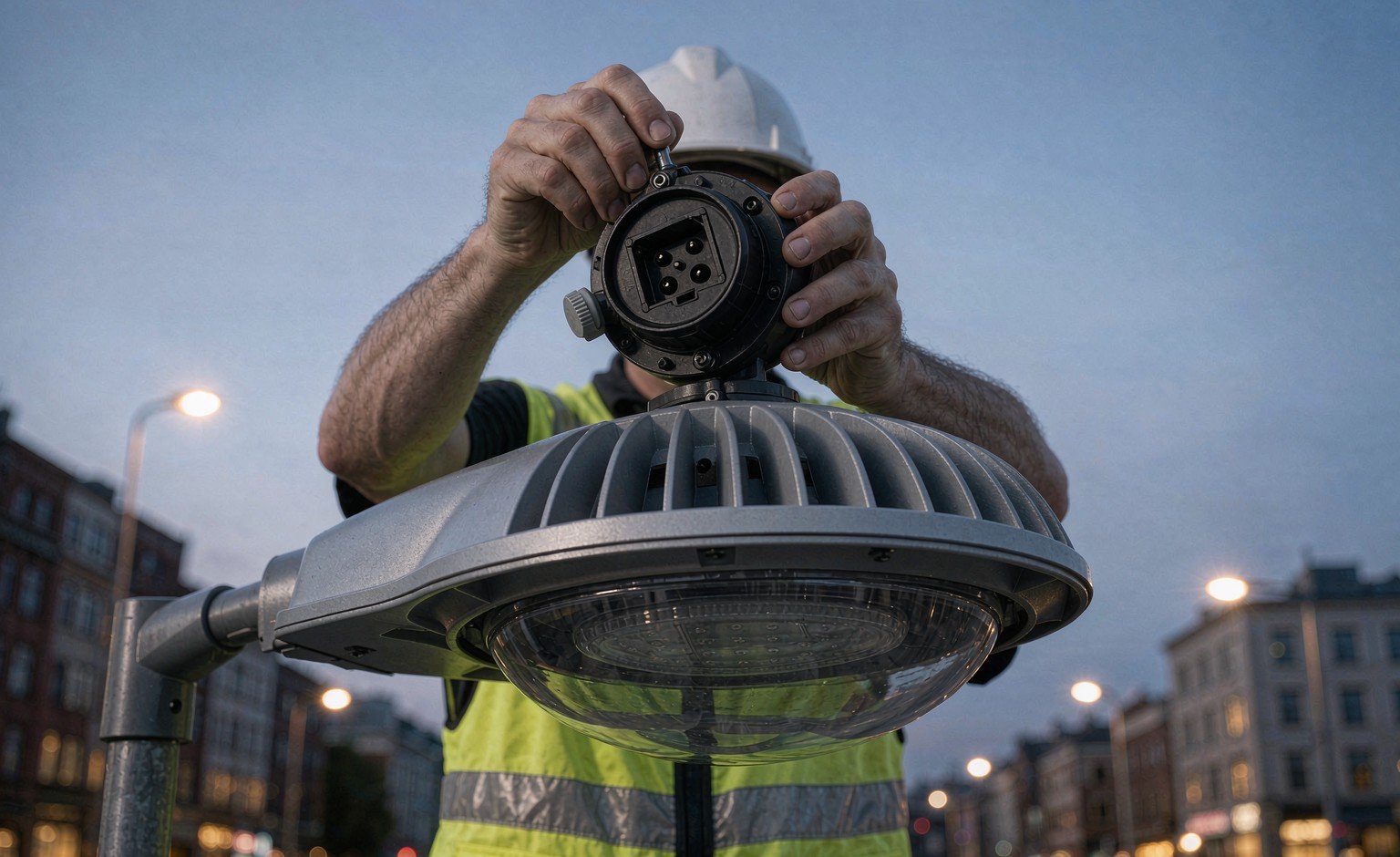
A luminaire’s photocontrol interface is set by its receptacle — and the pin count tells you what the fixture can actually support: on/off switching only, dimming, or dimming with adaptive control. This guide separates ANSI C136.10 3-pin receptacles from ANSI C136.41 5-pin and 7-pin bases, shows how to identify the socket already mounted on a fixture, and lists the LONG-JOIN model to order for each case. It is written for luminaire OEMs, distributors, utility retrofit programmes and installation contractors.
Quick answer
- 3-pin (ANSI C136.10) — line-voltage switching only. Takes a twist-lock photocontrol, a shorting cap, an open circuit cap or a protective cover.
- 5-pin (ANSI C136.41) — switching plus a dimming signal pair; takes dimming photocontrols and dimming-capable network nodes.
- 7-pin (ANSI C136.41) — the base used for dimming and adaptive controllers. Specify it together with the driver and the controller: the base alone does not create a dimming circuit.
The three interfaces side by side
The values below are the ratings published on each LONG-JOIN product page and datasheet. Confirm the exact model, suffix and installed sealing arrangement on your quotation — the IP rating of a cap or cover applies to the complete assembly, not to the part on its own.
| Interface | Standard | What it carries | Ratings listed (LONG-JOIN) | Models |
|---|---|---|---|---|
| 3-pin luminaire receptacle | ANSI C136.10 | Line-voltage switching to the driver or ballast | 0–480 VAC, 15 A load rating | JL-200X · JL-200Z · JL-230 · JL-230F |
| 5-pin dimming receptacle | ANSI C136.41 | Switching plus a dimming signal pair | 0–480 VAC, 15 A; dimming signal 0–30 VDC, 250 mA max | JL-240SXB · JL-240F |
| 7-pin base | ANSI C136.41 | Dimming and adaptive control interface | Signal 0–30 VDC, 250 mA; UL94-V0 flammability-rated body | JL-241J |
On a phone, swipe the table horizontally to see every column.
3-pin ANSI C136.10 — on/off switching only
A 3-pin C136.10 socket carries line voltage to the luminaire and nothing else. The device in the socket decides the behaviour: a twist-lock photocontrol switches the fixture at dusk and dawn, a shorting cap keeps the circuit closed while the control is out, an open circuit cap keeps it open, and a cover protects an empty socket. None of these adds dimming, communication or smart-control functions.
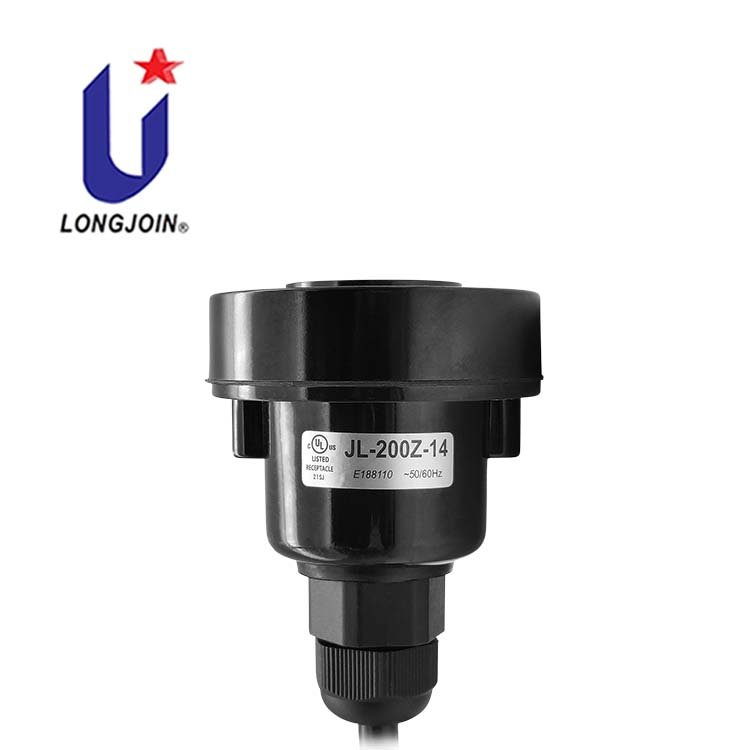
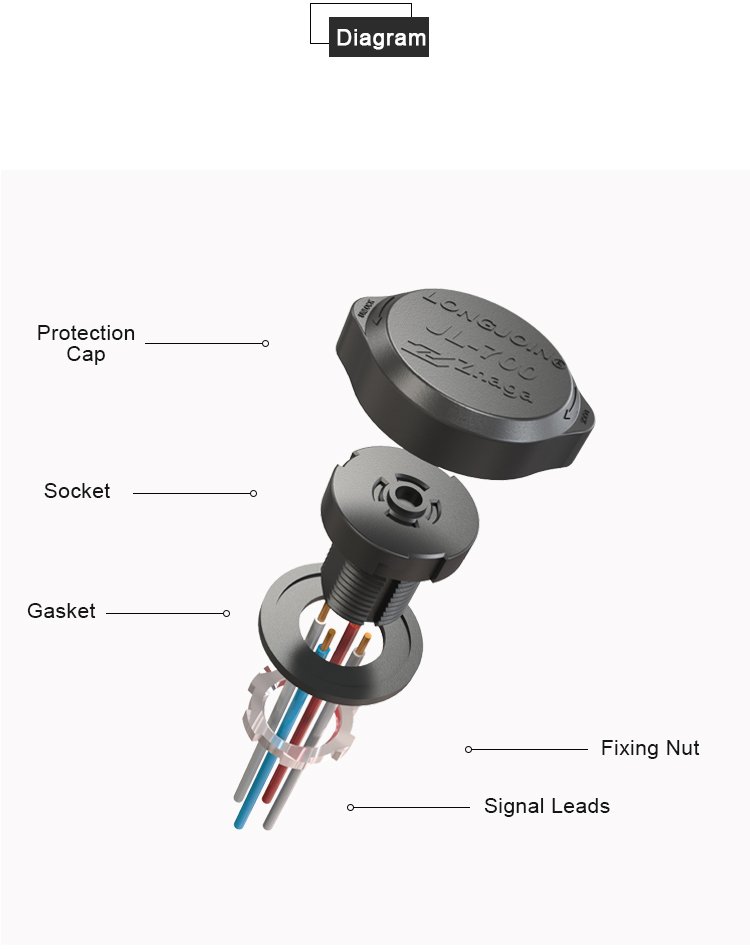
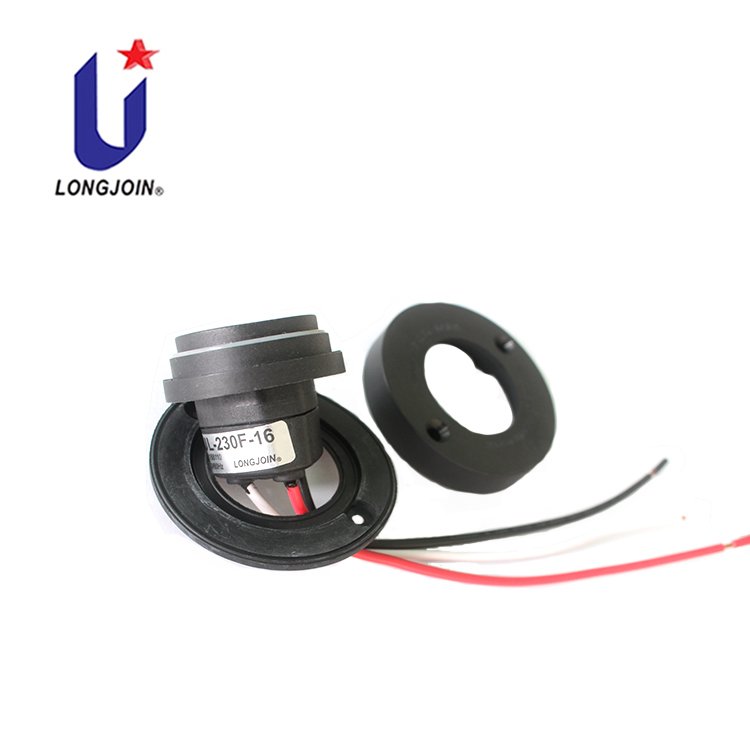
Two mounting families exist in the LONG-JOIN range. JL-200X / JL-200Z are fixed 3-pin receptacles with a bakelite body and silicone gasket, listed at 0–480 VAC and 15 A with an IP65 option and an ambient range of −40 °C to +70 °C. JL-230 / JL-230F are rotatable versions rated 480 VAC max at 15 A with H62 brass contacts; the JL-230F adds a built-in waterproof ring for IP65 protection.
See JL-200X specifications · See JL-230F specifications · 3-pin wiring diagrams
5-pin ANSI C136.41 — switching plus dimming
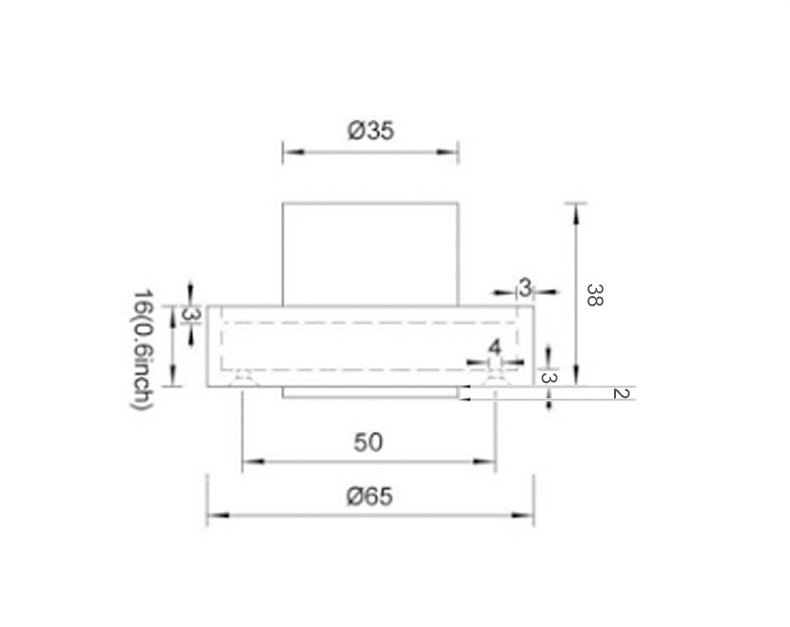
5-pin receptacles add a dimming signal pair to the switching contacts, which is what lets a dimming photocontrol or a network node set light output as well as the on/off state. JL-240SXB is listed at 0–480 VAC, 15 A with a 0–30 VDC, 250 mA max dimming signal. JL-240F covers the waterproof 7P/5P twist-lock version where the project calls for it.
The receptacle does not create dimming on its own: the LED driver must have a compatible dimming input and the controller must match the interface. Confirm the driver datasheet before specifying a dimming upgrade on an existing fixture.
See JL-240SXB specifications · See JL-240F specifications
7-pin ANSI C136.41 — dimming and adaptive control
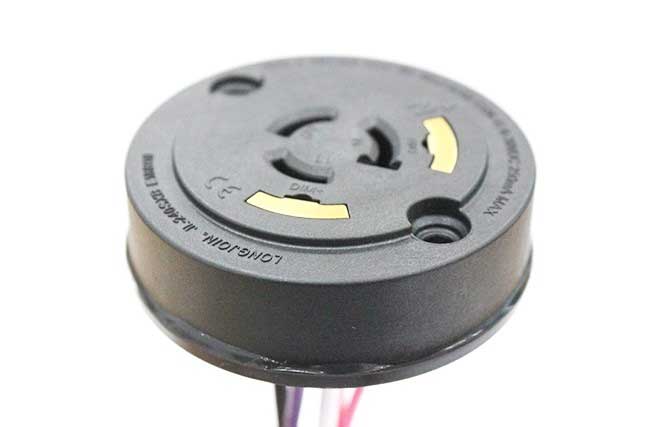
A 7-pin base is the interface used where a luminaire must accept dimming and adaptive controllers, for example street lighting that is being prepared for a connected control system. JL-241J is listed with a 0–30 VDC, 250 mA signal rating, a UL94-V0 flammability-rated body and a silicone gasket. Two documents are public: the 7-pin material datasheet (PDF) and the electrical assembly specification (PDF).
One approval note: UL94-V0 is a material flammability rating, not a product certification. Where a project requires UL recognition, ask for the file number and confirm that its scope covers the exact model supplied — our guide to UL recognized vs. reliability tested explains what to request.

See JL-241J specifications and request a sample
How to identify the receptacle already on your fixture
- Count the contacts — 3, 5 or 7. That single number narrows the standard to C136.10 or C136.41.
- Photograph the socket straight on, with the gasket visible. A clear photo is usually enough for us to identify the interface before you order.
- Read the luminaire and driver labels — supply voltage, load, and whether the driver has a dimming input.
- Check the wiring documentation for that fixture before reusing existing wiring. A matching housing does not prove a compatible circuit.
Pinouts and hook-up drawings for each interface are collected in the Photocell Wiring Diagram Library; the North America retrofit selection guide compares all four component types in one table.
Five checks before ordering
- Standard and pin count — C136.10 3-pin, C136.41 5-pin, C136.41 7-pin.
- Supply and load — voltage, luminaire wattage, and LED-driver inrush data where applicable.
- Circuit state during maintenance — photocontrol, shorting cap or open circuit cap.
- Installed IP requirement — state the gasket, mounting orientation and exposure conditions, because the rating applies to the completed assembly.
- Documents and order code — datasheet, drawing, and certificates whose scope covers the supplied model.
Caps and covers that pair with these interfaces
Shorting caps keep the circuit closed while a control is out of the socket, open circuit caps keep it open, and double-layer PC/PP covers protect an unused socket. All three take 0–480 VAC, 50/60 Hz and fit the 3-pin C136.10 footprint: JL-208 / JL-208-IP67 shorting caps and JL-209 open circuit caps. A 5-pin or 7-pin C136.41 receptacle needs a matching part instead — a C136.10 cap does not fit a C136.41 base.
Model-by-model comparison of every cap version: NEMA shorting cap vs open circuit cap guide.
Frequently asked questions
Can I replace a 3-pin receptacle with a 7-pin base?
Only where the luminaire, driver and controller all support the C136.41 interface and the mounting cutout is prepared for it. Changing the base does not add dimming by itself — the driver needs a dimming input and the controller must match the interface.
Does the pin count change the voltage rating?
No. The 3-pin JL-200X/JL-200Z and JL-230, the 5-pin JL-240SXB and the 7-pin JL-241J are all listed for the same 0–480 VAC supply family. Ratings come from the model datasheet, not from the pin count.
What keeps the fixture running while the control is removed?
A shorting cap closes the receptacle circuit so the luminaire can operate; an open circuit cap leaves it open. Neither senses daylight. Details are in the cap comparison guide.
What documents can I get before placing an order?
JL-241J publishes its material datasheet and electrical assembly specification as PDFs. For other models, request the datasheet and drawing with your quotation — we send them within 24 hours, together with the variant table and OEM options.
Need help matching a receptacle to your fixture?
Send the pin count, a straight-on photo of the socket, supply voltage, load, destination market and annual quantity. We use those details to confirm the model, the supporting documents and the quotation.
Send your socket photo for a match →
Email: wally@chiswear.com
Quick model shortlist for this guide
From this article straight to selection — free datasheets; unit price, MOQ and lead time within 24 hours.
| If this is your situation | Start with this model | Datasheet |
|---|---|---|
| Utility or OEM fixture with the standard 3-pin C136.10 socket | JL-200X 3-pin receptacle | Request PDF → |
| Dimming photocontrol or node to be added to a C136.41 socket | JL-240SXB 5-pin dimming receptacle | Request PDF → |
| Fixture being prepared for dimming and adaptive control | JL-241J 7-pin base | PDF → |
Related guides
- NEMA shorting cap vs open circuit cap: model & IP rating guide
- North America photocontrol retrofit selection guide
- Photocell wiring diagram library (9 guides, 12 PDFs)
- How to choose a NEMA receptacle manufacturer: 7 checks
- UL recognized vs. reliability tested: what buyers should verify
- How to find the right LED photocell supplier for your lighting needs
Technical references: LONG-JOIN product pages for JL-200X, JL-200Z, JL-230, JL-230F, JL-240SXB, JL-240F and JL-241J; JL-241J material datasheet and electrical assembly specification 2405V2; ANSI C136.10 and ANSI C136.41 interface standards. Ratings quoted above are as published on those documents — confirm the current approved specification with your quotation.



One Response